The Blue Roads of Cannes

Away from the homages, special screenings, classic films, away from the red carpet ride to that palace of dreams, away from the Cinema Paradiso deep in the watery hearts of those days of ‘how it used to be before they built the new Palais.’ Away from the game before it became the game it is “guarded by thin-lipped security experts..” (Roger Ebert).

Away from: This is a business after all, bringing in hundreds of millions (billions) annually. Away from the other Cannes down in the concrete heated bowels of an airless bunker where the sharp weave themselves into tongued-tied hoarse and whispery tanglings over business fits and contracts and suits.
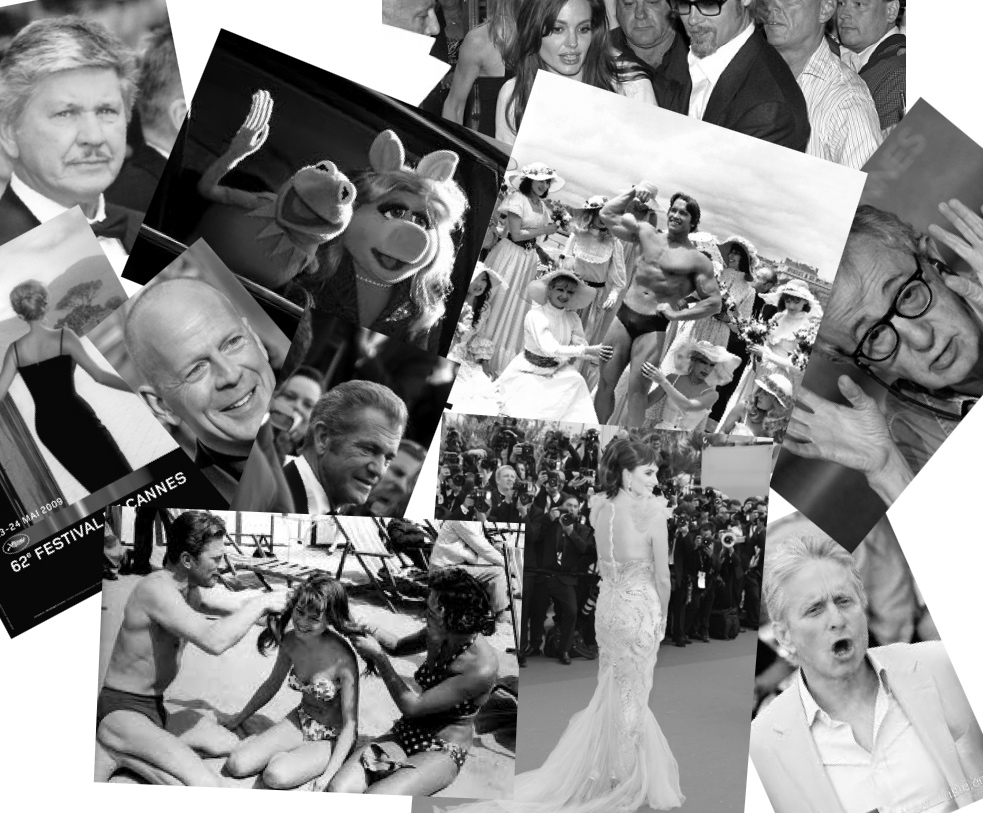
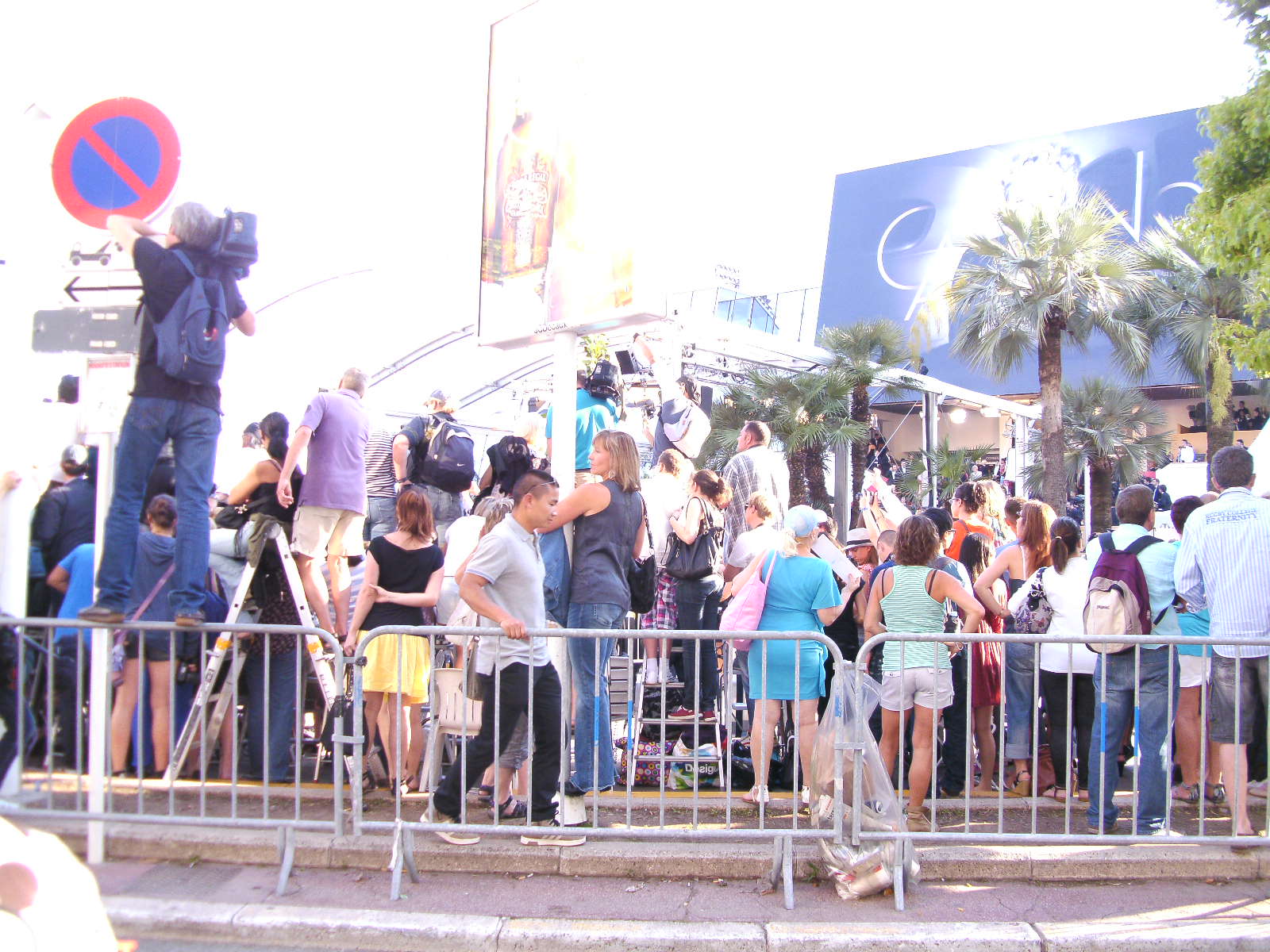
Away from the silver screen stars of present and past, Charles Bronson and Miss Piggy, Arnold, Bruce, Brad, Brigitte, Mel, Kirk, Michael, Woody or Penelope, away from the belle epoque hotel suites and facades, away from yachts as big as small apartment blocks stock stilled by the importance of those they house out in the wide bay, away from those gleaming bright decks, practiced sunglasses, strategic smiles, away from trained binocularists, the annual crush and cheap ticket ride along the promenading, skateboard Croisette, away from the blinding baroque plaster, the guest only dinners, friend-of-a-friend-who-knows-a-friend ticket-only beach parties, away from the clickety-click crush of pass-only photo shoots, prized seats under the balcony, away from ‘go easy I’m-not-wearing-makeup’, away from  the bright-new-glory of my-new-found-fame, those bullish, brave, belligerent and bereft smiles, away from the silent jeering, away from the exclusion zones out in the streets.

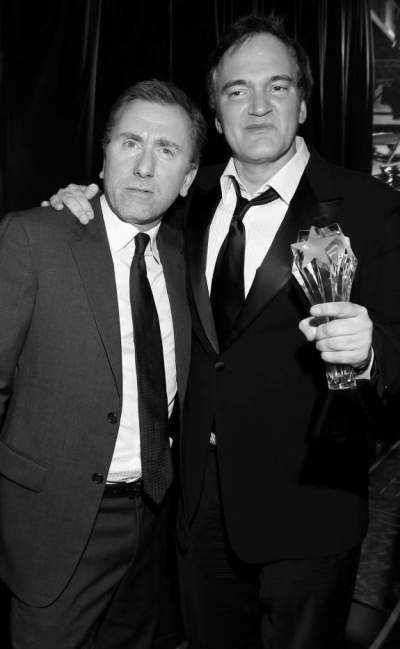
Away from get away from who-are-you-and-who-do-you-know big films and titles, away from that winnowy fame and limouey celebrity, over in the back blue road of Mediterraneanised cinema, over in – I only hole up in the dark to witness creative endeavour – over in this other plane and train load of tourist-class, over in the world you mostly will never hear talk long enough to remember how to forget, over in the altogether smaller world of Un Certain Regard, with a jury presided over by Tim Roth.

Among the yet no-so unfamous such as Benicio DEL TORO, Pablo TRAPERO, Julio MEDEM,  Elia SULEIMAN, Juan Carlos TABIO, Gaspard NOÉ et Laurent CANTET with 7 DIAS EN LA HABANA @ 2h and 5m,  four first-filmers, Brandon Cronenberg (yes, that Cronenberg) with ANTIVIRAL @ 1h and 50m, Ashim AHLUWALIA with MISS LOVELY  @ 1hr 50m, and Juan Andrés Arango with LA PLAYA @ 1h and 30m.

Roth’s own brit pack ever-repressed to boiling anger ride through names and changes in life and cinema from Dulwich to Los Angeles via works by Mike Leigh, Stephen Frears, Peter Greenaway, Robert Altman, Quentin Tarantino, Nic Roeg, John Sayles, Wim Wenders, Tim Burton, Woody Allen, Werner Herzog and Francis Ford Coppola seems to offer interesting, experimental possibilities as what might emerge as the final choice.


Cannes and Experimental Film

From one of cinema’s earliest experimental films, Luis Buñuel’s Un Chien Andalou (1929), to Maya Deren’s Meshes of the Afternoon (1943), winner in 1947 of  Cannes’ Grand Prix Internationale for 16mm experimental film, on to the films of Cocteau, Godard, Tati, Fellini, Lynch, Cronenberg and others, the notion of the film experiment inspires admiration, distaste, love and hatred in film audiences. Commercial movies (frantic pacing, hackneyed surprise, worn-out tropes, special effects barages), with their hero and quest driven narratives, seem diametrically opposed to the whimsical, subjective, interior, asymmetric, disjointed, dream-state inspired plotless, timeless, amoral, and often carelessly created worlds of the film experiment. Yet most if not all conventional cinema depends entirely on the concept and nature of experimental film. It’s axiomatic: without the experiment there is no convention. Experiment lies at the heart of cinema not only because early cine-cameramen experimented with moving images and celluloid film created art (even if art wasn’t the intention); experiment is the fundamental ancestor of all cinema.

A film that succeeds at the box office will often be remembered for a sequence that cites, borrows from film experimentation.

Commercial filmmakers often reconfigure ideas and approaches from earlier films, all art in fact, but they owe their largest debt to the spirit of film experiment in all its disguises.

Cannes encourages filmmakers to exhibit their experimental works in Un Certain Regard. 2012’s lineup includes sons of the famous in twenty chosen films. The route of an art film to the festival’s screens is not simple, with the spirit of today’s Deren or Buñuel struggling to shine in the annual failed attempts of filmmakers with ‘unexhibitable’ projects we never see, but without which we would know little of the true scope of cinematic experimentation.

Calling all photographers

Join with us in a People’s Justice Publication

Send us your photos accompanied by your own description – EEP will initially make a digital publication and if there is demand do one in print – ALL proceeds to a charity of our collective contributing creative choice.

This initiative is not for profit, this is for Justice.. We are sure you will have many to show us that are extraordinary…
…All rights to photos reserved to creators..

http://elephantearspress.com/

‘The Seat of Human Justice’

The Frankfurt School Revisited

The objective of  the culture industries – in a critique developed in the 1930s, written and published in the 1940s by Frankfurt School members Theodor Adorno and Max Horkheimer under the title The Culture Industry – was to keep ordinary folk as docile and manageable as possible… ‘happy’, uncritical, coralled consumers of a ‘capital’ controlled culture.

The idea was: the tranquilized poor, the culturally deceived, the ‘creatively dociled’ buy, watch, listen to and read what they are told to watch, listen to, read. The discourse on culture, being ideologically-fed by capital on steroids, makes phase 2 so easy, the accounts driven bottom-line. This pay-up and now driven discourse leads its proponents still to say –  See! It is what ‘they’ want (the great unwashed unconsidered)  otherwise they wouldn’t buy or want it.

Reminds me of Jack Crabb’s (Dustin Hoffman’s) encounter with General Custer just before the ‘great general’ got whipped at Little Big Horn. “General, you go down there,” Crabb says, when Custer asks him what to do. Thinking Crabb, a pathetic muleskinner, spineless, with not-even guts enough to shoot Custer in the back,  a git who could only lie to him, Custer reasons (aloud, of course) that if Crabb wants Him to go down to the Little Big Horn it’s only because Crabb really doesn’t want Custer to go down there  – Crabb could only lie to achieve a goal. So, Custer does go down there – much to relief of the world, history and the native American.

Little Big Man (1970) was the sort of film American filmmakers made after the film studios lost control in the late 1960s. In that rare moment, spanning a few years only, cultural complexity was synonymous with creativity – the audience and creators were so close they could have been one and the same.

Back to the genealogically disturbed present. No cultural outbreaks, no individual voices, no “surprises” for those in charge right now, no matter how many camp in Wall Street or outside St. Paul’s.  Society, dare I say it, Capital, is under control. No matter what the postmodernists, Foucault, Castells et al want, did and do tell us, culture is still controlled, top down –  never more than in the 21st century (thanks to Lessig {Free Culture, 2004, p12} for reminding us).

So a nod to the voices that seem so still and silent today – to Theodor, Max, Walter and Herbert: We need to hear from you again.

“The web of domination has become the web of Reason itself, and this society is fatally entangled in it.” Herbert Marcuse

What is Facebook really up to?

Initially this post was about Facebook dismantling its groups. The issue then: Many people spent an enormous amount of time developing them and asking people to join. Because of widespread concern and protest by Facebook members FB resolved this and groups could keep their members. At the time I wrote: “Facebook is fast acting like a corporation acting in concert with other corporate or shady political interests – not a borrowed idea from a dorm at Harvard existing only because a lot of people use it. If Facebook is about anything it is about each and every one of its members – Facebook is nothing without the people who bother to use its pages.”

Now Facebook wants, it seems, to use stored data of its members and make it public. This has been true for sometime of course. FB data-mines its users. But is the ante being upped with new moves? Does this breach the privacy terms implied in the original terms of use?

Facebookers should be informed of what this new FB policy is and what it means and then they should be asked whether they agree to the use of data that was once ‘private’ between FB members.

Facebook should reflect the members that make it up. Facebookers are not a resource to be exploited for profit in this way by Facebook’s founders (this was not the original ‘pitch’ or purpose of Facebook). If use of private data does happen, at the very least it should be only with prior full agreement of Facebook users.

If Facebook wants to charge for the service then they can and people can opt out of the FB site if they so wish – taking their data with them, not leaving it behind for commercial use.

If I buy a house I get the house and grounds, not the furniture and fittings inside and outside, unless it is in the contract of sale. Facebook do not own the data, (though I am sure their lawyers would say they do). They have already profited hugely from having such a huge number of users, but they don’t own Facebookers or their private and personal data.

Sammakon in Turku

I was in Finland last week, in the western city of Turku, facing down five days of clear blue skies and 30 degree sunshine, weather Londoners can only dream about. Turku is a friendly, gentle-paced city.

I found a bookshop not far from the hotel.

What caught my eye right away was a small John Fante hardcover in Finnish lying on an outside table, selling for 3 euros.

No dumping books in remainder shops, not in this corner of the bookworld anyway. There it was at a price anyone can afford – with the added value of being in translation. Sammakon is not an average bookshop, even if it could be mistaken for one at first glance.

There are two sammakko.com shops, the other in Helsinki. Sammakon’s owner publishes, sells and translates from English himself, especially his favorites – Bukowski, Fante, the beat poets and novelists. His first book was a translation of Charles Bukowski’s The Days Run Away Like Wild Horses Over the Hills. And don’t they just. After coming across this minor miracle for the world of books in English, one that so intimately caught my eyes, all both of them, it was on the bus for the drive back to Helsinki, for a day and a half of restaurants and walks, before flying back to rainy, chilly London.

Harvey Weinstein, M&Ms (MGMs or MFMs), SCB and the dreaded typo

When I wrote Uncorrected Proof, I thought – as it was a novel set in publish9ng, warts, bad behaviour, mistakes and all – what’s the BIG thing that sticks most in an editor’s craw…the typo of course.

Perhaps there are a few more things that stick in editors’ craws but the typo is a great place for me to start....a craw by the way for those who are not up with the term is ‘a pouch in many birds and some lower animals that resembles a stomach for storage’ ..(worth knowing and possibly connected to the punch-line).

But why should typos stick so deep and hard and mean in the editorial craw? Well, I’m sure it is annoying for editorial purists at times to stumble across a (strategic) typo (that OMG moment, that moment of editorial triumph): SEE how much unhoused-trained writers-like-you need us! Let me be frank, thank the gods for the eagle eye of a munificent editor – like Mike Phelps without the coach-guy telling him how to swim – had to drop a sport reference in there somehow.

But heinous literary crimes aside, and stepping back from the taking of an editor’s role in vain, it seems there might also be a wider issue here, one of power (where Harvey comes in) – when is power never involved? Editors play a very important and often uncredited role  in keeping writers ON MESSAGE – for the benefit of all of society. (Heaven forbid writers are left to their own rational devices on the MESSAGE).

In toto, our creative managers play an important role. Just look at how incredibly naughty & thoughtless Charlie Sheen has been over the last few days. If it hadn’t been for the sensible handling of him by Hollywood’s best and finest (Moonves and the rest), SCB* might just have shocked Libya off the front page. What a travesty, the entertainment industry deflecting our attention back to the real battle – extracting mega-media-revenues from impoverished consumers. Eventually SCB will head back to rehab, end of story (for a while), while Libya’s gonad-breaker keeps us politically glued, at least for a few more daily editions.

Apart from his penchant for power what does Harvey have to do with this?  His critique on CNN of SCB’s obsessions, Harvey’s own craw-charged battles with auto-gratification – on the floor chasing M&Ms – but that, like Charlie Sheen’s reel motives, and my typo-fictionalisations, is another story.

* Sacked Charlie Boy, the saga of off-message Charlie Sheen, a not so ‘poor’ not-so young actor learning how to get over himself.

LA

Andy Warhol (30 years ago, today)

Andy Warhol’s screen 16mm tests are now on at MOMA.

Warhol understood our need to stare, reflecting what tabloid newspapers have always been doing – only as Warhol under-hyped, the tabloids by default over-hype.

from Edie Sedgwick’s film test

Turning a ‘cool’ eye to the zeitgeist mood, Warhol caught the details of his (New York) times. He dealt with celebrity and near-celebrity uncritically, his own included. His instinct for finding meaning in what many thought was meaningless is as sharp now as it was then. Warhol invited us to evaluate and re-evaluate the banality of everything. His Diaries (1976-1986) are filled with commonplace responses to his celebrity-laden life, written as if his existence and the objects of his attention were banal – they were and weren’t. This is his entry for 30 years ago today.

Saturday, December 20, 1980

Vincent was having a party so cabbed there ($5). It turned out to be a really great party. I was taking pictures of this handsome kid I thought was a model and then I was embarrassed because it turned out to be John-John Kennedy. Fred brought him and Mary Richardson. And Chris Makos was there taking party pictures. And Debbie Harry gave me a present, and she said to open it up and I said no, that I’d wait till I got home, and I’m glad I did, because I just don’t know what it is. It’s this black thing. I wonder if it’s a cock ring, because it’s rubber with a stick on it, but it has this one piece that doesn’t make sense.

Monique’s getting ready to push her book, and she wants the cover of Interview, which actually might be fun.

Sunday, December 21, 1980

Jed’s decided to move out and I don’t want to talk about it. The apartment he bought on West 67th Street to work in, now he’s decided he’ll live in it, too.

Went to Church. Worked in the freezing cold at the office and I’m not going to send in the rent.