Shining a light on Neon

In 2019 the Neon released Korean film Parasite, directed by Boon Joon Ho, won the Palme d’or at the Cannes Film Festival, going on to be awarded Best Film at the annual Academy Awards. A rare double.

This year another Neon release Fjord won the Palme d’or, this time with another Korean director, Park Chan-wook, a friend of the director of Parasite, as jury president.

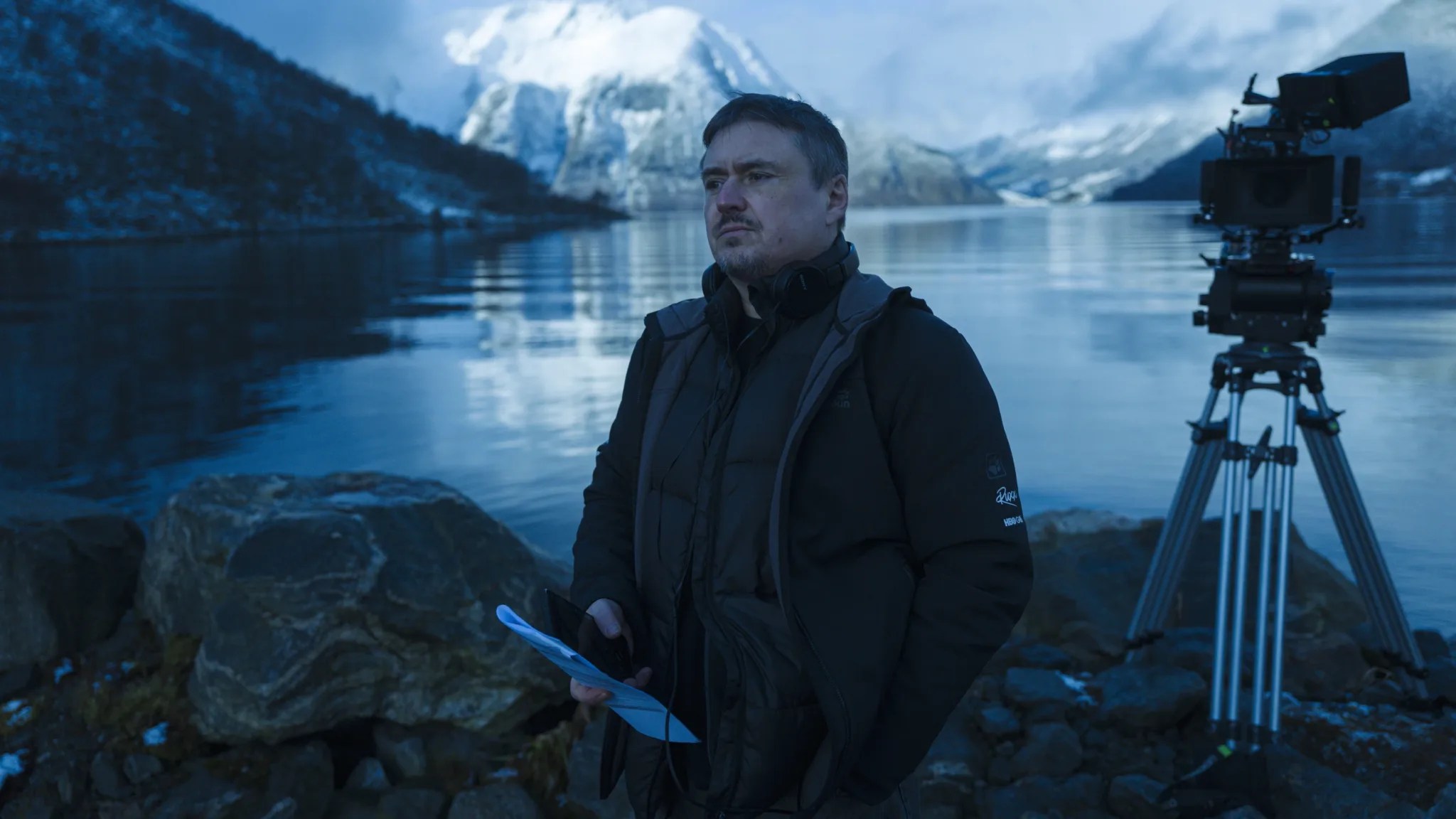
Photo during filming of FJORD by Director, Cristian Mungiu

NEON released films have now won all last six Palme d’ors from 2019 to 2026 (Cannes 2020 was cancelled due to Covid. )

Should we be concerned at this winning trend by Neon and should we examine the human connections in the Jury’s choice for 2026?

Critics are divided on Fjord. The Guardian’s film critic, Peter Bradshaw called it ‘a disappointment’ awarding it 2 stars out of 5.

Have juries at the annual Cannes festival ever been corrupted?

Are Cannes juries ever influenced by outside forces?

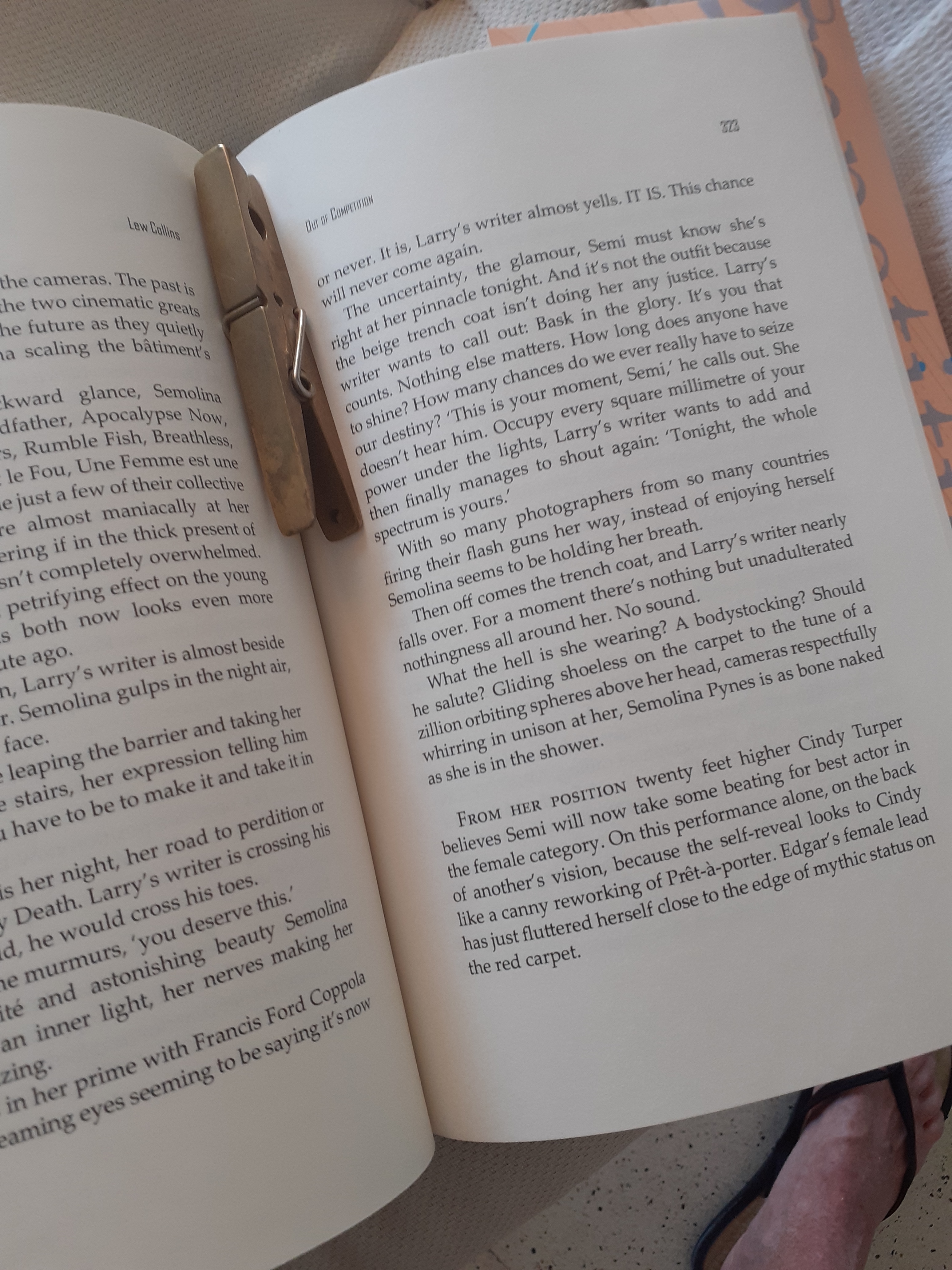
In my novel Out of Competition democracy is used in a one view, one vote method of choosing festival winners in that other famous Côte d’Azur event, the Renne-Sur-Mer Film Festival.

Is a democratic vote a better way of choosing?

The Big Takeover

Where will we get critique and truth if Larry Ellison gets his way?

The Ellison take over is analysed by Forbes. Does he have the money? It seems not. So what is the mega deal all about? Control of free speech for people, news and creative products and outlets.

https://www.forbes.com/sites/phoebeliu/2026/02/27/what-paramount-warner-bros-merger-means-for-larry-ellisons-fortune/

Watching the Meidas Touch coverage Youtube on Larry Ellison’s current take over of so much in Los Angeles film and other communication media I remember reading Exposure and then seeing the film of it Dark Waters and how important it is to have books, news and drama that are brave enough to stand up for truth and bring corporations to account. I was deeply impressed by the book and the film.

Exposure and Dark Waters took on DuPont’s production and sale of teflon, and the pollution of the forever PFAs chemicals used in the industrial process that affects us all. Effectively it meant death to many Americans and their livestock in Ohio and West Virginia as DuPont’s killer chemicals seeped into the rivers and water supplies. The effects were devastating.

“Was Life Simpler Back Then?” Vol. 4. Brittle realities-2.

So from September 1979 I made films for our new once a week magazine TV, hour long program, Here and Now. The same routine for me, a film every week, which morphed into longer films later. Some pieces I did were good stuff even if I say so myself. Yet, the founder of the program, deputy director Stuart W., lamented the lack of journalistic impact. The program without the set-up of Panorama or Newsnight wasn’t news.

After two years a story arrived that gave us our chance—a 1981 official report of by Justice Yang of his special Inquiry into the death of a police inspector, John MacLennan.

John Maclennan had been found with five bullet wounds in his torso, and the immediate police judgment was suicide. The kill shot went through his heart and liver, which for right-handed John meant he had to angle the gun down and across his body, a contortion that would enable him to hit his heart at the top left, the bullet travelling across to the lower right, piercing his liver. As a suicide it didn’t make sense at all.

John Maclennan had been investigating ‘the gay question’ in Hong Kong and the story of Chinese rent boys. At that point in time it was a still a capital crime on the Hong Kong statutes, meaning a man could be sentenced to death for being homosexual. At that time, the Police Commissioner, Roy Henry, lived alone except for his Malay servant boy. At that time many of the Hong Kong establishment were known gays.

I was the producer of the hour. I worked with two journalists on the report, one a young Englishman (twenties like me) and a Canadian Chinese girl.

We did a good job, beginning the hour with an early morning image of MacLennan’s block where he had an apartment, in which he was found dead. Over the still early morning image of his building came the startling sound of five gunshots in more or less the manner audio witnesses said they heard them.

We had good interviewees with one of the best quotes on Justice Yang’s very detailed report, from a gay Englishman: ‘I just want to put the whole inquiry behind me.’

To put it bluntly, the whole issue by late twentieth century standards was a joke and the conservative justice, Yang, didn’t spare any establishment members with his critique. Nor did we. Though we followed the report to the letter.

Still, the backlash was swift. The establishment got its revenge. Our phones were tapped by Special Branch. The English reporter left his job. As a founding program member, I was taken off Here and Now, demoted to overseeing English translations from the Chinese service. The Canadian Chinese woman, one of the few Chinese on H&N was left alone.

Our program was gutted, a sycophant given the role of editor.

Some demotions are good. Nobody wants to work for a sycophant, a yes man, who is also boring as an individual. Maybe those lack of qualities are all joined at the hip generally in humanity. When the sycophant was made the new editor of the program of which several of us were founding members Here and Now was finished. It had developed a profile and a good following, yet it seemed that Stuart W.’s interest in it in any real supportive sense was done and dusted as well.

It seemed to me that Stuart W. had moved on from the program anyway, personal ambition led him to eye the position of Director of Broadcasting which had become vacant. Personal desire also would soon lead him to a younger wealthy Chinese girlfriend who, being from a rich family, would present him with a Red Mercedes convertible with the licence plate DB1.

Who needs journalism when it is so easily corrupted. I was never a journalist. I was a filmmaker, but when we had journalism to do, I did my best and my best chance at journalism came with the hour-long program I and two other colleagues did on the inquiry into the death of police inspector John Maclennan. But if you tell the truth about powerful people you put yourself at risk.

I suppose Stuart W.’s relationship with other government departments, such as the Police force and Attorney General’s department, was at risk when we did our work properly on the strange death of the police inspector. Pressure from the Chief of Police, Roy Henry, and the equally inquiry criticised Attorney General, would have put Stuart W. in a bad career position. It seems to me he succumbed to that pressure.

I was given oversight of converting a Chinese program to English which took me maximum two to three days to do. I had time to do other things. Why did I stay on? My two and half year contract which I signed was approaching two years. It had a gratuity bonus payout at its end which I definitely didn’t want to throw away. I found other things to do, photography, I trained as a scuba diver went on a trip to Nouvelle Calendonie dived at a remote reef with sharks and and began running to get super fit – I ran two marathons Hong Kong and London 1983 – I found running marathons was actually a fun thing to do.

What did I learn during six years making films in Hong Kong? You have to make decisions on the run. You have to endure the people around you who can fail you. The turn-around of a week to week production schedule is demanding. You had to plan but then be ready to throw the plan away, trust your judgment, not worry if some things didn’t work out. There is always more than one way.

I had so many interesting film projects. To mention a few others: China twice for NIRT. The Trojan Horse for RTHK following Hong Kong fashion designers to Paris’s Prêt à porter, a cinéma vérité film. Another on how Hong Kong people and troops held captive during the Japanese occupation created entertainment. A film on an island two miles off the coast of China where Chinese refugees boated or swam to. A film on eye operations for diabetics. There were so many. My last film on the new HK Jubilee Sports Centre made just before leaving my job didn’t please the Centre’s CEO who expected a puff piece. Still it worked.

Three Films that Could Have Been Over Early

No Country For Old Men

While out hunting in west Texas Llewelyn Moss finds the drug deal gone wrong, then discovers the “last man standing” dead with the brief case under a tree. Llewelyn removes the trace, buries it at the feet of the man and goes home to tell his wife it’s time for a new life in a new state, where they go and live a wonderful life happily ever after.

The Fugitive

Doctor Kimble is charged with murder by a DA who didn’t do his homework. Kimble’s defence counsel proves to the judge and jury that Kimble couldn’t have done it, had no motive to kill her. Case is dismissed, leaving the police to DNA trace the one-armed man – they do. He leads them to Dr Nicholls. He and the one-armed man go to jail for life

The Godfather

Michael Corleone at the marriage reception of his sister decides life as a mafioso is not for him. His father at a loss out buying oranges is shot and dies in hospital, apparently by suffocation. Sad but resolute Michael marries his girlfriend joins the Democrats, goes into politics and is elected to Congress. The Corleones divide their father’s fortune between family members and decide on a side by side middleclass Condo existence down in Florida.