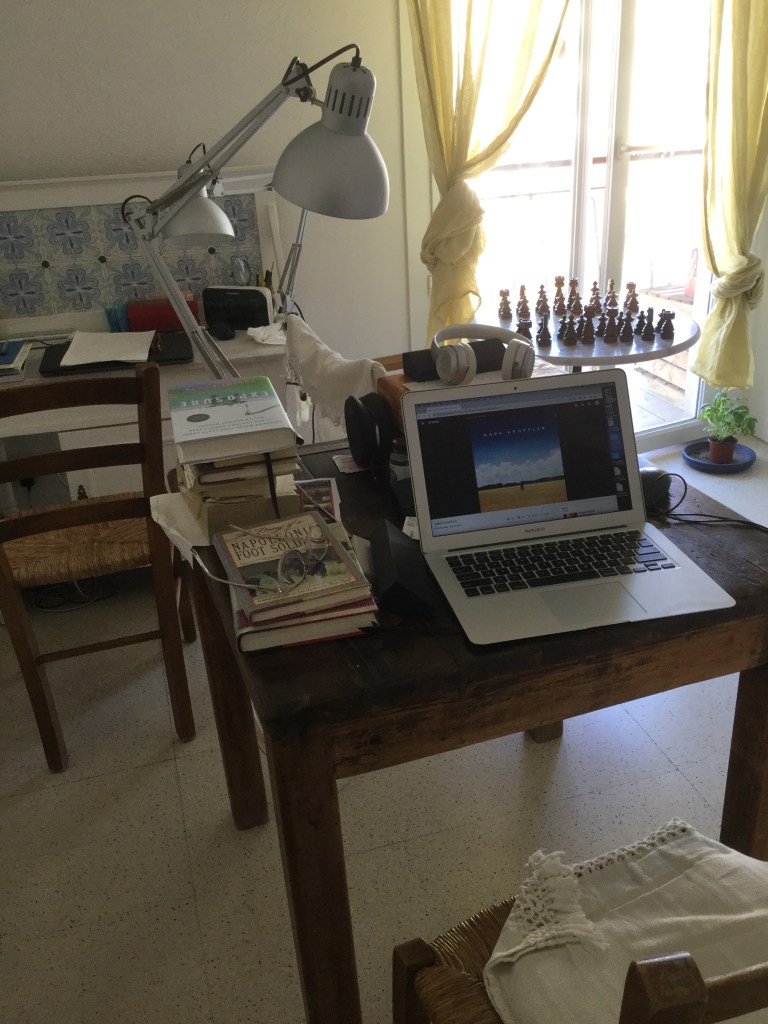
“Was Life Simpler Back Then?” Vol. 2. Opening arguments.

Novelists don’t write alone. The unconscious does the heavy lifting. While conscious, many writers can be like stenographers with a flair for editing.

What we say about ourselves consciously in any life writing or self histories has always to be viewed sceptically. An insight that seemed to me profound hearing it many, many years ago: it’s not what we put in diaries that counts. It’s what we leave out.

Does the unsaid in life writing count for more than the said? Some people are remarkably honest about themselves, but would I consciously leave out things in any life writing? Yes.

Autobiography is too self-aggrandizing. Fiction is more fun to do. Fiction frees up writers to find and tell truths he/she wouldn’t admit to when writing about themselves.

January 1979, while Safa, my best boss ever, and Noushi were packing to leave Hong Kong, I was busy writing letters to find new work. I had received one offer from NBC’s American office manager in their Hong Kong office. He had seen my work. NBC meant to me prestige, but assembling footage shot by someone else seemed a backward step.

I received a reply to my letter to Radio Television Hong Kong and went out to meet Stuart W., a former UK Nationwide daily editor. He heard me out and liked my experience. I got the job and became the director/producer of a Monday night ten minute aired film for a program called, Here in Hong Kong.

I was over the moon. After meeting an affable freedom-giving executive producer, Chris H., I felt at home. The choice of a film each week was mine, well mostly.

I soon found subjects, some better than others. Most of my early films were reasonable, some quite good. One on an opaque (at least to me) Chinese festival was absolutely awful. Making a ten-minute film every week was a treadmill but I learnt very fast, that as researcher, writer, director and producer of my own program I had little room for error. Choice of subject was crucial. Monday and Tuesday initially I would be setting up a film, Wednesday, Thursday I was out filming and if I were lucky Friday after film stock processing I would begin editing the film. Most Saturdays I was editing, often Sunday, me in a tiny cubicle with a film editor, then Monday morning, I would take the film for telecine transfer for the Monday night program at 6.45pm. It was never easy.

To put this in an international television producing perspective, BBC’s Newsnight, Panorama or even Nationwide would assign a researcher and a producer to a subject for three months. Late in the process a director and reporter would come on board. Meanwhile, I did everything alone all inside a week. BBC’s programs were longer, maybe a full hour, which I later did as well, but I never had a luxury of three months – maximum, three weeks.

Ten minutes a week when you are everybody – producer, writer, director, reporter, interviewer can be very hard. Of course, the key is to find a subject in a single location and do it all in one day. I wasn’t so good at that. And I wasn’t a trained reporter. I made films and to do that for me who prized the visuals above all else it meant multiple locations.

Occasionally though I had no say in what I was doing. One such project involved Chinese refugees pouring across the border. The Hong Kong Government wanted to tell the world what was happening. Stuart wrote the text to my film. I was sent with my film crew to meet a Colonel at a British army barracks near the Chinese border. During the afternoon we filmed general parade ground organisation, then after dinner with the Gurkha soldiers under command of a very affable Colonel of the regiment, we drove out to the border.

My crew and I had to document this all at night – if we found any refugees climbing the wire fence into Hong Kong New Territories, the land that adjoined China. We had one go at this. We sat nervously in the pitch-black night in a gully yards from the fence, where the soldiers said was a major crossing point, watching the motionless Gurkha with his nightscope. Except for the Colonel snoring, we had heard nothing. He was woken when a spotter began raising finger after finger. A few seconds afterwards we were told to get going!

My film crew was brilliant, camera shots sharp as portable lights lit up the night. We filmed of a terrified group of young Chinese, sixteen to mid-twenties, in traditional dark-blue Mao era outfits after having just climbed the wire.

The images of their startled faces that night are etched into my brain. One or two apparently held the fence to an iron pole as the others climbed silently up and down. The fence was at least twenty feet high. Stuart W. wrote the piece and Visnews sent the night’s film of ‘the capture’ around the world.

It was my second international news coup.

Out of Competition and Democracy

Grifters, sharks, wannabes, liars, creativors cruise the seaside Promenade as an enfranchising of an entire festival grows out of protest, taking voting from annual juries and giving it to the fans, without whom the festival would not be.

When I was writing this the second invasion of Ukraine hadn’t happened. When I was in the the final draft oligarchs lived only in Russia. Now they’re hard at gaming America. When I was in the final draft, political sycophancy was in its infancy now it’s fully grown.

When I was in the final draft there was still an operational Democratic Party, now a couple State governors are performing CPR on its seemingly lifeless body. When I began writing this most of America believed in habeas corpus, personal and civil rights, accountability and independence of the judiciary.

When I was writing this novel it wasn’t clear how much damage the right wing of the Supreme Court could inflict on America.

Is American democracy at death’s door …..

The No Kings Protest, and then what happens..

Let’s stop and think

We live in a digital, post-automated mechanical world, when once many centuries ago books were written and bound by hand.

Then with some ingenious reworking by Gutenberg and others in reimagining winepress and jewellery making techniques and technologies, metal type was created and off we went to the mass-printing races. So we thought. Because it only took a few centuries to really perfect the “mass” part of it all.

It makes me treasure the hardcover more, because it is the closest we still have to the wholly hand made book. Don’t get me wrong, I too saw a lot in the 1990s advent of the digital book, for its democratisation of information potentialities, which somehow could have brought to light many texts that publishers couldn’t be bothered thinking about re-printing. Only it didn’t happen for reasons we know. Free and fair and open competition is simply a myth, with publishers even sighing and throwing withering side glances at the “damnable” used book market.

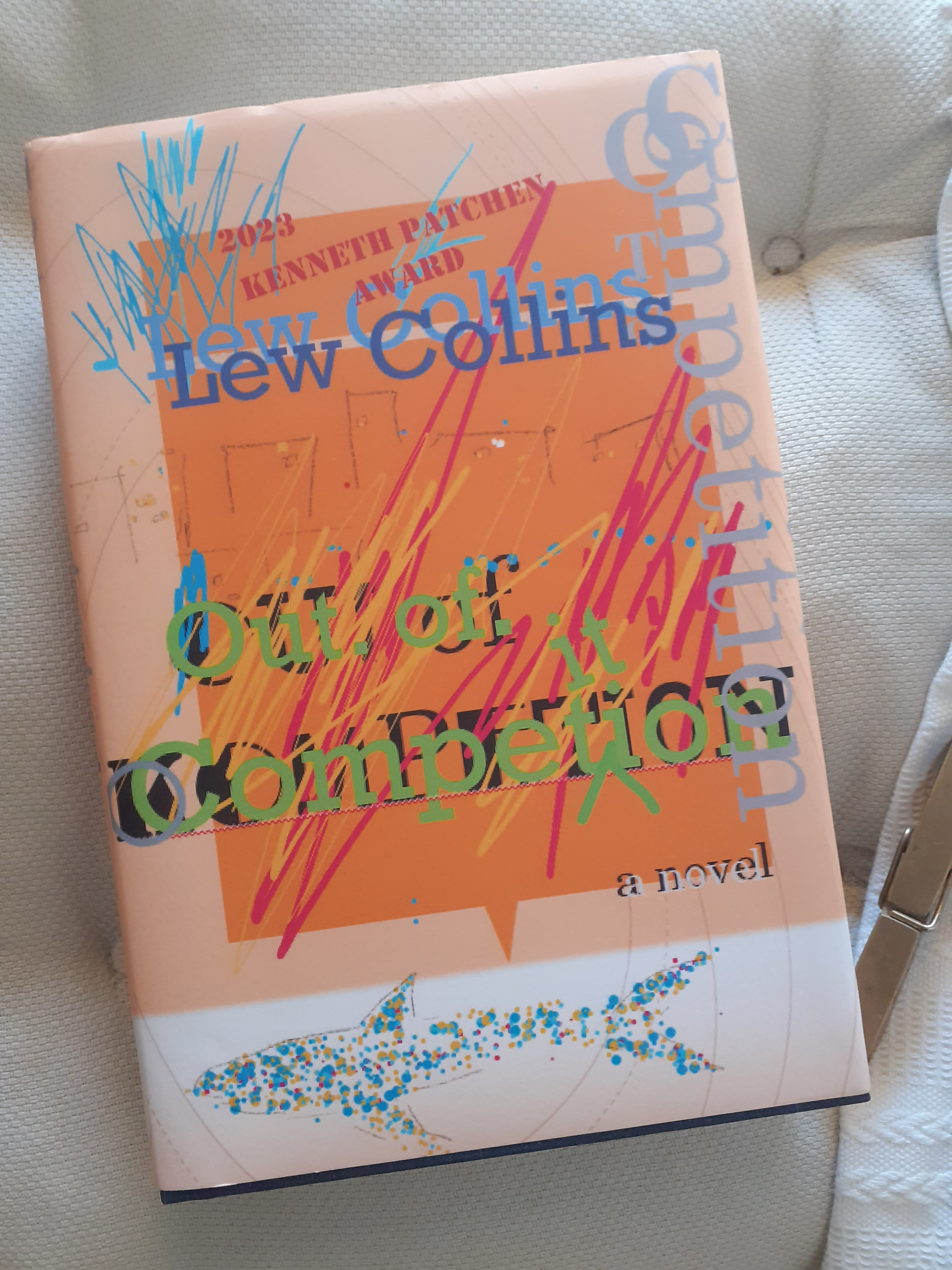
OUT OF COMPETITION (JEF Books 2024)

Kenneth Patchen Award for the innovative novel

‘Laugh out loud funny’

Carla M. Wilson

5 OUT OF 5 STARS

Intelligent, provocative and fun

Cherry Jam UK, October 16, 2024 Review

Humorously subversive. It goes so fast I read it in two days. A must for anyone with a love of cinema and its festivals. And the most irreverent novel written about the South of France

5 OUT OF 5 STARS

Ten Years is Enough!

Read-fest UK, 9 September 2025

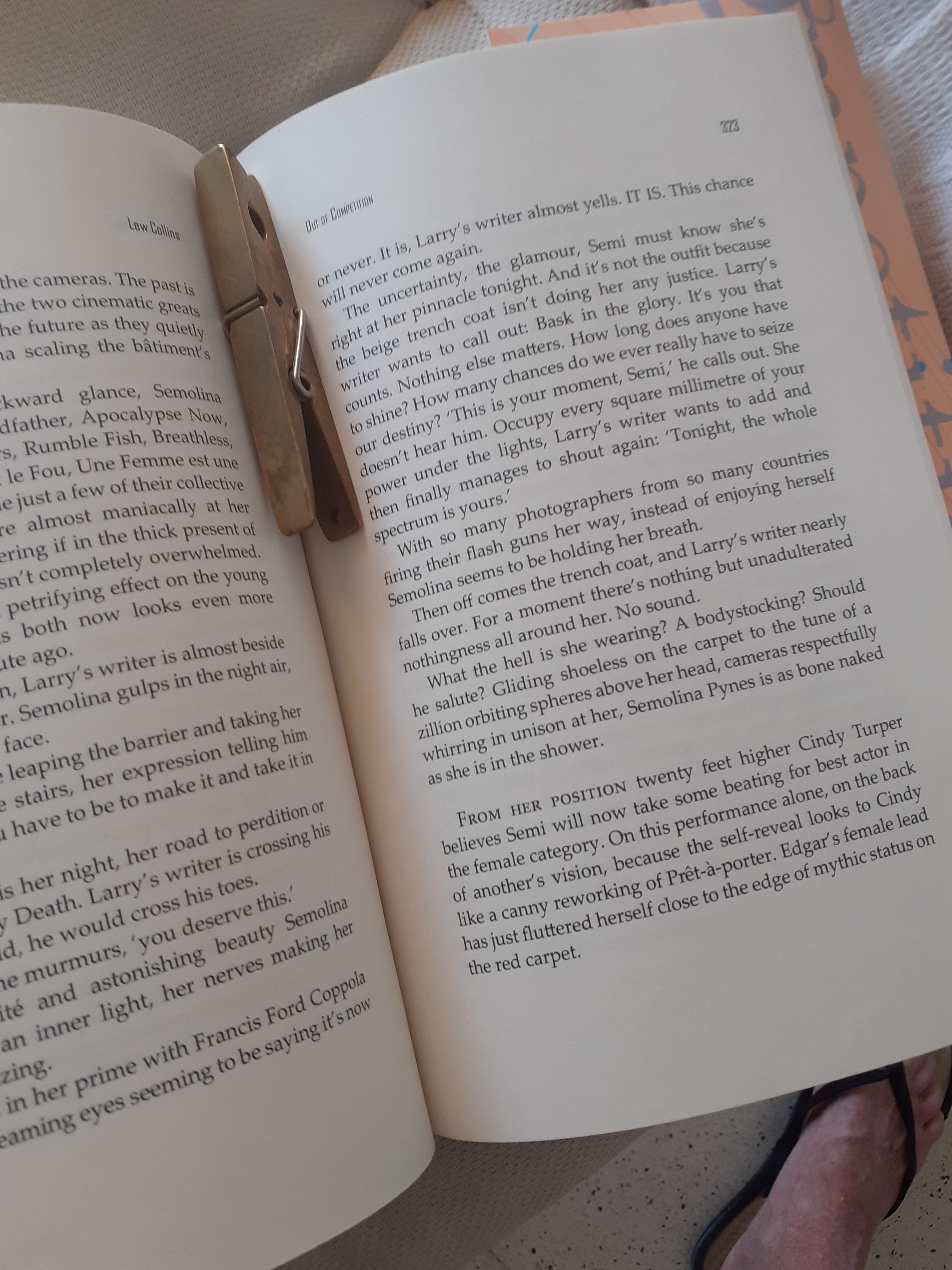
A sharp satire about democracy set in a Riviera Film Festival facing collapse as young cineastes demonstrate against privilege and lack of transparency in the annual voting shakedown, the novel opening with the kidnap off the streets of a desperate bankrupt Hollywood producer cadging money wherever he can

Out of Competition Ingram distributing, found at:

JEF Books

https://www.experimentalfiction.com/products/out-of-competition

Bookshop.org, bricks & mortar bookstores and online booksellers

Oh dear, oh dear

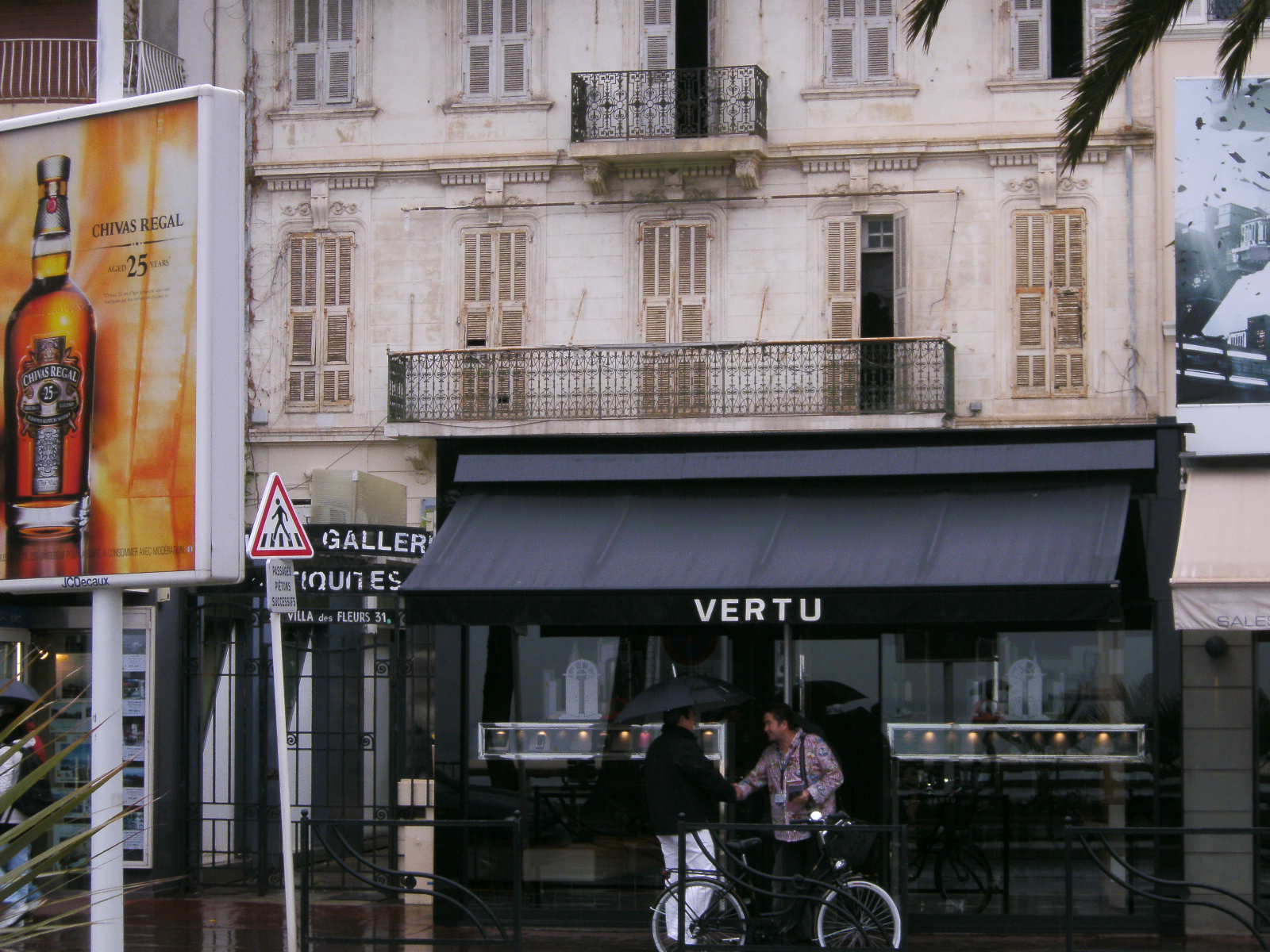
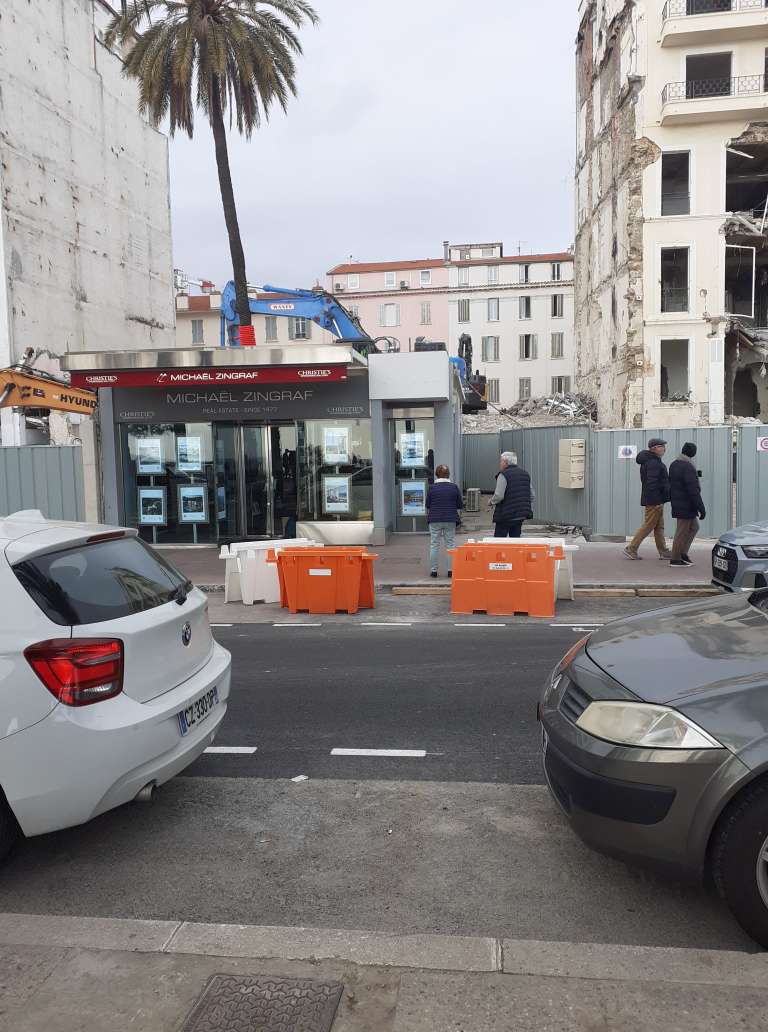
This old block of apartments was once one of the few examples of an older more interesting building along Cannes’s waterfront. There seems little virtue in destroying interesting architecture, especially with original wrought-iron balcony railings, high ceilings, old shutters. But now it’s gone – while Antibes has kept its past.

Except for the Carlton, what historic buildings are left on Cannes’s waterfront? Why not remodel a site like this?

Well they have.

The developer’s sign says the new offering will provide a private treated heated pool for two penthouse apartments – just a hop, step and tiny jump away from the Mediterranean.

Film list of 63 of the best for me

These films are not the best perhaps, or even the best 63 films I have seen, though they would be very close to that.

I simply laid them down without prior thought of ordering or listing them in any kind or categorisation of this or that.

The only change was to add Gosford Park by Robert Altman, and to do that I dropped Mira Nair’s Salaam Bombay! which should not be left out, but I kept Monsoon Wedding which I adored when I first saw it and still do.

So the filmmakers and films are all great and in no way am I listing them in order of best – first to worst. There are no second-best or best here. They are simply all magnificent for all their own reasons and appeared as I remembered them and wrote them down.

Tell me what you think – offer suggestions – i.e. if you wish to.

One Flew Over the Cuckoo’s NestMilos Forman
Butch Cassidy and the Sundance KidGeorge Roy Hill
The Last Picture ShowPeter Bogdanovich
Apocalypse NowFrancis Ford Coppola
Rear WindowAlfred Hitchcock
King of ComedyMartin Scorsese
Raging BullMartin Scorsese
The Good the Bad and the UglySergio Leone
Little Miss SunshineValerie Faris, Jonathan Dayton
Pulp FictionQuentin Tarantino
Reservoir DogsQuentin Tarantino
CasablancaMichael Curtiz
Dog Day AfternoonSydney Lumet
The GodfatherFrancis Ford Coppola
UnforgivenClint Eastwood
2001 A Space OdysseyStanley Kubrick
AmadeusMilos Forman
Blade RunnerRidley Scott
The ThingJohn Carpenter
Ace in the HoleBilly Wilder
The VerdictSydney Lumet
NetworkSydney Lumet
SidewaysAlexander Payne
The French ConnectionWilliam Friedkin
The Godfather IIFrancis Ford Coppola
A Clockwork OrangeStanley Kubrick
Paths of GloryStanley Kubrick
Lawrence of ArabiaDavid Lean
Easy RiderDennis Hopper
ChinatownRoman Polanski
8 1/2Federico Fellini
La Dolce VitaFederico Fellini
The ConversationFrancis Ford Coppola
Out of AfricaSydney Pollack
Annie HallWoody Allen
Hannah and Her SistersWoody Allen
Deconstructing HarryWoody Allen
Broadway Danny RoseWoody Allen
AmarcordFederico Fellini
Day for Night (La Nuit américaine)Francois Truffaut
La règle du jeuJean Renoir
Crimes and MisdemeanoursWoody Allen
The French Connection IIWilliam Friedkin
Thelma and LouiseRidley Scott
GandhiRichard Attenborough
American GraffitiGeorge Lucas
Atlantic CityLouis Malle
Das BootWolfgang Petersen
Monsoon WeddingMira Nair
Gosford ParkRobert Altman
WitnessPeter Weir
PersonaIngmar Bergman
Wild StrawberriesIngmar Bergman
Cries and WhispersIngmar Bergman
Autumn SonataIngmar Bergman
The Truman ShowPeter Weir
Fanny and AlexanderIngmar Bergman
War and PeaceSergei Bondarchuk
YojimboAkira Kurosawa
RashomonAkira Kurosawa
Paris Texas‎Wim Wenders
Schindler’s ListSteven Spielberg
JawsSteven Spielberg

Narratorial Unreliability

Christian Mihai discusses his ideas on unreliable narrators, something he likes to see writers use, and a technique he says he uses himself. Still, he misses a fundamental point – all narrators, storytellers, dramatists, poets, are unreliable. From Homer, Shakespeare to Sartre, no writer tells, gets close to ‘the truth’, even if he or she is prepared to die in the process of collecting all the observable details of a factually based fiction.

Catherine Lacey

Do we trust Tolstoy’s account of Napoleon in War and Peace? Perhaps… if we are Russian.

Narrator unreliability doesn’t have to be a first person account, though the most obvious modernist exploitations of narrator unreliability in fiction use that form. The best approach – for this writer at least – is when the writer sets out to deceive us, and by convincing us that he or she has told the truth, transfers any doubt on narratorial reliability to a reader’s interpretation of the tale.