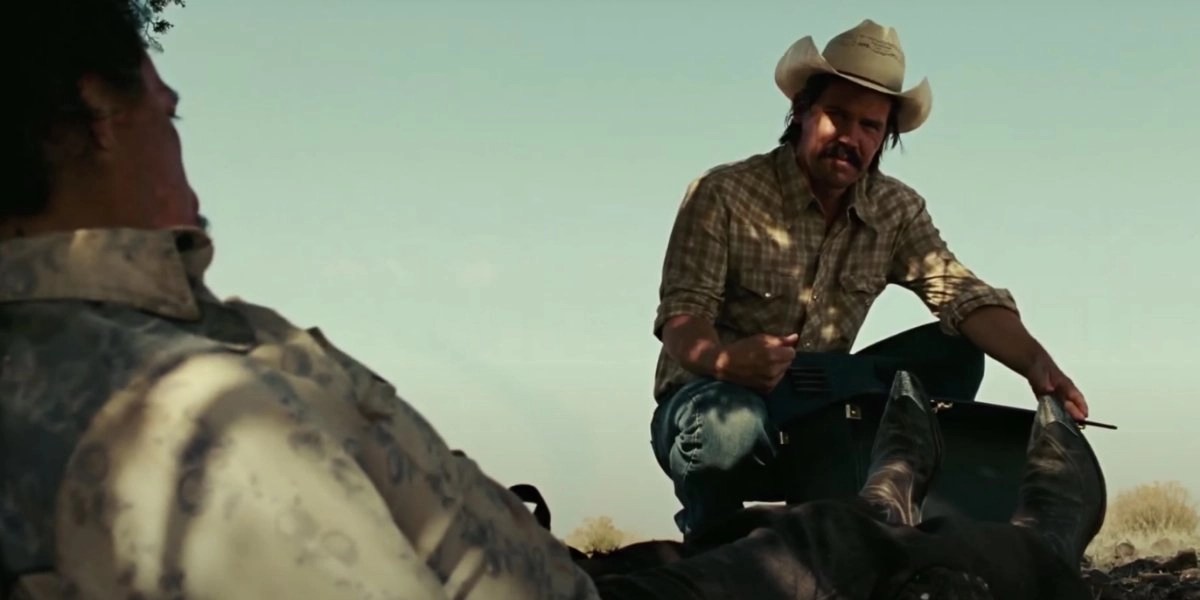
Film list of 63 of the best for me

These films are not the best perhaps, or even the best 63 films I have seen, though they would be very close to that.

I simply laid them down without prior thought of ordering or listing them in any kind or categorisation of this or that.

The only change was to add Gosford Park by Robert Altman, and to do that I dropped Mira Nair’s Salaam Bombay! which should not be left out, but I kept Monsoon Wedding which I adored when I first saw it and still do.

So the filmmakers and films are all great and in no way am I listing them in order of best – first to worst. There are no second-best or best here. They are simply all magnificent for all their own reasons and appeared as I remembered them and wrote them down.

Tell me what you think – offer suggestions – i.e. if you wish to.

One Flew Over the Cuckoo’s NestMilos Forman
Butch Cassidy and the Sundance KidGeorge Roy Hill
The Last Picture ShowPeter Bogdanovich
Apocalypse NowFrancis Ford Coppola
Rear WindowAlfred Hitchcock
King of ComedyMartin Scorsese
Raging BullMartin Scorsese
The Good the Bad and the UglySergio Leone
Little Miss SunshineValerie Faris, Jonathan Dayton
Pulp FictionQuentin Tarantino
Reservoir DogsQuentin Tarantino
CasablancaMichael Curtiz
Dog Day AfternoonSydney Lumet
The GodfatherFrancis Ford Coppola
UnforgivenClint Eastwood
2001 A Space OdysseyStanley Kubrick
AmadeusMilos Forman
Blade RunnerRidley Scott
The ThingJohn Carpenter
Ace in the HoleBilly Wilder
The VerdictSydney Lumet
NetworkSydney Lumet
SidewaysAlexander Payne
The French ConnectionWilliam Friedkin
The Godfather IIFrancis Ford Coppola
A Clockwork OrangeStanley Kubrick
Paths of GloryStanley Kubrick
Lawrence of ArabiaDavid Lean
Easy RiderDennis Hopper
ChinatownRoman Polanski
8 1/2Federico Fellini
La Dolce VitaFederico Fellini
The ConversationFrancis Ford Coppola
Out of AfricaSydney Pollack
Annie HallWoody Allen
Hannah and Her SistersWoody Allen
Deconstructing HarryWoody Allen
Broadway Danny RoseWoody Allen
AmarcordFederico Fellini
Day for Night (La Nuit américaine)Francois Truffaut
La règle du jeuJean Renoir
Crimes and MisdemeanoursWoody Allen
The French Connection IIWilliam Friedkin
Thelma and LouiseRidley Scott
GandhiRichard Attenborough
American GraffitiGeorge Lucas
Atlantic CityLouis Malle
Das BootWolfgang Petersen
Monsoon WeddingMira Nair
Gosford ParkRobert Altman
WitnessPeter Weir
PersonaIngmar Bergman
Wild StrawberriesIngmar Bergman
Cries and WhispersIngmar Bergman
Autumn SonataIngmar Bergman
The Truman ShowPeter Weir
Fanny and AlexanderIngmar Bergman
War and PeaceSergei Bondarchuk
YojimboAkira Kurosawa
RashomonAkira Kurosawa
Paris Texas‎Wim Wenders
Schindler’s ListSteven Spielberg
JawsSteven Spielberg

A Rainy Day in New York

From the moment in Annie Hall when he led Marshall McLuhan out from behind a film hoarding in a New York cinema I have been a huge fan of Woody Allen. He is America’s best writer director of ensemble urban comedies – truly a unique filmmaker.

Lee, JFK and Stephen King

It’s tough being a writer in this organised politically-controlled oligarchic world of ours. Publishing is a strategic asset in a stable of assets essential to a well-tuned oligarchic universe. The message, whatever it is, must be edited. That seems to be the last law of the universe, the one Scientists haven’t yet owned up to.

Try thwarting it and you will be edited out of existence says a footnote on the first page of the Oligarch’s Manual. Try beating the system and your Sun will shine no more.

So, I guess even the great Stephen King obeys this largely hidden law of our Oligarchic Universe. (I say great because book sales obviously equate with greatness, right?) It has nothing to do with well-oiled sales machines. Sales = Greatness and vice versa. So, I went, I must say with hope, to read 11.22.63 by the undoubtedly great Stephen King. And what did I find? Well, my mother always said: if you can’t say anything nice don’t say anything at all. But when did I ever listen to my mother?

What on earth was King thinking about?

Not the truth clearly. His novel is fiction, okay I get it. Only he put an awful lot of real people in it as well. Like poor old Lee Harvey. Poor old very dead and much maligned Lee Harvey Oswald. A feckless man and near hopeless rifleman who some people keep saying was guiltier than his own much imagined sin. Lee Harvey Osward with his Carcano Model 91/38 rifle with which he probably couldn’t have hit a barn-door from 100 metres. No, not probably, maybe definitely. The man who somehow reverse-actioned Newtonian physics—with that minor impediment of a tree blocking-out his vision—hitting a moving target from the wrong direction.

From how far was it?

The man who ended in history as being responsible for killing a President. Go figure. Many have tried. I don’t need to debate this anymore. To my mind at least, if Lee were on the sixth floor of the Book Depository that fate-filled day and fated time and was pointing a rifle at the back of the President’s head, he would have had more chance of hitting Parkland Hospital, than as is claimed, he murdered JFK, in the still so far un-investigated—at State Law level—crime of homicide.

The make-believe myth come mystery in Dallas, 22 November 1963.

All now co-signed by bestselling-author Stephen King.

Narratorial Unreliability

Christian Mihai discusses his ideas on unreliable narrators, something he likes to see writers use, and a technique he says he uses himself. Still, he misses a fundamental point – all narrators, storytellers, dramatists, poets, are unreliable. From Homer, Shakespeare to Sartre, no writer tells, gets close to ‘the truth’, even if he or she is prepared to die in the process of collecting all the observable details of a factually based fiction.

Catherine Lacey

Do we trust Tolstoy’s account of Napoleon in War and Peace? Perhaps… if we are Russian.

Narrator unreliability doesn’t have to be a first person account, though the most obvious modernist exploitations of narrator unreliability in fiction use that form. The best approach – for this writer at least – is when the writer sets out to deceive us, and by convincing us that he or she has told the truth, transfers any doubt on narratorial reliability to a reader’s interpretation of the tale.

Experiment, what experiment?

..handheld shaky cam, found footage, ultra-violence, meta-storylines, etc., all becoming part of the broad pop cultural landscape and assimilated into the commercial marketplace. This translates across all cultural lines – music, art, technology, etc. as the outsiders and untouchables of yesteryear are today’s TV spokesmen and tastemakers..

…experimental film seems to represent more fully the true potential and magic of cinema

…for brief moments in history, think the ‘beats’, the real ground-shakers, the true risk-takers, manage to do something that is life and culture affecting, their minds drafting the future…

One Writer’s Journey

I grew up watching Superman, The Cisco Kid, O.S.S., hearing war stories, chasing down moth-eaten army uniforms back when milk arrived in a horse and cart marvelling at the colour style of actual coca leaf sugarpop in Coke bottles blinking at motor cycles Dick Van Dyke falling over a couch cowboy films shot in daylight B/W then coloured nights of my father’s home-grown vegetables, born with words in my mouth – ‘gimme-that’ , ‘how-dare-you’,  ‘what-the-fuck’ –

– ideas as fixed and eternal as the motives for every war, growing into Kidnapped bicycles desert boots Seventy Seven Sunset Strip Disney Land Rear Window Psycho Lawrence of Arabia, the annual anxiety of packing the car at holiday time, each and every moment stilled in memory of the forever mysterious parodies of life or art even if parodies weren’t even an option back then. I knew the Beatles before the Monkees, Bogart before Belmondo, but I can’t say I recall the idea behind the Summer of ’42 before it was a film conjured into a Mad magazine parody or whether it co-existed in the smash crash and kill dinky toy mind of George W. Bush. I believe I’m not alone, even growing more bewildered year on year by the incoherence of images and texts surrounding me from birth arresting my natural river environment in the far southern climes the commercial and cultural ink-blotting over my childhood my natural world a parody of some story my mother told me, those seconds on a baked sidewalk hearing JFK was dead, pink socks on the rock ‘n rollers, moments things events sounds sent to make life even more dangerous curious frightening, a direct result of the industrial military complex, Elvis Presley Chuck Berry even, the jack shit political influences beaten into the worrying shame of death in the world, prejudice, organically connected and woven into a general valueness held dear by so many years on from that day when morality was gunned down in broad daylight.

The Frankfurt School Revisited

The objective of  the culture industries – in a critique developed in the 1930s, written and published in the 1940s by Frankfurt School members Theodor Adorno and Max Horkheimer under the title The Culture Industry – was to keep ordinary folk as docile and manageable as possible… ‘happy’, uncritical, coralled consumers of a ‘capital’ controlled culture.

The idea was: the tranquilized poor, the culturally deceived, the ‘creatively dociled’ buy, watch, listen to and read what they are told to watch, listen to, read. The discourse on culture, being ideologically-fed by capital on steroids, makes phase 2 so easy, the accounts driven bottom-line. This pay-up and now driven discourse leads its proponents still to say –  See! It is what ‘they’ want (the great unwashed unconsidered)  otherwise they wouldn’t buy or want it.

Reminds me of Jack Crabb’s (Dustin Hoffman’s) encounter with General Custer just before the ‘great general’ got whipped at Little Big Horn. “General, you go down there,” Crabb says, when Custer asks him what to do. Thinking Crabb, a pathetic muleskinner, spineless, with not-even guts enough to shoot Custer in the back,  a git who could only lie to him, Custer reasons (aloud, of course) that if Crabb wants Him to go down to the Little Big Horn it’s only because Crabb really doesn’t want Custer to go down there  – Crabb could only lie to achieve a goal. So, Custer does go down there – much to relief of the world, history and the native American.

Little Big Man (1970) was the sort of film American filmmakers made after the film studios lost control in the late 1960s. In that rare moment, spanning a few years only, cultural complexity was synonymous with creativity – the audience and creators were so close they could have been one and the same.

Back to the genealogically disturbed present. No cultural outbreaks, no individual voices, no “surprises” for those in charge right now, no matter how many camp in Wall Street or outside St. Paul’s.  Society, dare I say it, Capital, is under control. No matter what the postmodernists, Foucault, Castells et al want, did and do tell us, culture is still controlled, top down –  never more than in the 21st century (thanks to Lessig {Free Culture, 2004, p12} for reminding us).

So a nod to the voices that seem so still and silent today – to Theodor, Max, Walter and Herbert: We need to hear from you again.

“The web of domination has become the web of Reason itself, and this society is fatally entangled in it.” Herbert Marcuse

What is Facebook really up to?

Initially this post was about Facebook dismantling its groups. The issue then: Many people spent an enormous amount of time developing them and asking people to join. Because of widespread concern and protest by Facebook members FB resolved this and groups could keep their members. At the time I wrote: “Facebook is fast acting like a corporation acting in concert with other corporate or shady political interests – not a borrowed idea from a dorm at Harvard existing only because a lot of people use it. If Facebook is about anything it is about each and every one of its members – Facebook is nothing without the people who bother to use its pages.”

Now Facebook wants, it seems, to use stored data of its members and make it public. This has been true for sometime of course. FB data-mines its users. But is the ante being upped with new moves? Does this breach the privacy terms implied in the original terms of use?

Facebookers should be informed of what this new FB policy is and what it means and then they should be asked whether they agree to the use of data that was once ‘private’ between FB members.

Facebook should reflect the members that make it up. Facebookers are not a resource to be exploited for profit in this way by Facebook’s founders (this was not the original ‘pitch’ or purpose of Facebook). If use of private data does happen, at the very least it should be only with prior full agreement of Facebook users.

If Facebook wants to charge for the service then they can and people can opt out of the FB site if they so wish – taking their data with them, not leaving it behind for commercial use.

If I buy a house I get the house and grounds, not the furniture and fittings inside and outside, unless it is in the contract of sale. Facebook do not own the data, (though I am sure their lawyers would say they do). They have already profited hugely from having such a huge number of users, but they don’t own Facebookers or their private and personal data.