Review: “Out of Competition” by Lew Collins

by Austin Williams, Director of The Future Cities Project

It is fifty years since Spielberg’s movie, Jaws, first reached the big screen. It was described by film critic, Mark Kermode as a “genre-defining blockbuster that changed the face of modern cinema.” Indeed, a new theatre production, The Shark Is Broken, reflecting on the making of that movie is playing in UK theatres today. Lew Collins’ new book “Out of Competition” makes a few nods to the film – one of the characters is proposing yet another remake of the Jaws franchise – and to film-making per se, in a novel of intrigue, murder, and protest set in the murky world of international-finance in the film industry. Within the first chapter, a motor-boat driver is killed by a real shark falling from a promotional helicopter stunt. And so it begins.

The story is told in chronological order, day by day, over the course of a Film Festival in the south of France. A central protagonist Larry Linsteeg, a failing Hollywood film producer, kicks things off and within the first few pages we see him manhandled in a street in the south of France and bundled into a rowdy, radical, pro-democracy meeting. He’d been on his way to close a film-deal, and this opening chapter is fast-paced, and scripted in a manner of a Tarantino-esque film-edit. And equally confusing.

This book has been acclaimed as the 2023 Kenneth Patchen Award-winner (a prize celebrated by the Journal of Experimental Fiction). The author, Lew Collins relocated to France several years ago and his love of the country and especially its language comes across in the text that mixes French language freely into the dialogue. Maybe it’s a little too much for this GCSE-level reader. I found myself reaching for the Google Translate app across several paragraphs (but perhaps that says more about me than the average reader).

Adding to the need for concentration while reading this book, a number of characters appear with few flags or signature and we are confronted by a growing cast in rapid succession: a dodgy Russian oligarch, a film correspondent, a freelance photographer, a chief inspector, an ex-KGB agent with a heart condition, an outgoing festival director, critics, journalists, billionaires and showgirls. Along the way, there is a disappearance and a murder; there are Chinese kickboxers, Japanese artists and leftist demonstrators. It’s a lot for the reader to take in, and it is clearly a strain in the author’s character-naming inventiveness; culminating in Semolina Pynes, the out-of-her-depth, lead actress; or Zena Zatters, the festival gofer. Where characterisations are made, they are a little laboured, for example, sign-posting the “LA-based American audiovisual expert and putative film producer” or describing the oligarch’s boat as “a three hundred and twenty foot welded steel and aluminium moulded fibre-glass… ocean-going, part-solar-powered ship cruiser.”

That said, the story settles, and intrigue ensues. With so many characters, they rise and fall, appear and disappear all too easily and it is hard to relate to the characters in sufficient depth. But the pace is cinematic. Indeed, the filmic ambitions of the novel seem to have drawn characters from movie references: I pictured Rollergirl in Boogie Nights, or Alain Delon in La Piscine, and one can imagine a script for the big screen that emphasises the “homage“, as they say in France, towards updated Bogart detective noir. Maybe even a hint of Get Shorty… about a loan shark after all.

Out of Competition” by Lew Collins, Jef Books, 2024. pp407.

https://futurecities.org.uk/2025/02/01/french-connections/

Out of Competition and Democracy

Grifters, sharks, wannabes, liars, creativors cruise the seaside Promenade as an enfranchising of an entire festival grows out of protest, taking voting from annual juries and giving it to the fans, without whom the festival would not be.

When I was writing this the second invasion of Ukraine hadn’t happened. When I was in the the final draft oligarchs lived only in Russia. Now they’re hard at gaming America. When I was in the final draft, political sycophancy was in its infancy now it’s fully grown.

When I was in the final draft there was still an operational Democratic Party, now a couple State governors are performing CPR on its seemingly lifeless body. When I began writing this most of America believed in habeas corpus, personal and civil rights, accountability and independence of the judiciary.

When I was writing this novel it wasn’t clear how much damage the right wing of the Supreme Court could inflict on America.

Is American democracy at death’s door …..

The No Kings Protest, and then what happens..

One Writer’s Journey

I grew up watching Superman, The Cisco Kid, O.S.S., hearing war stories, chasing down moth-eaten army uniforms back when milk arrived in a horse and cart marvelling at the colour style of actual coca leaf sugarpop in Coke bottles blinking at motor cycles Dick Van Dyke falling over a couch cowboy films shot in daylight B/W then coloured nights of my father’s home-grown vegetables, born with words in my mouth – ‘gimme-that’ , ‘how-dare-you’,  ‘what-the-fuck’ –

– ideas as fixed and eternal as the motives for every war, growing into Kidnapped bicycles desert boots Seventy Seven Sunset Strip Disney Land Rear Window Psycho Lawrence of Arabia, the annual anxiety of packing the car at holiday time, each and every moment stilled in memory of the forever mysterious parodies of life or art even if parodies weren’t even an option back then. I knew the Beatles before the Monkees, Bogart before Belmondo, but I can’t say I recall the idea behind the Summer of ’42 before it was a film conjured into a Mad magazine parody or whether it co-existed in the smash crash and kill dinky toy mind of George W. Bush. I believe I’m not alone, even growing more bewildered year on year by the incoherence of images and texts surrounding me from birth arresting my natural river environment in the far southern climes the commercial and cultural ink-blotting over my childhood my natural world a parody of some story my mother told me, those seconds on a baked sidewalk hearing JFK was dead, pink socks on the rock ‘n rollers, moments things events sounds sent to make life even more dangerous curious frightening, a direct result of the industrial military complex, Elvis Presley Chuck Berry even, the jack shit political influences beaten into the worrying shame of death in the world, prejudice, organically connected and woven into a general valueness held dear by so many years on from that day when morality was gunned down in broad daylight.

Small versus Big, and small must win

ElephantEars Press, my publisher in Hackney, a small, new and independent publishing press dedicated to bringing you good literature, fiction and non-fiction, at fair prices, is now offering FREE post and packing to ANYWHERE in the world.

These holidays ElephantEars Press wants to give readers a real and true deal.

Lately, I have been following Amazon’s attempt to monopolize Print On Demand, to force independent publishers to accept Amazon on terms designed to crush the life out of the independent publishers and booksellers. It’s a disgrace – Amazon only got where it is because readers like you and me helped them become a force. We supported them in the early days because we wanted diversity, because we believed they were for us. Not anymore they aint!

Amazon wants to monopolize bookselling and print on demand publishing. They want to to kill off publishing independents and consumer independence. Don’t let them. Buy from small independent presses like ElephantEars. Support small and ignore the big homogenizers of creative output.

For this holiday, for your gifts – Buy from the small dedicated publishers like ElephantEars Press determined to bring to you reading quality for your pound, dollar, and euro

SUPPORT SMALL against BIG.

Where we are

Linda Nylind
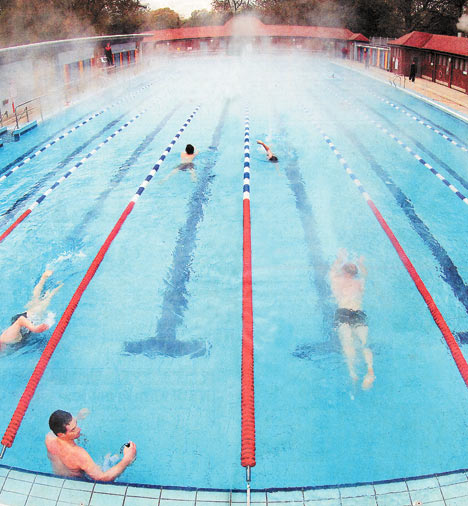
London Fields outdoor Pool - The Guardian. Photo by Linda Nylind

I was doing my 1500 metres in the pool yesterday, lap, swim, turn, lap, roll, stretch, concentrating on my breathing, thinking of what novelist, inventor, academic, Eric Willmot said to me on the phone the other day, talking of his recently written essay on human and planetary survival. I had read the pages he sent me, describing our progress of us all, the twenty third species of human on this planet..the story aint all pretty. Well, I think we know that, but where do we go from here? We seem to be running out of time. Eric is convinced that the global warming we are experiencing is a prelude to another ice age.

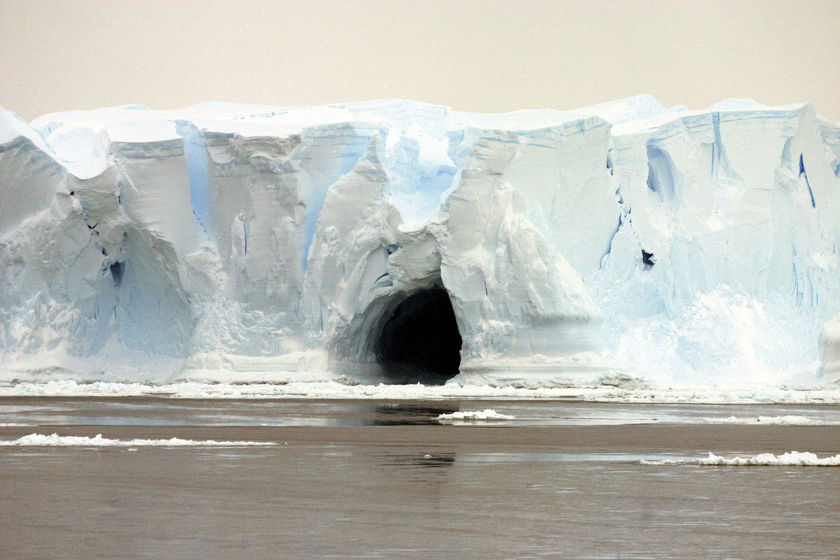
Ice with a black hole - see that's the proof!
Ice Age (with a black hole in it as well!)

Our nearest refuge, that is, nearest to our earthly conditions in toto, is Venus, but that planet is a green house gaseous inferno. So that’s out. Another solar system like our little ‘Goldilocks zone’ around the sun, surrounds the star Gliese 581, but that is twenty light years away, beyond our capacity to reach in all our lifetimes. Without some sort of quantum leap in our capacity to travel, our interplanetary air bus is going to run out of gas, if not time.

And even if we get there Gliese 581 may not be quite for us. It hasn’t sent us any kind of signal, let alone a welcome email they want us over for any holiday coming. We better find out then. We could send the executives of Fanny Mae and Freddi Mac and a few bank presidents, the whole of Wall Street in fact, on ahead to check it out, investigate the real estate and other markets and set up for us. In the meantime, we’ll sit it out and wait down here, glued to the telly for messages, filling our neighbourhoods (and the silent universe) with the sounds of humanity, eating, drinking and getting inordinately merry, all those goings on, as we use up the planet we’re whizzing around on.

Eric has some ideas on what we can and can’t do. Are we facing extinction? Are we staring into the abyss, not so blissfully un-a-ware as impotently more-than-scared? Rabbits in the headlights of some rogue comet or asteroid heading relentlessly our way? What should we do? Recycle our rubbish, turn off our appliances, walk to work, invest in nuclear reactors using Thorium (pronounced /ˈθɔːriəm/ wikipedia tells me).

Well, I think the first thing we should do is get up to speed on the actual conditions, educate ourselves. Get to know our options (even if the picture aint pretty). We’ve faced threats before – Hitler, the Cold War, the nuclear holcaust. Let’s face this one, form neighbourhood groups to discuss intra and interplanetary survival.

Well..okay…let’s do nothing then..just sit and wait and watch it happen. Let’s climb into the warming pot we call this world and boil slowly and then when the fuel burns out, slowly descend down into that big freeze.

REVIEWS of UNCORRECTED PROOF

What readers are saying

From America

With tongue in cheek humor and a sly poke at genre fiction, literary untouchables and the publishing industry this book seems tailor made for smart praise. Even though I wasn’t able to pick out all the literary styles interwoven playfully within the book — and frankly at a certain point I was so into the story it didn’t matter — when I was able to pick up on an author or style it just added to the fun. Very impressed with the versatility of the prose and the ability to coopt all these writers and yet still make it all work within the story being told, a story that holds its own as a larky genre thriller with literary overtones and a lot of humor too. In the end all came off as clever parody. Especially enjoyed the “genre thriller” kick of the kidnapping and rescue of Ellen mirroring the story within the story within the story. Given the levels of literary byplay and the scope and ambition of the prose styles, the story is amazingly accessible. It even is a bit of a high concept as well — literary high concept (or highwire act) in which, while flawlessly speaking in all these different voices the book still tells a thoroughly enjoyable pulp story about stolen manuscripts and deferred vengeance in the volatile, cutthroat world of publishing. Making publishing a life and death enterprise is a nice conceit that allows all the tropes of detective and spy fiction to come into play and gives it much of its kicky fun. Bravo!

– Paul Duran, LA director and writer (Flesh Suitcase and The Dogwalker)

I found your book very refreshing..very readable but also so postmodern and referential. I delighted in your sources.

Richard Olafson, Editor, Pacific Rim Review, San Francisco

From Australia

Quite an extraordinary work. Initially the surreal plot threw me then I realized that the plot, the use of various styles and forms, present continuous, film scripts and cooking instructions etc, were creating a particular structure.Eventually, I concluded that it was some sort of a coded book, either intentionally or as some kind of experiment, which I failed to appreciate.Like most coded works, the book consists of two novels seamlessly interwoven.In this case the characters from at least one are able to inhabit the other.This is clear when you separate the two novels by the plot and other code markers.The two novels are quite different, and even seem to deal with different subjects and are sometimes contradictory. I have tried this coded thing but I used simple invisible multi-layering as you do when encoding engineering drawings.This form of yours is way beyond that.This is a very brave new world you have stepped into, or invented, a new realm.

Eric Willmot, author of Pemulwuy and Below The Line

It reads like a splendidly maintained & protracted metafictional elaboration of the climactic shoot-out in the fun-fair corridor of mirrors at the end of Orson Welles’s ‘Lady from Shanghai’. I was glad to see refs. to ‘King of Comedy’, surely one of the last century’s vy best films…

Tom Gibbons, painter, writer (Rooms in the Darwin Hotel) and academic

From the UK

Uncorrected Proof … I’d read it. If I were reading anything.

Katy Evans-Bush, author of Me and the Dead

http://elephantearspress.com/uncorrectedproof.html

Joyce’s Influence

James Joyce

Brought him up because I wondered if his position in the literary scheme wasn’t drifting into a long slow decline. No, not so, it seems, from the reaction. Someone put him down as having two of the best final lines ever written, but then his final sentence in Ulysses goes on forever  – 33 pages in Penguin Twentieth Century Classic edition (Bodley Head – if not boggle yr head).

Joyce is one of those impossibles, except the other impossibles like Musil you can learn to forget pretty quick. Joyce, he lingers and lingers and makes you re-read him and then you frown and then you pick him up again and frown some more and then you find gems, but boy some ordinary stuff, duds as well. The point is though, he recreated the novel, gave us a key out the Victorian literary prison – literally.

Is Joyce Dead?

Does he live on in writing today? And if not, who are the writers that make the difference, guide our consciousness these days? Marquez? Borges? Pynchon? (not for me). McCarthy? Stephen King (is he anyone’s favourite?). How many people still read 20th century writers today for inspiration? Anyone want to add to this list? (in no particular order).

Joyce – for destroying the concept of realistic/willing suspension of disbelief narrative. Kakfa – for bringing the waking dream to the fore. Faulkner – for As I Lay Dying. Hemingway for being himself and those short stories, Gertrude Stein – for the value of repetition, Andy Warhol – for that diary, Marquez – for Love in the Time of Cholera, his prose-poetry and story capacities really melded in this one, J.D. Salinger – for page one filled with attitude in The Catcher in the Rye, Jack Kerouac – for describing the road, Brett Easton Ellis for showing us how alive American sociopathology and sadism is in the ‘well bred’ (well-breaded) American soul, James Kelman for that language and wonderful portrait in How Late it was, How Late, Dylan for Like a Rolling Stone, Henry Miller for Tropic of Cancer, Samuel Beckett for being there, Woody Allen for all his films onward from Annie Hall, Jorge Amado, The Animals, W.H. Auden, Warren Beatty, Saul Bellow, Chuck Berry, Robert Bloch, Lawrence Block, Jorge Luis Borges, for the best short writing of the 20th century, Hermann Broch, Joseph Brodsky, Charles Bukowski – made east LA come so alive, Anthony Burgess, John Burnside for crossing Commercial Street (Road) in the rain, Albert Camus, Ethan Canin – the Accountant, Raymond Carver for all his stories, Raymond Chandler, Leonard Cohen, Larry Cohen, Julio Cortazar, Billy Crystal, e.e. Cummings, Michael Cunningham, Len Deighton, Don DeLillo, T.S. Eliot – sometimes, James Ellroy, John Fante, William Faulkner, Lawrence Ferlinghetti, F. Scott Fitzgerald, Ian Fleming, Safran Foer, Richard Ford, Michel Foucault, Jonathan Franzen, William Gibson, Nadine Gordimer, Graham Greene, Dashiell Hammett, Jimi Hendrix, Homer (hey, you can’t forget him), Dante for just those opening lines in Inferno , Elfriede Jelinek, Juan Ramón Jiménez, Thom Jones, Charlie Kaufman, John F. Kennedy, Milan Kundera, Philip Larkin, John Le Carré for Leamas at Checkpoint Charlie, John Lennon, Elmore Leonard for everything he wrote 1980 to 1990, Kenneth Lonergan, Federico Garcia Lorca, Norman Mailer for The Executioner’s Song, David Mamet, John Marks for exposing the undercover boys, Paul McCartney, Jay McInerney, Robert McKee, Czeslaw Milosz, Eugenio Montale, Robert Musil for showing us that a book and a brick can be the same thing, Vladimir Nabokov, Pablo Neruda, Stewart O’Nan for Speed Queen, Harold Pinter, Luigi Pirandello, Marcel Proust, The Rolling Stones, Philip Roth, Arundhati Roy, José Saramago, for a truly favourite book of all time for me – The Year of the Death of Ricardo Reis, Sam Shepard, Wislawa Szymborska, Quentin Tarantino for Reservoir Dogs and Pulp Fiction, Peter Tolan (along with Billy Crystal, Robert De Niro and Harold Ramis for some of the best dialogue in a film), Sue Townsend, Gore Vidal, Derek Walcott – beautiful narrative poetry, Patrick White for showing me the spirit, William Butler Yeats for opening up classical style modern poetry for me and Paul D. Zimmerman for that gem and most underrated screenplay, King of Comedy.

The Spectre of Joyce

I caught an online Oprah Winfrey interview with Cormac McCarthy. Having only read No Country For Old Men I was and still am a little surprised by all the fawning atttention, but then traced his writing history and found Suttree (1979) .. “the novel’s evocation of Joyce’s masterpiece, Ulysses, is often palpable”. How many writers did Joyce influence? I have lost count of the readers who say they cannot read Joyce, do not like him, yet on literary writers of the 20th century alone Joyce’s influence is always there somehow in some way in their work. Until I hear something that dismantles my view, I think I can say quite confidently that Joyce must be the most influential writer on writers to ever have been so disliked by readers.