Humorously subversive. It goes so fast I read it in two days. A must for anyone with a love of cinema and its festivals. And the most irreverent novel written about the South of France
5 OUT OF 5 STARS
Ten Years is Enough!
Read-fest UK, 9 September 2025
A sharp satire about democracy set in a Riviera Film Festival facing collapse as young cineastes demonstrate against privilege and lack of transparency in the annual voting shakedown, the novel opening with the kidnap off the streets of a desperate bankrupt Hollywood producer cadging money wherever he can
This old block of apartments was once one of the few examples of an older more interesting building along Cannes’s waterfront. There seems little virtue in destroying interesting architecture, especially with original wrought-iron balcony railings, high ceilings, old shutters. But now it’s gone – while Antibes has kept its past.
Except for the Carlton, what historic buildings are left on Cannes’s waterfront? Why not remodel a site like this?
Well they have.
The developer’s sign says the new offering will provide a private treated heated pool for two penthouse apartments – just a hop, step and tiny jump away from the Mediterranean.
Oliver Stone’s film Alexander shows the power of war as a means to extend power. With JFK, Stone followed and unravelled at least part of the story of how Jack Kennedy – who began a process of rolling back war as the means for the extending and using power exporting America’s cultural power peacefully – was brutally cut down in his prime.
Years ago I saw and argued in print with a Hong Kong reviewer, who disparaged the film. And now I see how right I was to defend it!
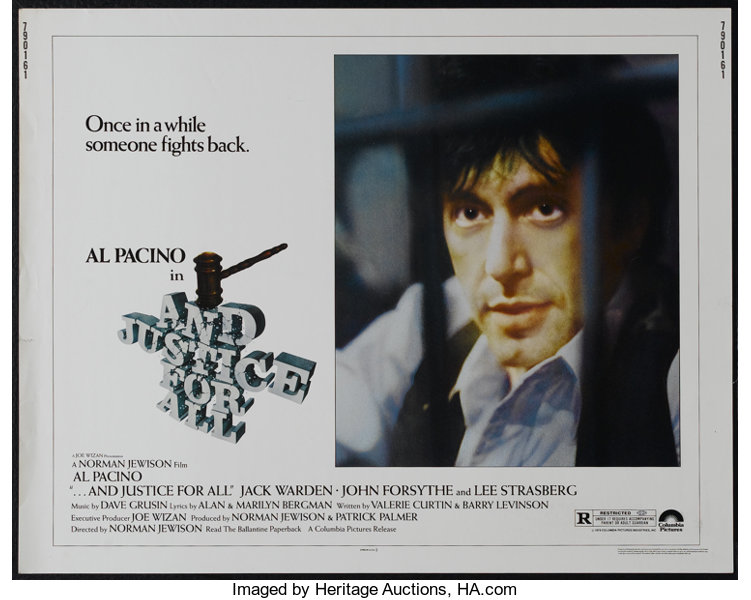
Great performance by Al Pacino, in a deft screenplay, whose power is masked by a film which seems to be presenting itself more as entertainment than biting satire.
These films are not the best perhaps, or even the best 63 films I have seen, though they would be very close to that.
I simply laid them down without prior thought of ordering or listing them in any kind or categorisation of this or that.
The only change was to add Gosford Park by Robert Altman, and to do that I dropped Mira Nair’s Salaam Bombay! which should not be left out, but I kept Monsoon Wedding which I adored when I first saw it and still do.
So the filmmakers and films are all great and in no way am I listing them in order of best – first to worst. There are no second-best or best here. They are simply all magnificent for all their own reasons and appeared as I remembered them and wrote them down.
Tell me what you think – offer suggestions – i.e. if you wish to.
From the moment in Annie Hall when he led Marshall McLuhan out from behind a film hoarding in a New York cinema I have been a huge fan of Woody Allen. He is America’s best writer director of ensemble urban comedies – truly a unique filmmaker.
Robert Bilott’s ‘self-documenting’ book, Exposure, on Du Pont’s chemical pollution in Parkersburg, West Virginia, is a sobering study of the immorality of corporate America in recent times.
This searing book shows how greed drives so much economic activity in America. Robert Bilott’s story was first revealed to me when I recently saw the film Dark Waters – a Todd Hayes (directed) and Mark Ruffalo (produced and acted) film, well worthy of several nominations in this year Hollywood awards round. It received none. I think we get the picture why.
Bilott tells us the whole story. It begins his ‘unusual’ jumping the fence from his law firm’s usual corporate defence work to take on a plaintiff’s case, for a West Virginia farmer, Earl Tennant, who showed up at his office with a mountain of supporting evidence.
Rob Bilott discovers how Du Pont had been for years dumping poisonous waste from its Washington Works plant at Parkersburg, West Virginia, into landfills which leached into rivers, streams, ponds, killing cattle and compromising the health of inhabitants in a wide area.
This story of corporate harm shows the casual, arrogant and ugly ease with which a powerful corporation can engage in immoral practices, in the name of business as usual. Initially rebuffed by Du Pont, Bilott convinced the courts to order the company to agree to settle, following an independent scientific investigation into the harm done by a chemical PFOA, used for many products, famously in Teflon, gathering huge worldwide profit source and spinner for Du Pont.
It takes years for results from an exhaustive scientific study of the blood samples of nearly 70,000 people in the immediate and surrounding areas, to come back with findings of clear probable cause links to several major life threatening and life-altering diseases and conditions. Du Pont ruined natural water and piped-water supplies meaning that many were already suffering, some dying, from directly associated diseases and conditions.
A jury finally finds for a class civil action against the company – who put up a fierce and at times devious public relations & legal defence – the plaintiffs awarded a 670 million dollar settlement against a corporate giant. Du Pont appealed and appealed then in the face of the unshifting evidence folded and accepted the decision.
This ‘environmental crime’ was aided and abetted by the EPA who worked in tandem with Du Pont to obfuscate key facts of a chemical dumping program from the public, Du Pont carrying on its harmful activities for years in plain sight, abusing the basic trust its economic stranglehold had over the small trusting community. Being the town’s main employer Du Pont had the town cold, knowing all along PFOA was an extremely dangerous substance for all life forms.
In summary, this is a fine book and a necessary read for people who want clean land, air and water, people who a reasonable chance of living their live without corporations callously poisoning them, providing them with cancer. This book is for anyone who believes that accountability over corporate activities is sorely needed, so are lawyers who hold to decent norms, working in a soundly and honourably (democratically) governed society in the 21st century.
Without Earl Tennant bringing this to Robert Bilott’s attention and Bilott deciding to take the career risk of bringing a civil action on behalf of Earl and many others, facing with the victims so many stress-filled years, we may never have even heard about Du Pont’s malfeasance.
Note: In a run up to the class-actiontrial, Du Pont spun off its Washington Works plant into a new company, Chemours, a spin-off technique many companies use to limit financial damage, placing the offending product range under another firm, a firm that can easily be tipped in bankruptcy thus preventing a payout. After years of seeing how Du Pont operated Robert Bilott was ready for the tactic.
As a filmmaker and writer everything I saw and heard in Dark Waters was pitch perfect for me. Is this the point when an already very, very good filmmaker makes something so significant it and he cannot be ignored? On my one viewing I would say definitely yes. So, how did Todd Haynes, and the cast and crew, not receive any Oscar nominations? The answer to that is unfortunately in the film itself.
Mark Ruffalo is exceptional as the initially unsure advocate (should I, shouldn’t I take this case?) the reluctant hero turning crusading lawyer travelling deeper into the lies and cover up world of Du Pont’s immoral practices, as he takes them on in the courts. The journey is long and far from easy.
Based on the New York Times Magazine’s “The Lawyer Who Became DuPont’s Worst Nightmare” by Nathaniel Rich, the story is real, the deaths associated with teflon and the poisoned waters from chemical spill run-off are countable, coupled to another important fact—the film narrative is so well managed and un-histrionic in its style and delivery that it makes watching dramatic and very affecting.
The mantra told often to us by lecturers in JD units: ‘a lawyer reads, that’s what a lawyer does’ hit home as I watched the many boxes of incriminating documents and records being wheeled into Mark Ruffalo’s (Rob Bilott’s) law offices.
How was Bilott not removed from his firm? It’s to my relief and all our benefit that he kept his position and kept on fighting the actions. A roomful of long applause for all involved.






 Swimanög