

| The Paper | Ron Howard |
| Delicatessen | Jean-Pierre Jeunet and Marc Caro |
| The Paper | Ron Howard |
| Delicatessen | Jean-Pierre Jeunet and Marc Caro |
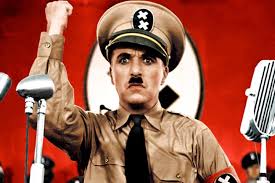
“Let us fight to free the world to do away with greed, with hate and intolerance. Let us fight for a world of reason, a world where science and progress will lead to all people’s happiness.”

Robert Bilott’s self-documenting book, Exposure, on Du Pont’s chemical pollution in Parkersburg, West Virginia, is a sobering study of the immorality of corporate America in recent times, a searing book that shows how greed drives so much economic activity in America.
Robert Bilott’s story was first revealed to me when I recently saw the film Dark Waters – a Todd Hayes, directed, and Mark Ruffalo, produced and acted in film, well worthy of several nominations in this year Hollywood awards round. It received none. Reading below, you will soon get the picture why.
Robert Bilott tells us a story that begins with his unusual jumping the fence from his law firm’s usual corporate defence work to take on a plaintiff’s case, a West Virginia farmer, Earl Tennant, who showed up suddenly at his office with a mountain of supporting evidence.
Looking through it all, Bilott discovers how Du Pont had been for years dumping poisonous waste from its Washington Works plant at Parkersburg, West Virginia into landfills which leached into rivers, streams, ponds, killing cattle and compromising the health of inhabitants in a wide area.
This story of corporate carelessness, greed and willingness to do harm, shows the casual, arrogant and ease with which a powerful corporation can engage in immoral practices, seeing it as business as usual.
Initially rebuffed by Du Pont, Bilott convinced the courts to order the company to agree to settle, following an independent scientific investigation into the devastating harm created by a chemical PFOA, used for many products, famously in Teflon, a huge worldwide profit spinner for Du Pont.
Du Pont ruined natural water and piped-water supplies meaning that many were already suffering, some dying, from directly associated diseases and conditions. But it takes years for results from an exhaustive scientific study of the blood samples of nearly 70,000 people in the immediate and surrounding areas to establish clear probable cause links to several major life threatening and life-altering diseases and conditions.
A jury finally finds for a class civil action against the company – who put up a fierce and often devious public relations & legal defence. The plaintiffs were awarded a 670 million dollar settlement against a corporate giant. Du Pont appealed and appealed then in the face of the unshifting evidence folded and accepted the decision.
This ‘environmental crime’ was aided and abetted by the EPA who worked in tandem with Du Pont to obfuscate key facts of a chemical dumping program from the public, Du Pont carrying on its harmful activities for years in plain sight, abusing the basic trust its economic stranglehold allowed them in the small trusting community. Being the town’s main employer Du Pont had the town cold, knowing all along PFOA was an extremely dangerous substance for all life forms.
In summary, this is a necessary read for people who want clean land, air and water, people who want a reasonable chance of living their lives without corporations callously poisoning them – in this case providing them with cancers. This book is for anyone who believes that accountability is sorely needed. Sorely needed too are lawyers who hold to decent norms, who work honourably in a democratically governed society of the 21st century.
Without Earl Tennant bringing this to Robert Bilott’s attention and Bilott deciding to take the career risk of bringing a civil action on behalf of Earl and many others, with him and victims together facing down so many stress-filled years, we may never have even heard about Du Pont’s malfeasance.
Note: In a run up to the class-action trial, Du Pont spun off its Washington Works plant into a new company, Chemours, a spin-off technique many companies use to limit financial damage, placing the offending product range under another firm, a firm that can easily be tipped into bankruptcy thus preventing a payout. After years of seeing how Du Pont operated Robert Bilott was ready for the tactic.
http://www.guardian.co.uk/film/video/2009/may/22/cannes-film-festival
Watching the video of the Guardian’s group of UK film critics on their annual junket to Cannes, sitting around a half empty verre de vin, un bicchiere di bianco, mezza affogata nell’alcol doing the Guardian’s wrap up video Cannes film festival roundup: ‘A year of Prophets and Basterds, scandals and stars’, watching them get it so completely and utterly and horribly wrong on what and who would win, with at least one expert exhibiting an ‘Oh oh I’m gedding a liddle tipthsy’ half giggle, was one of the best laughs at Cannes 2009 in a year that seemed notably spare of the real thing up on screen.
The film hardheads guarding our take and hold on the fourth dimensional art form, displayed zero-none insight into the Cannes Festival Jury’s collective mind or political process of selection. It had me wondering if they ever got out of the UK film village at all over the two weeks. They weren’t idiots, don’t get me wrong. Intelligent, personable, likable almost – they just didn’t know anymore than you or me, their comments about as good as yours or mine on any given film at any given glassy-eyed moment. I mean who really knows what’s good or not in cinema? God only knows why or how anyone wins awards at these events – what really does go on behind those draped windows? Can you imagine the jury, sorry, The Jury, sitting around seriously trying to be serious about their role. I mean it’s a junket, an annual film publicity junket in a lovely breezy May-warm part of the French Mediterranean. Time to get the sunglasses and floppy linen out and the dingly-dangly things and say words from romance languages almost as the French do…okay, simulate the French.


But after being there and getting back and seeing the Guardian get it horribly, no, miserably, wrong, I thought I’ll have a go at being a film critic too. I went and sat through Synecdoche at the Rio Cinema and here’s my review:
It was an interesting film, an interesting two hours plus of my time spent indoors on a warmish rainless spring afternoon in London. I left the cinema thinking: real life aint so bad after all.
For me Charlie Kaufman is a genius, or the closest thing to true genius that film, well, the closest thing to true genius that American film… well, there’s also Woody Allen, an influence on him and his work Kaufman said. So who’s first and who’s better? Well…See it all gets very silly, very quickly, not just the genius tagging bit but film criticism all round.
Synecdoche is an uncompromising portrait of a human being doing everything but slip down the toilet before your eyes, all written and directed by someone who wrote Being John M, Adaptation and Eternal Sunshine – we are talking serious film writing ability here. But Synecdoche is tough to watch. Not impossible, not horrible or miserable, well yes it is miserable – and between Woody Allen’s division of the world, “miserable” or “horrible”, this is Kaufman’s “miserable”.
It brought Woody Allen to mind, it brought Fellini back to me, Coppola, really anyone who made a film that was a tough ask, a tough sit, at least once, in their hey or other days. Bring on the heh heh days I say, because there seems to be a moment in many famous filmmaking careers when the auteur inside says screw the audience, screw entertainment, screw the laughs I’m going to give them a piece of my art, one from the heart ART.
It also brought to mind a scene in Woody Allen’s Anything Else, David Dobel (Woody Allen) and his protege Jerry Falk (Jason Biggs) walking, nutty Dobel giving Falk some more sage advice.
DOBEL What goals.. wh-what are these goals?
FALK I want to write a novel, Dobel, a novel about man’s fate in the empty universe, no god, no hope, just human suffering and loneliness.
DOBEL Yeah well I’d stick to the jokes if I were you, that’s where the money is.
….Okay I’m a philistine, so what else is new.

