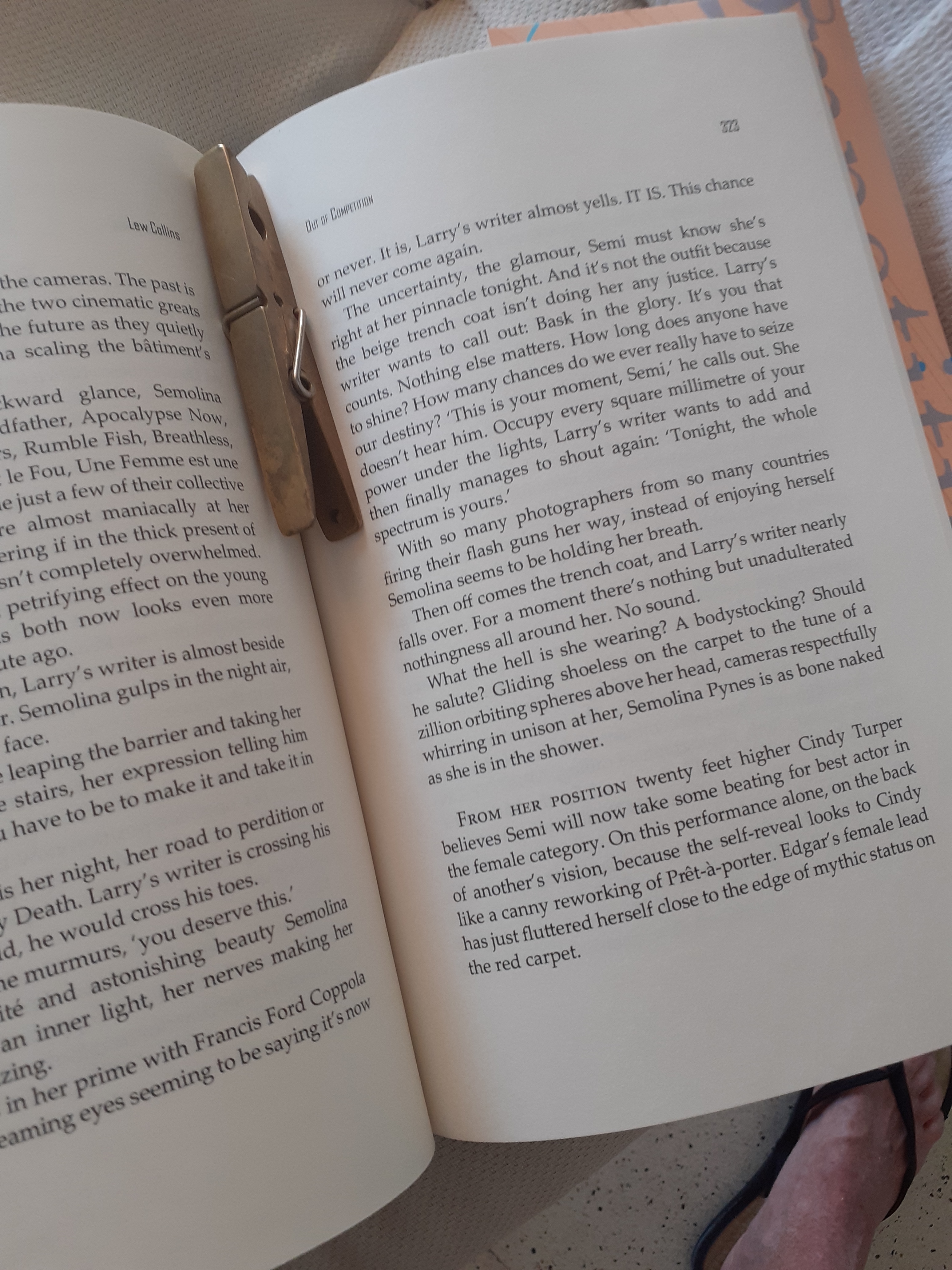
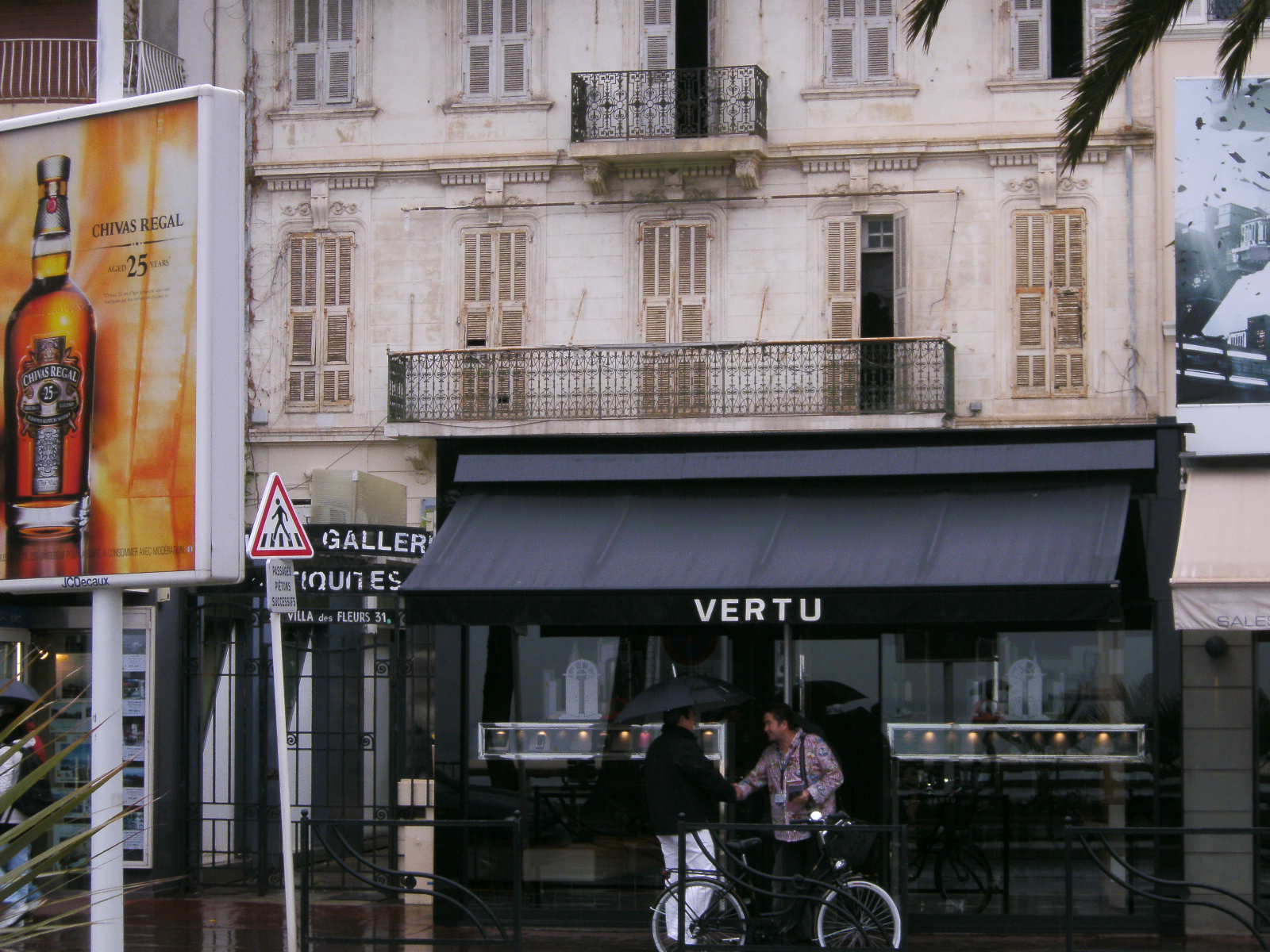
Out of Competition began as an idea in 2000. It was written in France. Attending a French film festival I saw a film producer grandstanding his way through a series of well-constructed lies. Present that day in a film tent, I thought to myself: this guy needs analysis. At the same time, the recently-ended Soviet Union was embarking upon an economic march over to join in with the West.
Pencilling down ideas I came up with a couple of sketchy characters, one American, one Russian, similar and unique – types who wanted attention, enjoyed power, and were destined to meet, maybe do business together.
Other ideas and characters came into my head as a story began shaping up, but I couldn’t find a central idea to unify everything.
As the novel’s progress slowed my idea faded into the background. Where to begin and what is this about stalled me. I moved on to writing two other books and stopped thinking about the film tent inspired idea. Then in 2010 I read the translation of War and Peace by Richard Pevear and Lara Volokonsky. Hooked immediately, I read it once, then twice.
The translating team’s stated intention was to return War and Peace to Tolstoy’s original Russian language style. It was time. A series of English translators had turned Leo Tolstoy into a copy of a 19th century English novelist. The now well-known Tolstoy test: “The children rode the chairs to Moscow” showed Tolstoy not mutating chairs into carriages. Tolstoy’s children needed no linguistic bridge for their imagination. Pevear & Volokonsky understood this clearly, and translating simply, translated Tolstoy carefully following the original Russian of W&P. Bursts of French appeared again. Then the French culture and language influencing Russian life were torn asunder when Napoleon invaded in 1812.
I had my novel’s subject: Russians invading a French film festival.