I found this radio demo of ‘Book of Longing’ by chance some time back and played it many times before it disappeared – it has now been reposted. It is so good it should be released as a track by itself – hypnotic base, drums and sax.
It was Bukowski’s birthday (16th August) – the LA Times alerted me.
“I was drawn to all the wrong things: I liked to drink, I was lazy. I didn’t have a god, politics, ideas, ideals. I was settled into nothingness; a kind of non-being, and I accepted it. It didn’t make for an interesting person, I didn’t want to be interesting, it was too hard.” Women
More than any writer of recent times he made himself and East Hollywood a person and place you wanted to know. In an uncanny way, he made himself the writer you knew without meeting. The story of publication with John Martin and Black Sparrow is a hell of a ride – one that given the state of the publishing industry today makes you shake your head and wonder what went so horribly wrong. How and why did the spivs take control? Moneybags spivs walked in one day and a good part (the best part) of writing and publishing gave up the ghost and died. What happened to that generous reader, writer publisher spirit that John Martin recounts, those early days – he wasn’t imagining or romanticizing it. It was there. (It’s still there in pockets and angles and bolt-holes all over – the connectiveness reliant on the Web – the spivs are desperate to colonise and control the Web now as well.)
Back then when publishing was open for any and all business John Martin said to Bukowski – I’ll give you a hundred dollars a month (we’re talking late 1960s) and you just write for me. I’ll publish you. Just go and do it. Bukowski went off and wrote Post Office in a whirlwind.
John Martin is still a beacon in a wilderness we really should call – information control – or entertainment froth – or laugh your way to the little bank blues – not book publishing, not anymore.
Bukowski made you laugh out loud about things that were no laughing matter. He just made his humanness (really, Chinaski’s) matter to you. No one has captured him yet on film. Mickey Rourke and Matt Dillon – put them together, maybe (Jeff Bridges could do Bukowski really well). Or as a friend said – Mickey Rourke now – yes, Rourke or Bridges could do Bukowski now.
Any film takers out there? Any producers with the heart to try again?
France. I have been going in the series 3 every year taking old furniture down to Italy or just going for the hell of it, across/under the channel down through France up over the Alps into Italy (you have to see Liguria’s Cinque Terre at least once in your life) – the rest of the time the old car sits idle outside.
As for so many things, time is running out for the old land rover. Old cars are not liked anymore. They are smoky – I won’t defend them more than this: emissions of 24/7 trucks, high octane fuel guzzlers, the factories etc etc, one old car on one month annual trip (no city driving for me) doesn’t add up to much – not in my arithmetic. Not more than 50 mph (in fact 40 mph) is my way and motto (I’d like to put a sign on the back saying – This goes less than 50 mph.. on principle! – as well as by design). It’s not only the bunches of flowers every few miles – where do all these hearts go when they leave the road..we don’t need to know the details…they’re gone.
How much more you see going slow.
photos by Valentina
One France I know is magic, sometimes a melancholic magic – rivers, fields, towns (to die for, towns so many did die for), little ordered graveyards along the way to forests, mountains, plains. But I can’t sit back and say nothing about these evictions by the police.
Where do the developed countries think their labour forces come from (bus drivers, street sweepers, factory workers). Oh I forgot – all these poor and hopeful immigrants are freeloaders on the state, not cheap labour at all for moneybagging developed nations. That’s what the exploiters want us to believe – we and Africa, South America, and vast swathes of Asia know better.
The West uses, abuses and discards. Reading some wonderful memories in essays of what New York (New York Calling ed. Marshall Berman) used to be like even in the not so distant past, before Rudi Giuliani began building his ‘political career’ by killing diversity, giving the bankers and other users etc the chance to move in and tear down, throw up condos, destroy the art that the city used to grow on every edgy noisy street corner. It all’s babbitts now whatever they are – John Strasbaugh ‘From Wise Guys to Woo-Girls’ describes one property owner taking out contracts on low-renters to get his hands on their apartments.
Where is the heart, the meaning of community, ‘this land is your land this land is my land’, where is the belief that we all share this planet (being an old car user – I aint perfect)..but where are the Bohos, the ex-centricos, the buskers, the old guys and girls who have ‘lived here all their lives’..where is all this redevelopment going? I look in London and wonder how the architects could even think of putting this up – the plastic crap that’s dead inside a year – whatever happened to weathered brick? Where’s the spirit of Lou Kahn?
We have to think this through, again, claw back meaning, humanity, the street belief, the daily art and human show, somehow.

ʻUncorrected Proof’ could be seen as a labyrinthically shaped many-dimensional map, pointing above and beyond itself by showing mirrored images of other places in literary time and space. And that’s one reason why you do not feel trapped by the, also present, postmodern paranoia. In this book as in real life. Painting pictures pointing beyond themselves out into a vast literary universe, you may feel lost in a labyrinth but it can, and for me does, feel like an opening, or a broad road, in it’s freedom to play out and stay away from an apparent order of themes according to fit the forms in the styles of the past, and norms or ideas of originality and individuality. The text stretches out of and becomes wider than the thickening plot, which is something I think can be inferred if employing multiple perspectives on the puzzle pieces presented – which, to use the map metaphor again, can be viewed from a distance at the same time as you are caught up in it/them.
In other words it does, in my opinion and to my appreciation, knit parodies and parallells into something in which it is possible to discern a pattern, in and through the somehow accented spy novel style, making the pictures and scenes full rather than fragmented in relation to the substratum one can sense somewhere in the heart of the text. To try and concentrate my impressions in one sentence I would describe it as confusion in association with the flexibility of not being one and itself. I have personally become deeply involved in this hectic story, and though I have read it over and over from cover to cover I still do not feel I am done with it. I use the word hectic as at many points there is a bit of a stressful atmosphere with the characters and the ones who in parts in their turn play the characters, as with the authors from various times and places who file past. Others such as the fishing scenes and the pasta recipes are a bit of a break, through being a bit more worldly.
Alba’s work in itself is in my view an original one. To pick but a few illustrative
quotes which echo my impressions when reading:
“It is not just a runaway relentless river of words following mental storms or unauthorized brainwaves”,
Notes from the diary of the reviewer’s work
raw thoughts which c(sh)ould be refined. the truth may be purer in this version than in the next. i’ll go with the next one.
The first copy I read was from the library. I saw some review, got curious, and made a suggestion for the library to buy it (which is my normal way of getting many of the books I read). I read this first, borrowed, copy of the book, among other contexts, while washing clothes and while watching clothes wash.
—
1: Excerpt Six; Inside the plot (UP, Acknowledgements)
2: Excerpt Four; Archie thinks it through (UP, p 65)
3: Excerpt Five; Alessandro gets on the case (UP, p 71)
4: Excerpt Three; Archie & Cal try to sort it out (UP, p 81)
5: Excerpt One; Ellen Spartan contemplates her fate (UP, p 86)
6: Excerpt Two; Chaos at Folio (UP, p 109)
And later, through X months’ hard labour, resulting in the above, I won my own copy. Fair enough. And fair and square. “[I] found the order (or found the copy on Google Book Search 🙂 Either way, [I] did it.”
“Hi Kristin, the copy will be sent to you on Monday.”
I re-read it when on a flight to New York. And back. I might not have concentrated as hard as I should. At this moment a clarinet played by a neighbour is mixed with birds singing through the open window mixed in turn with relatively silent electroacoustic music from my computer. The temperature is very/too high. And in addition coffeepipyng hoot out of the glede. I also made my own correspondences between style, theme and reading. For example, eating haggis when I read the part on scots. “And yer nae even scottish”. I made the pasta in the recipes in the book when I read those. Following the instructions I did use olive oil. And then I didn’t. (But to use another one of my jotted down quotes from the book “every author lies in every case”, you shouldn’t take my word(s) for this. As for haggis, I’m a vegetarian.) I have also been pondering on the author. One personal (but still quite unoriginal, I have read this opinion in other places) guess on the subject of the author Louisiana Alba, is that this is not a non-fictional character. But I would not swear on that either. “Because I know nothing about this guy.” But I am a “friend” of “his” on Facebook. Some other intriguing passages are for example the equations describing how the book (the book(s) in the book/the actual book) was written, the question “Is that Heidegger quoting Kundera or Kundera quoting Heidegger or Homer Simpson misquoting both?”, and speaking of Homer; blurbs by Homer and Brontë, the pictures of authors on the cover, the thank yous to many more in the preface. The familiarity of them seem to cover and cushion some of the literary tumbles of the eponymous author, the implicit author, the fictional author and the reader.
As at the moment being involved in library and information science, I also at points in my reviewing progress saw parallels to knowledge organization and cataloging, as well as some kind of hyper- or at least intertextuality, in the alphabetical list of authors and artist in the preface, pictures of some of them quite neatly organised on the cover, and and as mentioned reminds me of a map – which a catalogue can be as well, often concerning documents such as literature and often interesting in itself in what has been chosen for representing and how it is represented, making new stories out of, as well as new relations and associations, between older works. Some of the charm of this book lies in it waking curiosity and associations, and some of the challenge with the book lies in it making you want to solve some of its riddles, such as where allusions are, to whom, and what this in turn might imply if interpreted “correctly.”
The Paste Land
“Lou maintains you have look through the prism of Duchamp’s Mona Lisa..the mustache on the most famous woman in art..Everything is a comment, a value add on, a parodic piece of fun, a slide off the original text into something else..built inside text which itself is built inside text and so on..Foucault’s comment in ‘What is an author’, an author is only a collection of statements that have come before, comes into play. Writers often play with borrowed stories (Shakespeare mercilessly so)..Lou referenced over 100 styles. T.S. Eliot borrowed from the whole of the literary world. The Waste Land could be The Paste Land. (You are quite free to use our emails as well if you like – Uncorrected Proof is an open book published by an open press)”
– Geoff Berry… ElephantEars Press – e-mail correspondence June 2010
http://elephantearspress.com
Laura Miller of Salon is one of a long line of ‘I know best-ers’ to throw the tired old crumbly stones of ‘writing commandments’ from the journalistic mountaintop http://www.salon.com/books/laura_miller/2010/02/23/readers_advice_to_writers/index.html(was-there-not-anymore) :
Anyone who champions rules of commercial fiction risks sinking creativity to the lowest common denominator in the reader’s mind. It is so easy to force feed unknowing audiences junk culture, just as easy as it has been to promote junk food. And where has junk food got us? If Laura or anyone attacks quality or ‘difference’ be it in art, commercial fiction, food or politics, in the end, logically, it leads to totalitarianism. Commercial control of a cultural market, or political control of a society have similar roots.
We are not animals tethered to a plot line only – sophisticated readers want more than plot. If anyone reads War and Peace (a great read by the way, easy to read, entertaining and enjoyable) it is a long time before any one character assumes ‘the what’s going to happen to me next driver’ aspect to his or her role, but it is there – but it is always there as part of ‘the life’ in the novel – what will happen today? It is part of all of us – but there is much more to enjoy in Tolstoy’s novel, as there is in reading Year of the Death of Ricardo Reis, The Outsider, As I lay Dying, and A Hundred Years of Solitude – all examples of novels and narratives that are far more mysterious and compelling than commercial fiction that obeys these silly rules Laura speaks of. In The Great Gatsby, what do we ever discover really of Gatsby? – not a great deal, more than half Fitzgerald’s point. Nick, we get to know, the character we engage with, the thinking centre of the novel. Hamlet was introspective and procrastinating and one of the greatest characters of all time. Just because lowest-common-denominator is now the major dollar driving factor in contemporary reading culture doesn’t make it good or good to read. The only comment I agree with is the last – laugh while you write and hope like hell the reader laughs with you!
“Naturally, writers of genius have broken these “rules” as well as every other rule ever conceived. But, let’s face it, geniuses don’t need lists like this and couldn’t follow them even if they tried. Most writers are not geniuses, and most readers would be exhausted by a literary diet that consisted only of the works of geniuses.”
This is Laura’s ‘a genius can do it, but the rest can’t argument’ which in effect shuts down experiment, closes the door on dissent. Who knows what genius is? It was 200 years before the Romantics woke up and declared Shakespeare a genius. All we can really hope for is that creativity in any novel is whatever form it takes when exciting readers. If a writer takes readers somewhere we haven’t been, surprises us in some way then it is an achievement worth applause. The ‘Only a genius can break the rules’ argument is another argument for more gatekeeping. This ‘we know the rules’ is nonsense. And even if someone like Laura could for a moment make a good fist of why she subscribes to her only a genius-can-break-rules-theory, very few of the ‘genius writers’ she’ll choose will surprise even her all of the time. No book or writer is untouchable. Everybody can be criticized, even Shakespeare. Logically, if anyone follows these, or any rules, they will become slaves of a market mechanism. Rules for fiction or any other art form only end up filling the pockets of the chosen and promoted writers. Rules lead straight to homogenization (though that doesn’t mean you can’t have a little fun with rules, while you’re doing other more interesting things) …go-go genius go.
Review of Uncorrected Proof by Louisiana Alba – ElephantEars Press
Paul Duran – L.A. director and writer
from Pacific Rim Review of Books Fall/Winter 2009 Issue 12 – pg. 33
Who is Louisiana Alba and what does she (or he) have against the publishing industry? It’s a rhetorical question since most authors inevitably have some gripe against the media giants they are forced to rely upon to shepherd their creative works to the masses. Yet usually, besides the odd drunken cocktail party diatribe or expletive-laden rant to one’s spouse, authors won’t, or can’t afford to, bite the hand that feeds them. Alba on the other hand has decided to go straight for their throats, going public with the writer’s eternal screech – the bastards have (add your own word here – ruined, stolen, fucked up, etc.) my book! – then framed it within a literary conceit so audacious and capricious, that to stumble just a little bit is to fall off the mountain completely.
It’s a high wire act that literally co-opts the style of dozens of literary untouchables and pop culture icons from James Joyce to Jimi Hendrix, Anthony Burgess to Andy Warhol, Ernest Hemingway to Quentin Tarantino (there are over a hundred authors and artists listed in the book’s acknowledgements starting with ABBA!). Alba (an obvious nom de plume) uses each successive voice in her vast arsenal to tell the story of Archie Lee, the plagiarized author who schemes to get his novel back from the people who stole it – the celebrity novelist Martyrn Varginas, his greedy publisher Menny Lowes, and his man-eater of an editor, Ellen Spartan.
Using The Iliad as a starting reference point (in a deliberate cracked mirror image to Joyce’s use of The Odyssey in Ulysses), the novel playfully winks at Homer not so much for his epic poem’s style as for its archetypal tale of love, abduction and revenge. The characters all are sly doppelgangers for their Greek counterparts; Archie Lee for Achilles; Ellen Spartan for Helen; Menny Lowes for Menelaus and so on. But the book does not rely solely on post-modern mimicry or clever homage to keep our interest. It more than holds it’s own as a thoroughly enjoyable pulp story about stolen manuscripts and deferred vengeance in the volatile, cutthroat world of publishing. Making publishing a life and death enterprise involving kidnapping, murder and the CIA is a nice conceit that no doubt will give even the crustiest of publishing execs a knowing chuckle.
The novel starts with Archie out to expose his literary theft at the Crocker Prize banquet (read Booker Prize). He gets cold feet when he comes face to face with his nemesis Varginas and Varginas’ attractive editor Ellen. She unexpectedly offers Archie a position at her new imprint when he stammers out that he’s “expert with espionage thrillers.” From there the story follows Archie’s desperate scheme to wreak revenge from inside the publishing mecca using his newfound influence to try to get his original novel into print under the name of an opportunistic young hustler he has hired for the part. Nothing goes according to plan as the novel ricochets from London to Barcelona to the South of France to New York and back; from pulp crime to spy thriller, memoir to meta-fiction, screenplay to redacted text.
It may sound like a daunting task for the narrative to constantly shape-shift from one disparate source to another but the effect is breathtakingly kaleidoscopic and in most cases wholly appropriate (even the few typos in the book seem correct given the title). In truth it would probably take a tenured literature professor with a vast music and DVD collection to decode all the stylistic shifts in Uncorrected Proof but that’s not really the point. Given all the literary byplay and conceptual ambition, the story is still amazingly accessible, so when you are able to pick up on a particular author or style, it just adds to its kicky pleasure.
In the end Uncorrected Proof is also a cautionary tale about ego and ambition run amok in a world where ego and ambition are the only character traits that seem to really matter. With no clear winners or losers it could almost be read as a twisted metaphor for our own troubled times, with the publishing industry standing in for Wall Street and the banks, where the “best and brightest” have had their way for too long and have grown fat on the bones of those crushed under their Gucci loafers and stiletto heels. Perhaps I’m reading too much into Alba’s remarkably varied prose, but the seeds of a revolution are there, if not on the economic front, then maybe just in the publishing house.
Paul Duran’s films, Flesh Suitcase & The Dogwalker.
Another review by LiteraryMinded please go to:
http://blogs.crikey.com.au/literaryminded/2008/11/07/uncorrected-proof-louisiana-alba/

Image – ElephantEars Press
The novel has seen so many developments on so fronts through its long history in many languages and periods of history. It began with Cervantes and still is going strong. ElephantEars Press through its Facebook group Progress of the Novel, wants to learn of innovative novels, ‘gems’ published in recent years.
(posting for ElephantEars Press)
http://www.guardian.co.uk/film/video/2009/may/22/cannes-film-festival
Watching the video of the Guardian’s group of UK film critics on their annual junket to Cannes, sitting around a half empty glass of blanche, un bicchiere di bianco, mezza affogata nell’alcol doing the Guardian’s wrap up video Cannes film festival roundup: ‘A year of Prophets and Basterds, scandals and stars’, watching them get it so completely and utterly and horribly wrong on what and who would win, with at least one expert exhibiting an ‘Oh oh I’m gedding a liddle tipthsy’ half giggle, was one of the best laughs at Cannes 2009 in a year that seemed notably spare of the real thing up on screen.
The film hardheads guarding our take and hold on the fourth dimensional art form, displayed zero-none insight into the Cannes Festival Jury’s collective mind or political process of selection. It had me wondering if they ever got out of the UK film village at all over the two weeks. They weren’t idiots, don’t get me wrong. Intelligent, personable, likable almost – they just didn’t know anymore than you or me, their comments about as good as yours or mine on any given film at any given glassy-eyed moment. I mean who really knows what’s good or not in cinema? God only knows why or how anyone wins awards at these events – what really does go on behind those draped windows? Can you imagine the jury, sorry, The Jury, sitting around seriously trying to be serious about their role. I mean it’s a junket, an annual film publicity junket in a lovely breezy May-warm part of the French Mediterranean. Time to get the sunglasses and floppy linen out and the dingly-dangly things and say words from romance languages almost as the French do…okay, simulate the French.


But after being there and getting back and seeing the Guardian get it horribly, no, miserably, wrong, I thought I’ll have a go at being a film critic too. I went and sat through Synecdoche at the Rio Cinema and here’s my review:
It was an interesting film, an interesting two hours plus of my time spent indoors on a warmish rainless spring afternoon in London. I left the cinema thinking: real life aint so bad after all.
For me Charlie Kaufman is a genius, or the closest thing to true genius that film, well, the closest thing to true genius that American film… well, there’s also Woody Allen, an influence on him and his work Kaufman said. So who’s first and who’s better? Well…See it all gets very silly, very quickly, not just the genius tagging bit but film criticism all round.
Synecdoche is an uncompromising portrait of a human being doing everything but slip down the toilet before your eyes, all written and directed by someone who wrote Being John M, Adaptation and Eternal Sunshine – we are talking serious film writing ability here. But Synecdoche is tough to watch. Not impossible, not horrible or miserable, well yes it is miserable – and between Woody Allen’s division of the world, “miserable” or “horrible”, this is Kaufman’s “miserable”.
It brought Woody Allen to mind, it brought Fellini back to me, Coppola, really anyone who made a film that was a tough ask, a tough sit, at least once, in their hey or other days. Bring on the heh heh days I say, because there seems to be a moment in many famous filmmaking careers when the auteur inside says screw the audience, screw entertainment, screw the laughs I’m going to give them a piece of my art, one from the heart ART.
It also brought to mind a scene in Woody Allen’s Anything Else, David Dobel (Woody Allen) and his protege Jerry Falk (Jason Biggs) walking, nutty Dobel giving Falk some more sage advice.
DOBEL What goals.. wh-what are these goals?
FALK I want to write a novel, Dobel, a novel about man’s fate in the empty universe, no god, no hope, just human suffering and loneliness.
DOBEL Yeah well I’d stick to the jokes if I were you, that’s where the money is.
….Okay I’m a philistine, so what else is new.
Google, Inc.
Google Legal Support,
AdSense DMCA Complaints
1600 Amphitheatre Parkway
Mountain View, CA 94043
U.S.A.
19 May, 2009
Dear Sirs,
I am writing to point out Google’s association – inadvertent association, I accept – with the blatant theft of my copyrighted material by a site It’ s Entertainment, blazoned with Google Ads. The offending site is set up using DoshDosh.com powered WordPress software and can be found at: http://entertainment.uwant2know.info/cannes-film-festival-2009-the-big-time/
It’s Entertainment is engaging in unauthorised holus bolus copy-theft of my original material from a post I wrote, based on a research trip I made to Cannes last week for my new novel. My original post can be found on my blog at:
https://swimanog.wordpress.com I put the post up on 18th May, 2009. It was barely up one hour before It’s Entertainment began using it illegally for commercial purposes with Google Ads.
I received no request by It’s Entertainment for its use and there was no attempt to properly acknowledge the original. There is no way to contact the site owners to register my disquiet or complaint. From my research, this site is a serial offender of this kind of copy-theft.
I am a novelist and I put up my blog posts up for public awareness of my writing and for the public’s and my own enjoyment. It’s Entertainment is stealing copyrighted material placed in good faith on the World Wide Web. Google, inadvertently and unfortunately, is aiding and abetting It’s Entertainment by giving it sustenance to survive, so the offending site can carry out copy-theft.
Please help stop this abuse by withdrawing the site’s ability to use Google Ads. The site’s unauthorised use of my writing is unlawful, unfair and wrong. Google should prevent sites like this one from acting like this. Your company will be doing a great service to everyone and will win wide respect if it does. At the very least sites like this should be forced to negotiate legal use of copy. I am not against the use of Google Ads on any site per se but have not investigated it. I am not against commercial activity, only against illegal copyright activity carried out for commercial exploitation.
The use of my copyrighted materials as described above is not authorized by me, or the law. I swear, under penalty of perjury, that the information in the notification is accurate and that I am the copyright owner of an exclusive right that is allegedly infringed. My thanks for your consideration of this matter.
Yours faithfully,
Louisiana Alba
– The Big Time
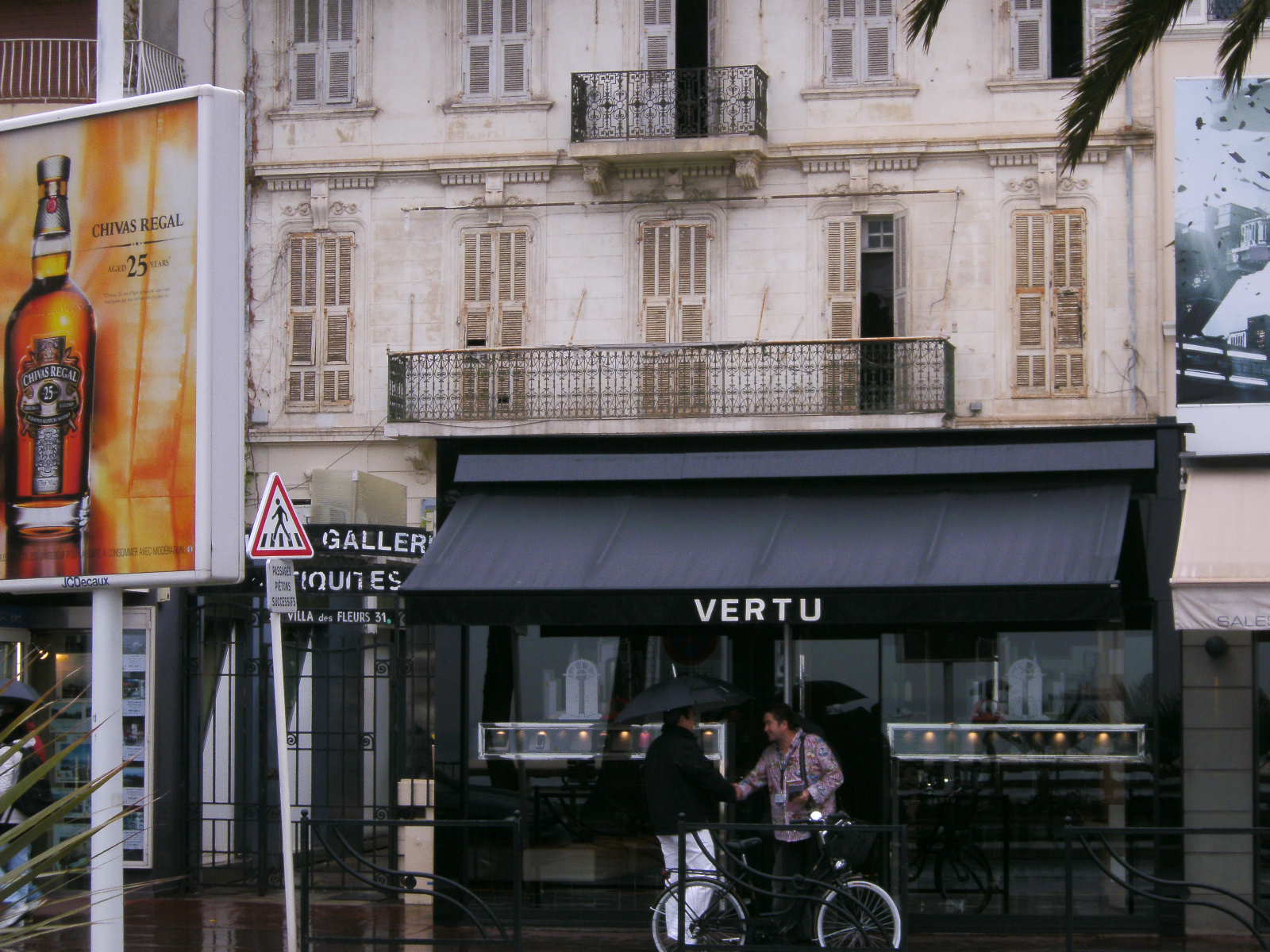
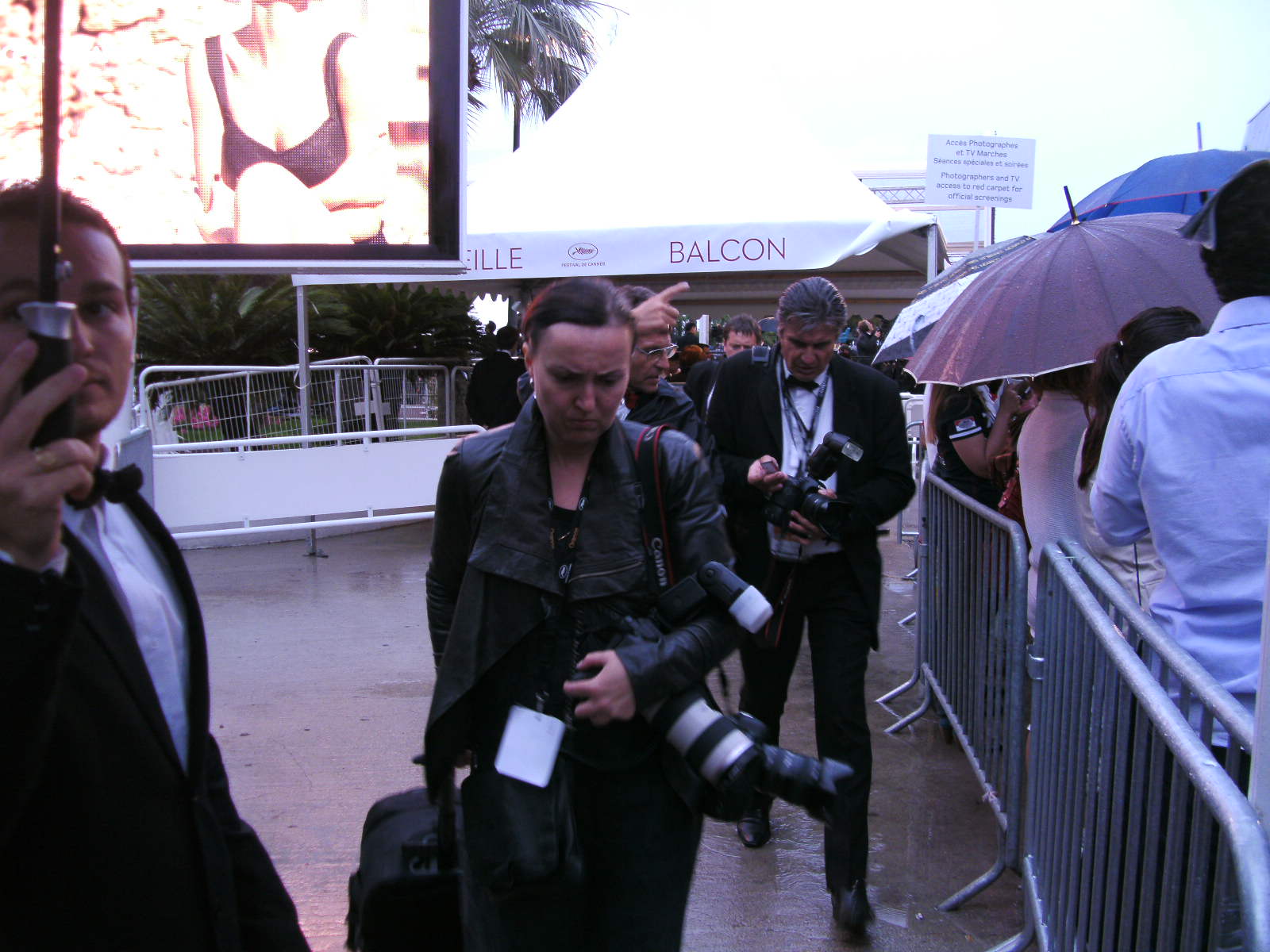
You’re in the south of France.


You arrive on the TGV, in a bit of a blur…

Right, where’s your place then. Christ, you hope you haven’t been conned. You walk out of the station, get lost in two minutes. How do you get lost in Cannes when you’ve been there ten times. You just do. But up the hill you go, eventually, get there, find the place…believe you me, well away from the hoy palloy.

Not bad, you think, for something off the Internet, okay, away from the action, on the other side of the train line, but it has a beautiful garden…

A bit Graham Greenish, even. But you are here to work, not to sit in a garden deck chair, sip pink gins, complain about being an Anglophone abroad all day long. You are here to take photos. You get started right away..

Get the writing tools set up…
Right then, down to the Croisette..

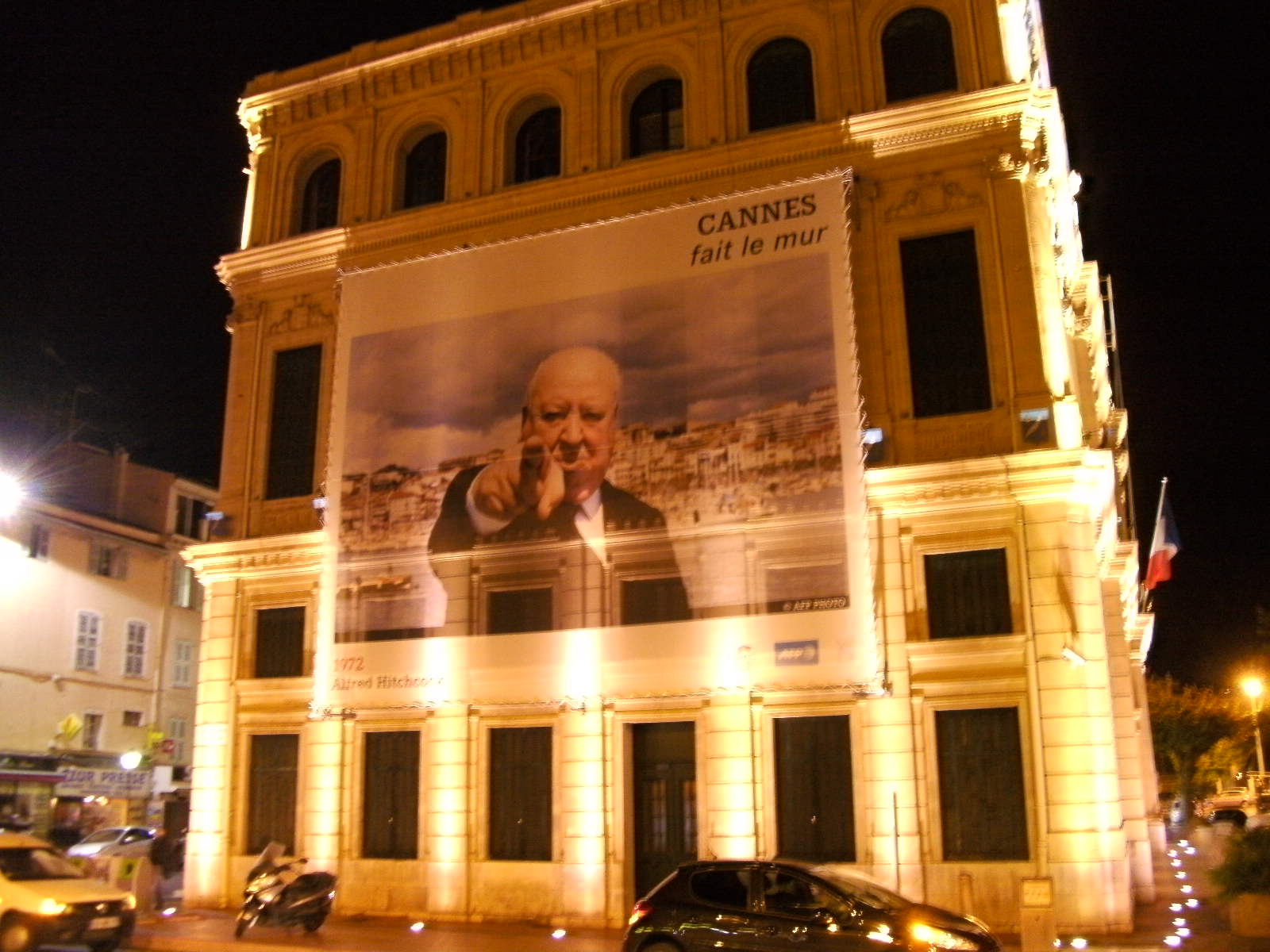
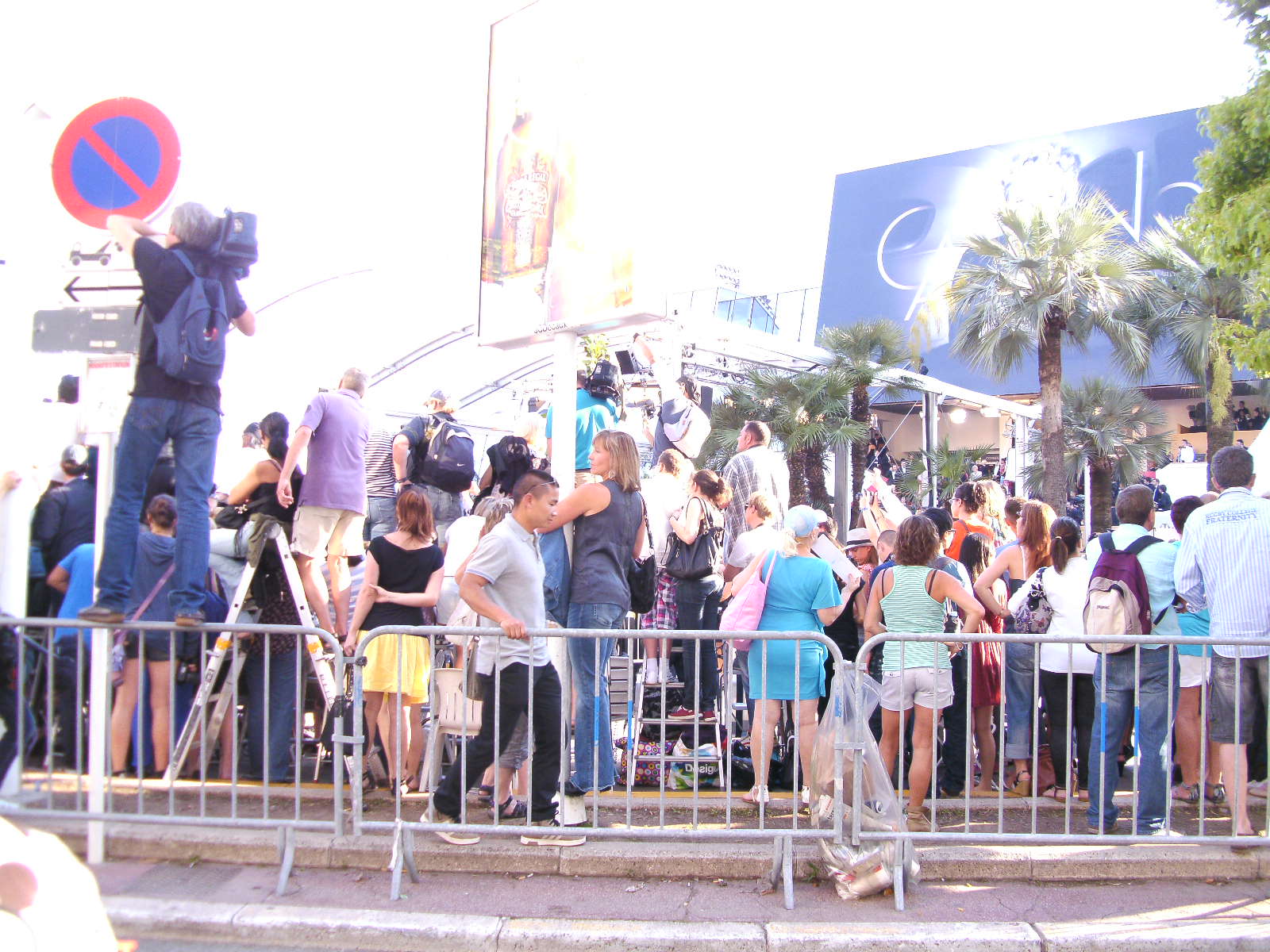
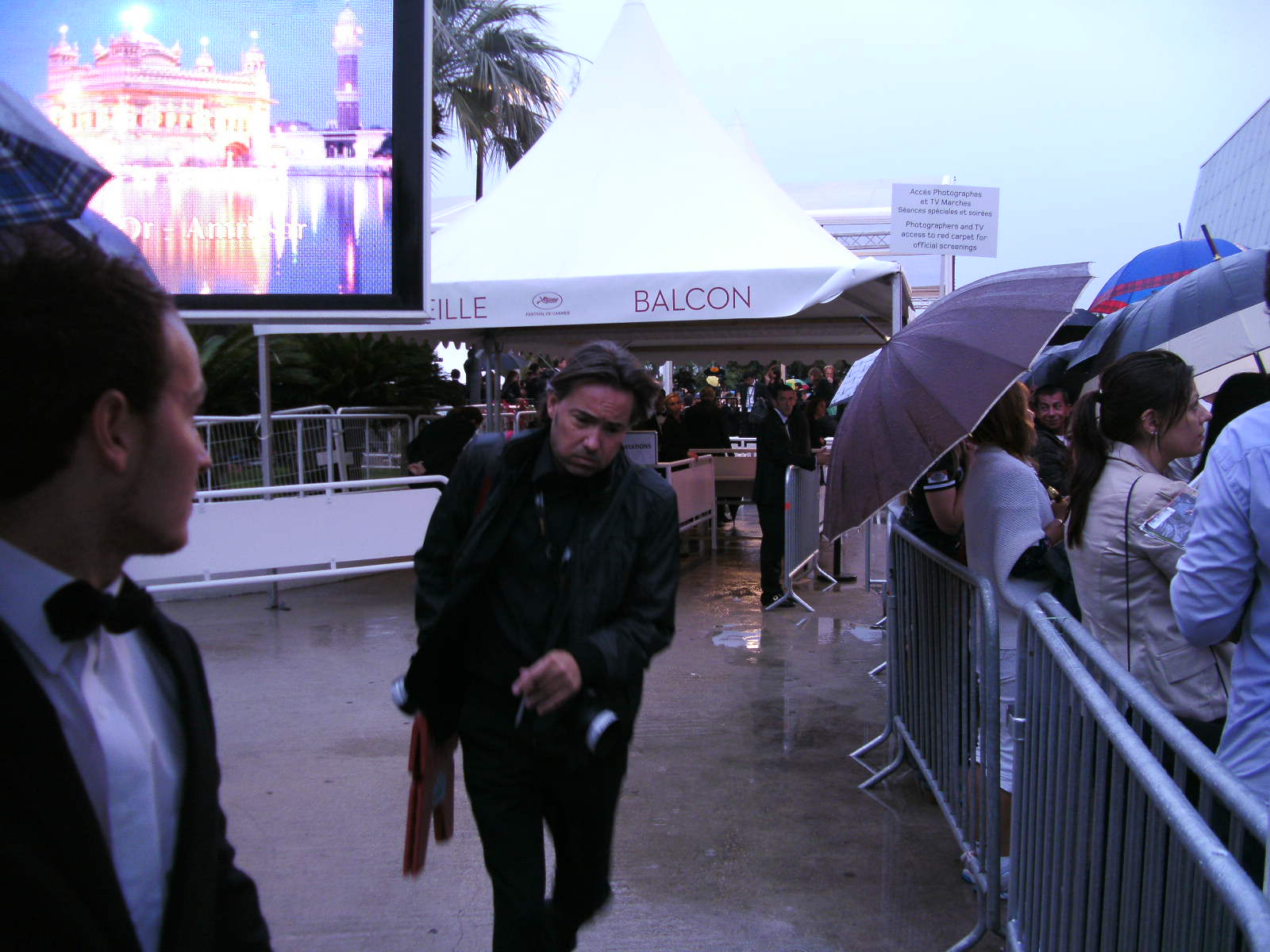
To do what? Gawk at the stars…

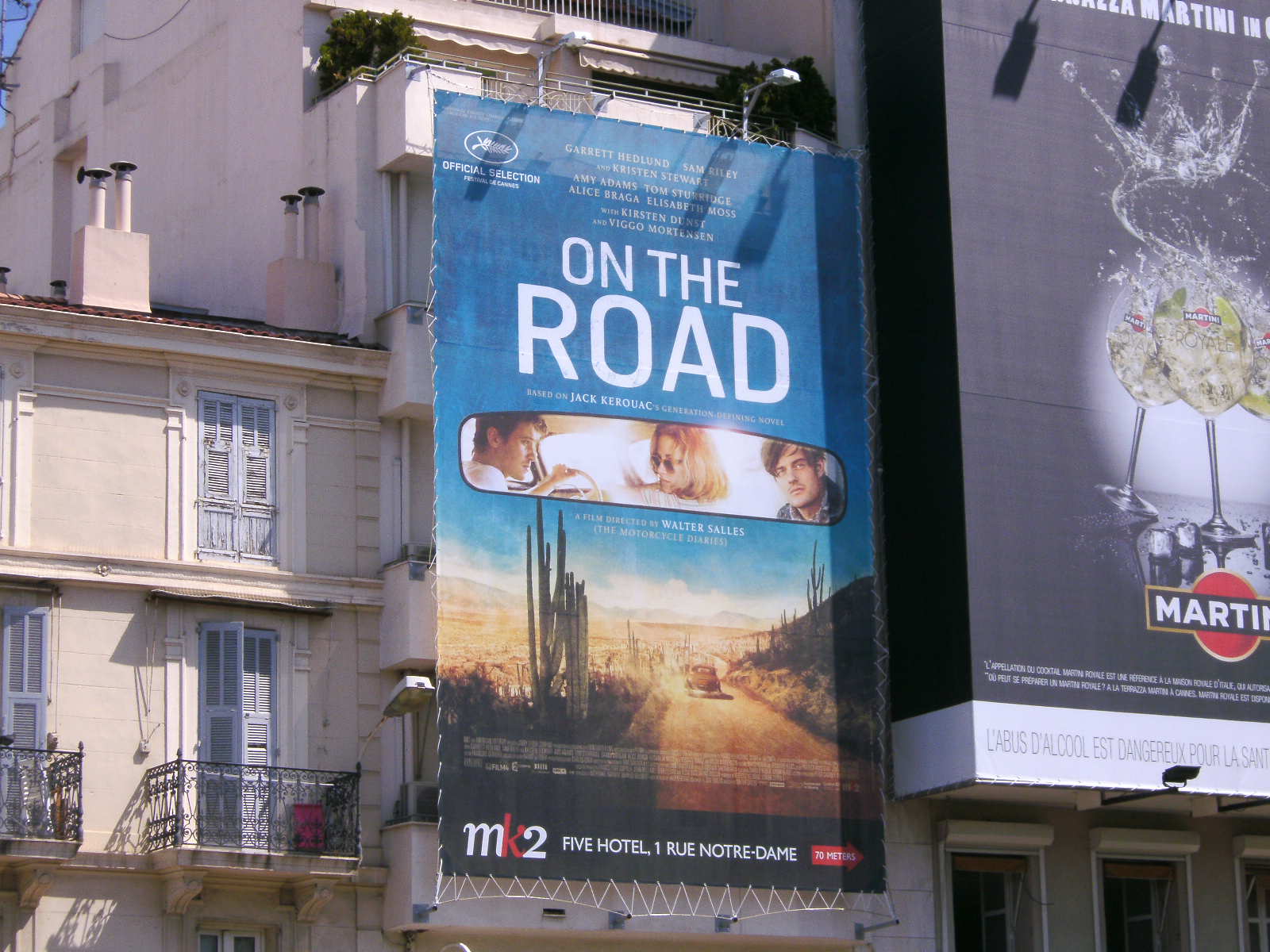
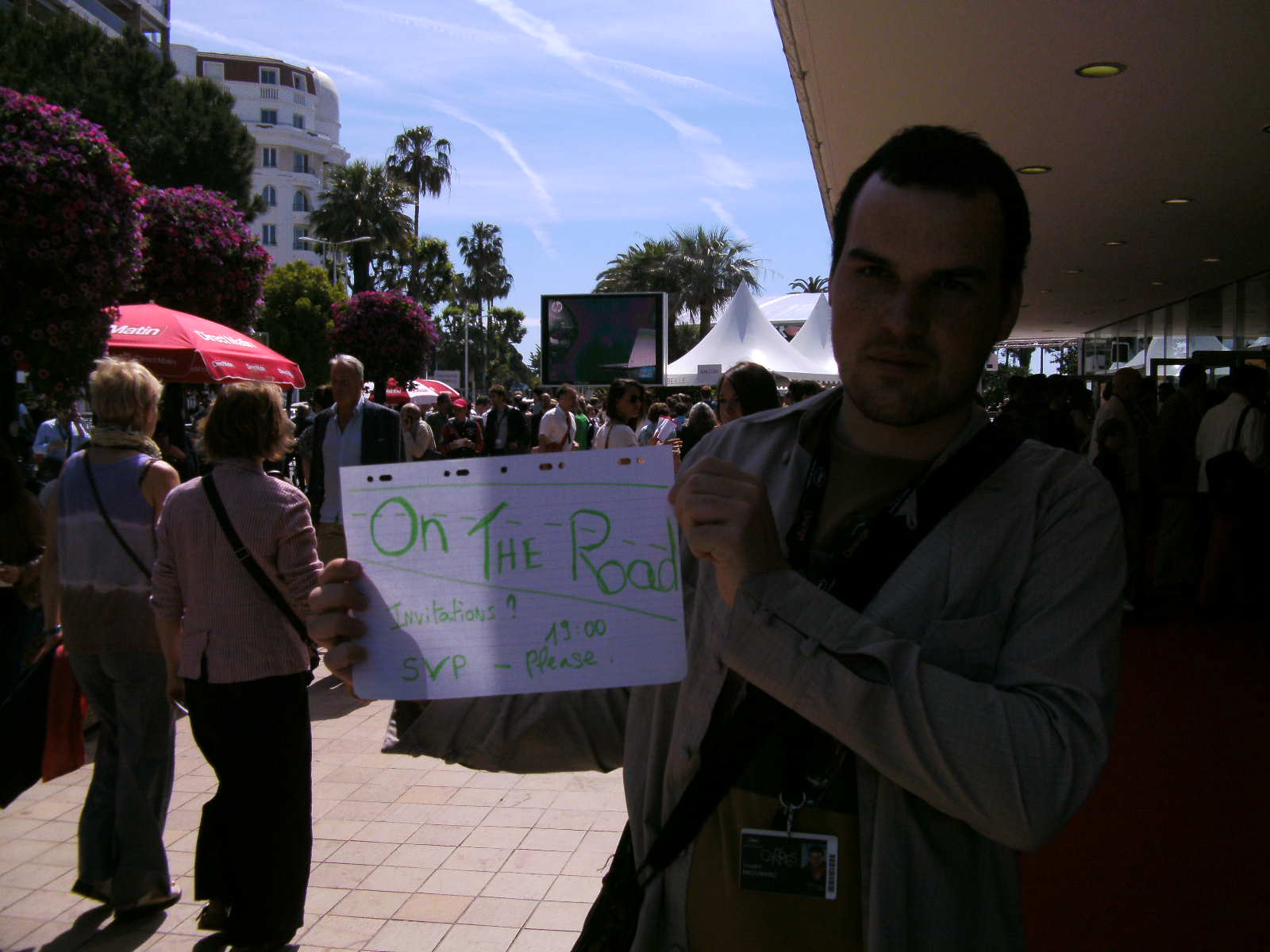
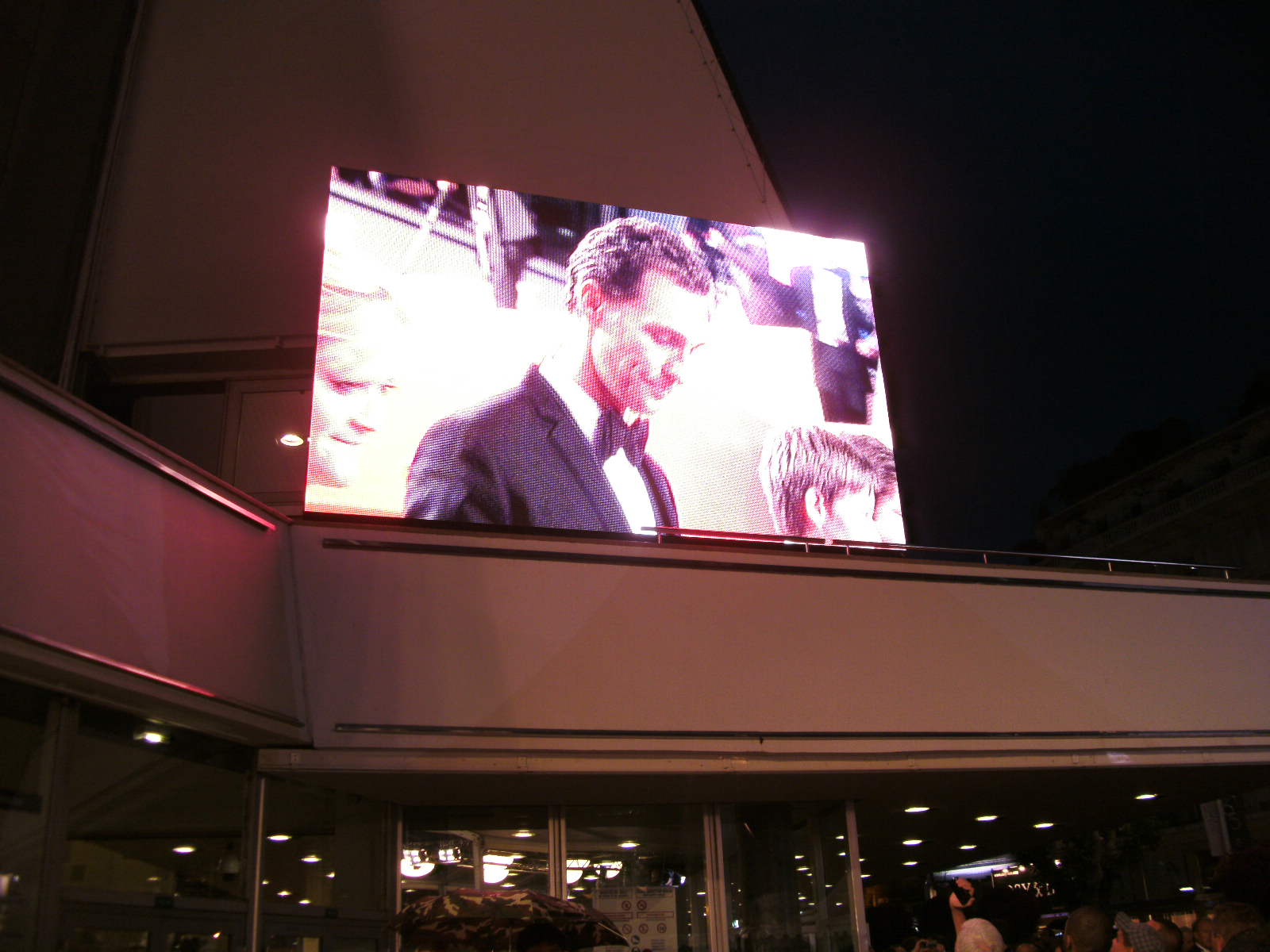
Where are the stars anyway? Up on bill boards or hiding in hotels. Maybe the key is to be a star yourself…get yourself somehow onto one of these bill boards even…but how do you do that?

You could simulate the process..

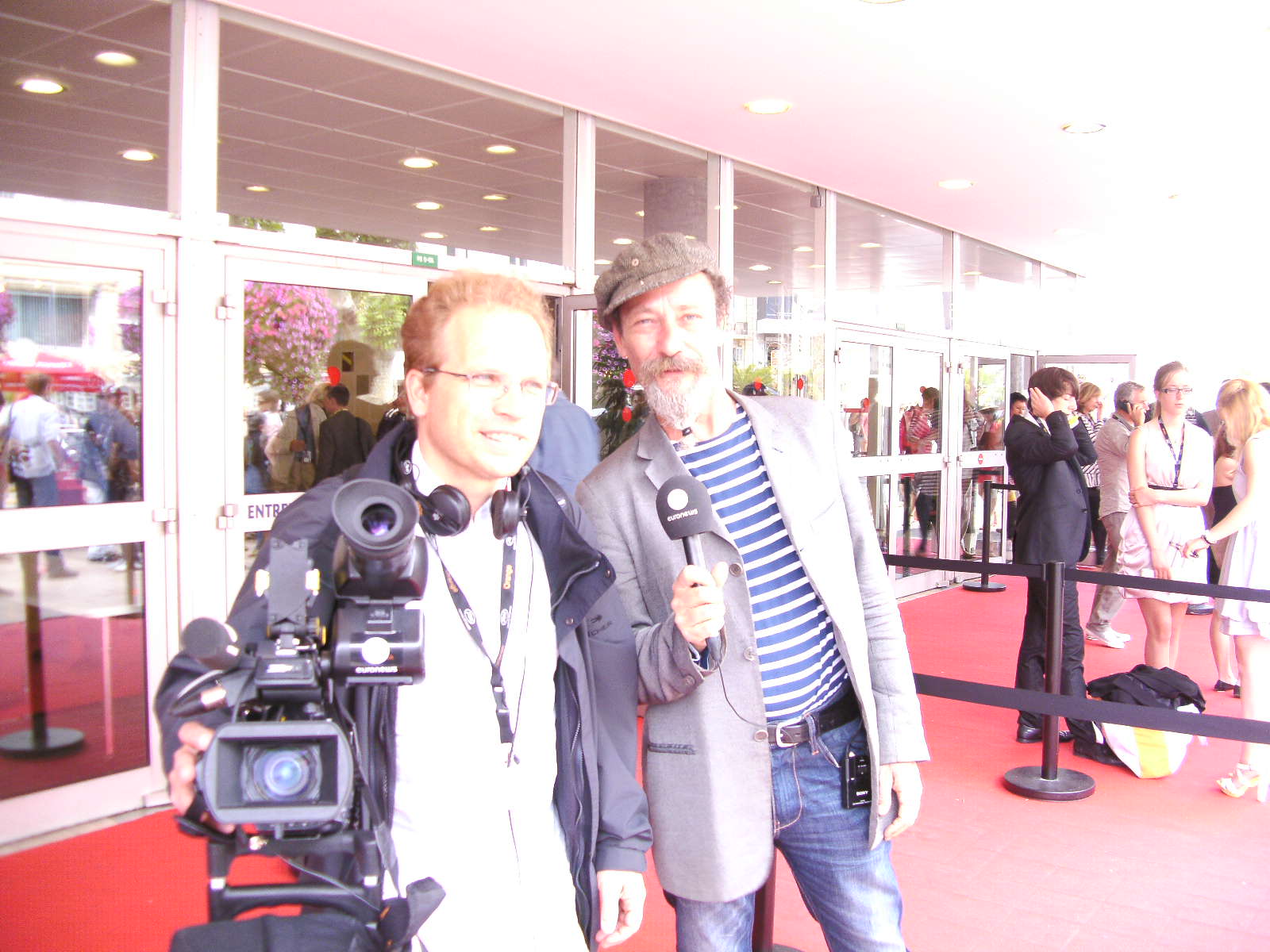
Or take a leaf out of the books of others, mix in with the media..

Wait, maybe you don’t look the part. Do you need a special pair of shoes, a hat even?

At these prices, forget it. But you know how to climb all over the competition, get head and shoulders above the crowd.

But what are you looking for anyway, or at, what do you hope to see?

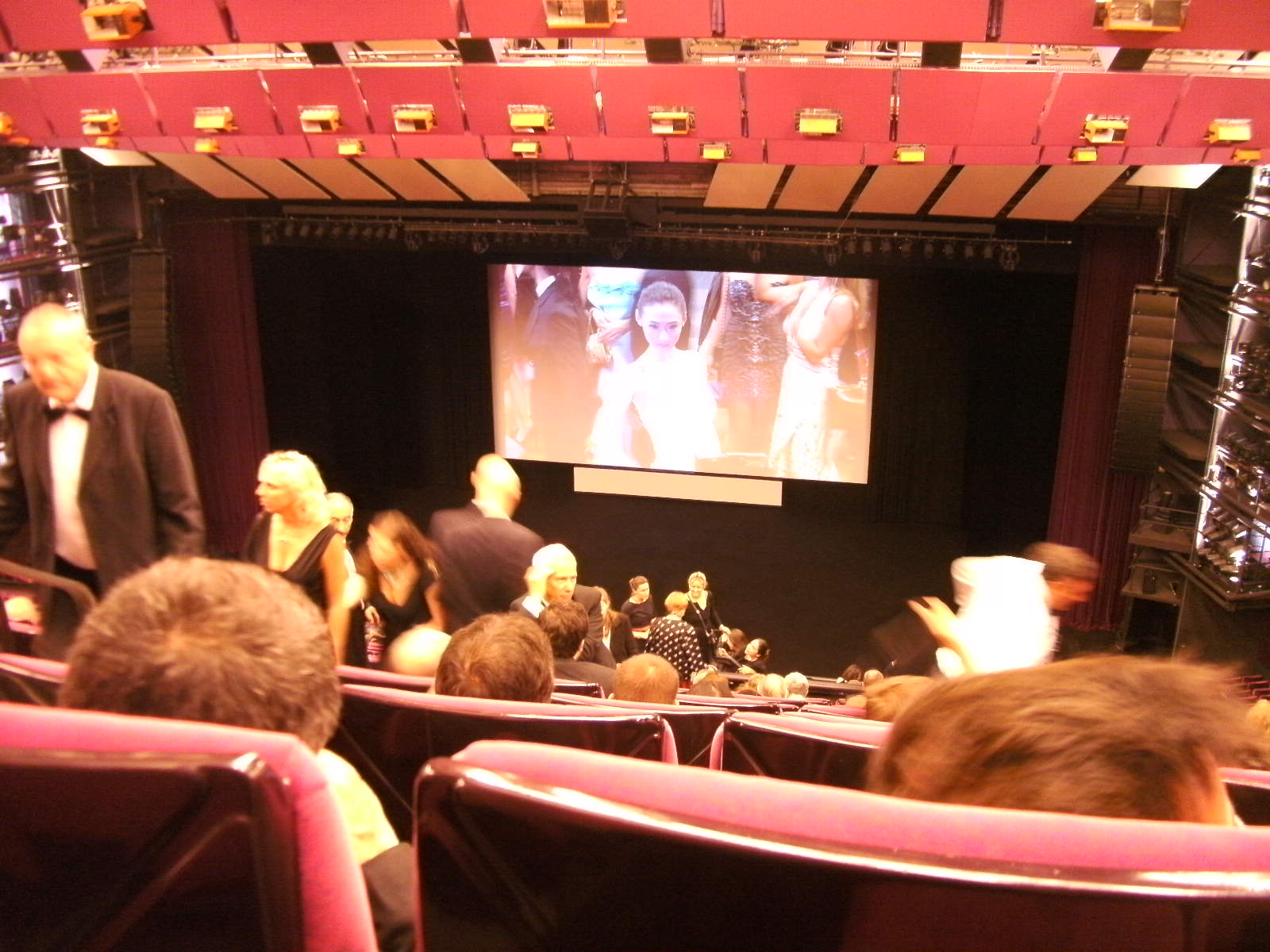
Is cinema just another empty business?

Or is that all just a bit too serious.
What to do? You could dress up, give someone a laugh, at least..


Or get drunk…

…or find yourself an empty chair.

Stare at the scenery..


…yr mind all out to sea.


This site’s content is copyright. All Rights reserved.