“Was Life Simpler Back Then?” Vol. 3. Brittle realities-1.

As 1979 progressed, I kept producing my ten minutes long film every Monday, while RTHK’s new deputy director, Stuart W., was planning a new programme he wanted us all eventually to make for him at RTHK, a one hour weekly magazine, Here and Now, which would go to air in September.

One week I was led by a news report involving my recent past down to some warehouses on the western wharves, the godowns as they’re called, where boatloads of Vietnamese war refugees from South Vietnam arrived one after another. The arrivals were housed in pretty dire circumstances, and you smelt the distress immediately you walked onto the wharf.
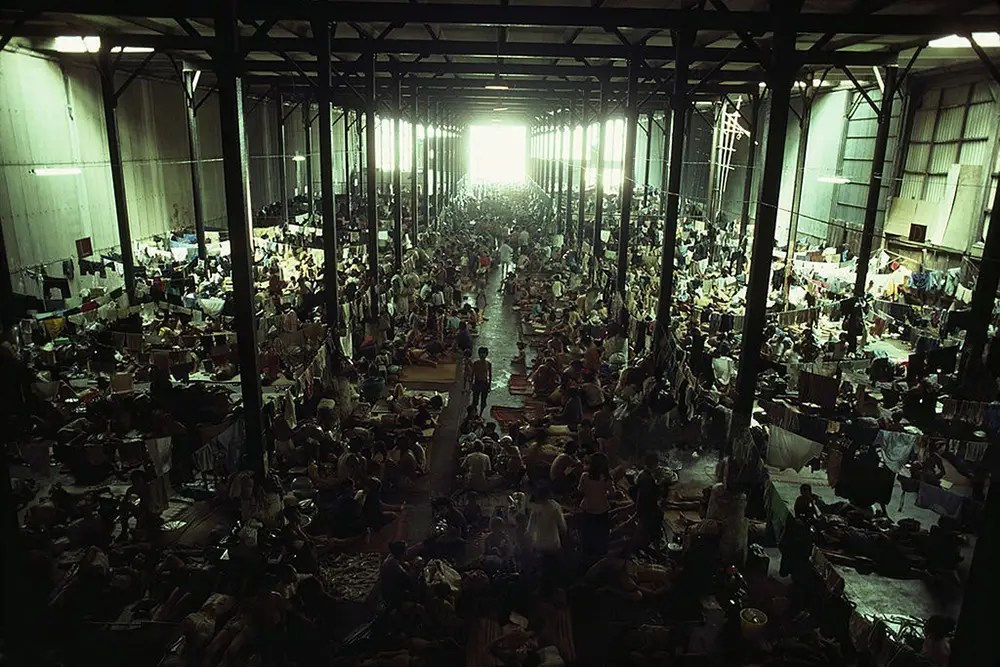
Boats would come into harbour by themselves or be towed or ushered there by British patrol boats, where they would tie up to begin the process overseen by representatives of the United Nations High Commissioner for Refugees (UNHCR) who would deal case by case of their plight as being “refugees” from post-war-torn South Vietnam, each hoping the UNHCR office in Hong Kong would resettle them in a third country.

Getting from where they were into Hong Kong was hard, waiting for resettlement often harder. When boats arrived in the British Colony few local people were understanding. Many Hong Kongers thought most of these boats did not come across the South China Sea from Vietnam, but were refugee-scammers who after entering China by land then somehow found a boat to get across the water from China to Hong Kong. Some in Hong Kong thought some arrivals might even be Chinese mainlanders who wanted to get into Hong Kong posing by posing as Vietnamese.

Deep background to this is the 99 year 1898 signed ‘unequal’ treaty signed between Britain and Qing China, leasing mainland Chinese territory to the British, who had already acquired the island of Hong Kong ‘in perpetuity’ from the Qing empire in 1842 after the Chinese lost the First Opium War. Britain said it needed a land ring of protection for the island, so leased some of southern China’s land to the north of Hong Kong Island.

The treaty lasting 99 years was an insult mainland Chinese would never forget. Forced on China in an age of extreme duress when China was a weakened nation facing internal troubles and watching foreigners set up ‘concessions’ on Chinese soil.

China wanted to end British occupation of Hong Kong in 1997, an expiry date that was non-negotiable.

So there I was at a steaming godown in July ..ToBeContinued..

Beginnings

In the summer of 1981, my first trip to Greece, one late hot July evening, I wandered up the road from my Plaka hotel to the Acropolis, a young filmmaker on holiday, a working resident from Hong Kong visiting Europe.

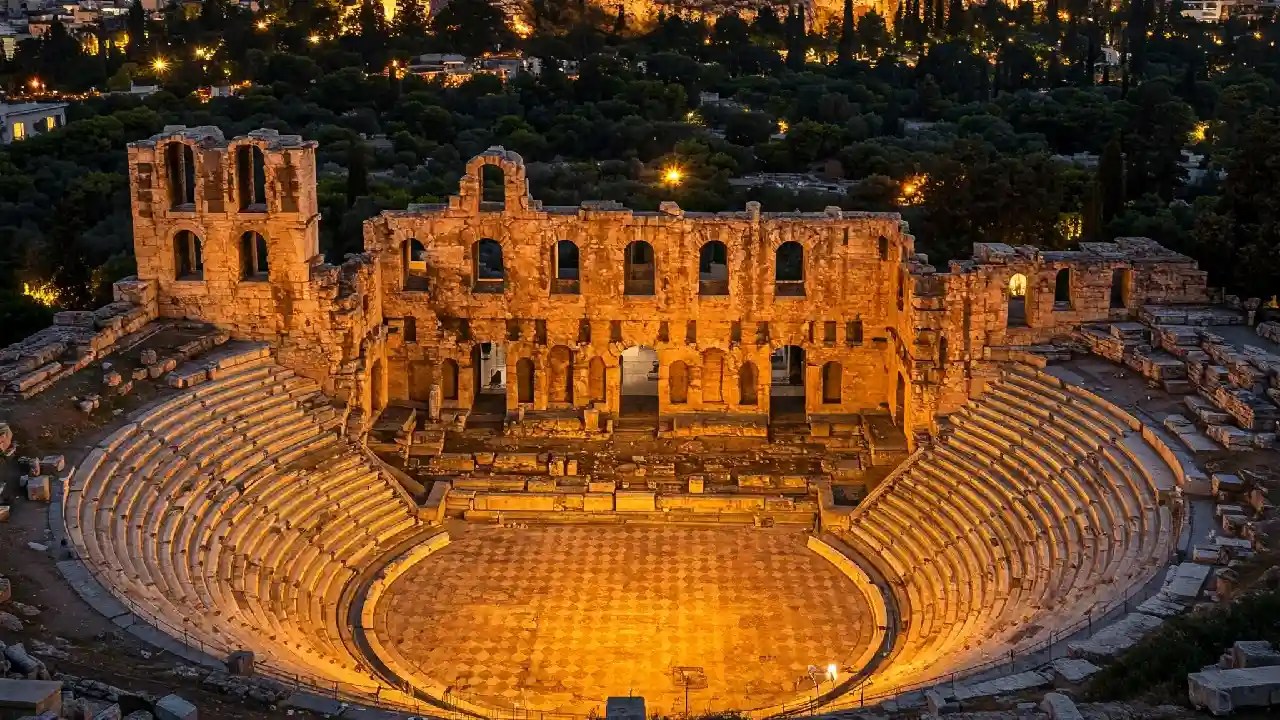
As darkness gathered I sat on a perimeter wall and took in the summer dusk scenery all around. Facing the seaward south I stared down from my spot at the lit up Odeon of Herodes Atticus theatre way down below me. A rehearsal was going on. After watching for a short while I walked back to the entrance road, took another path the other way, hiking down the hill to find out what it was I had just seen.

A poster outside the Odeon announced that the Athens Summer Festival was showing Aristophanes’ The Acharnians. Had I seen a play by Aristophanes before? No.

I returned to my hotel, and the next day found a ticket seller in Athens. I bought a seat for the play – prices of the day ranging from $1.20 to $6. I bought a Penguin translation of the play in a bookshop and read it, and certainly no wiser, set off the following night to see the performance.

The Acharnians was first performed in 426 BC. A strident anti-war play it is credited as the oldest staging of a western threatrical (Greek) comedy. I didn’t know what to expect because the Penguin version, translated into English, did not make it clear. Still, I had seen the rehearsal. I had seen something intriguing. The play would do the rest.

The Odeon theatre is an extraordinary space but on a hot July summer’s night it is other-worldly, the night air made translucent by light alive with what looked like tiny floating tippy tips of flowers, rising in the lit-up warm evening air all throughout the amphitheatre.

In jeans, t-shirt and sandals, surrounded by Greeks in evening dress I was an outsider but nobody cared about me. They were there to see a play, an important play in the ancient Greek canon.

What truly resonates with me most now forty plus years later, is how an ancient play, interpreted, performed and directed as it was, was so relevant to me and that 1981 audience. I spoke no Greek yet the production literally lifted me off my seat. This was not a stilted ancient classic, the sort of production I remembered too well from university productions. The Penguin translation was swept from my mind.

Dicæopolis, a native of Acharnæ, and an ex-soldier, returns utterly disillusioned and deeply angered by the Persian wars, heartsick at the misery and stupidity of conflict. Not shy in making his anti-war views known he railed against his fellow citizens chastising them with lewd gestures while a chorus of indignant citizens in white masks, odd hats and fantastic sewn quilt-like costumes, rushed from one side of the stage to the other, all this happening in a cacophony of startling music and sound effects, the chorus remonstrating and arguing with Dicæopolis and each other. The audience was in stitches. I didn’t understand a word, yet understood everything.

As a writer it’s hard to communicate the effect this experience has had on me from that hot July Athenian summer’s night onward. The Archarnians is the western world’s most ancient staged comedy, its performance having Greeks no doubt in ancient times, almost rolling in aisles as Greeks were doing around me. 

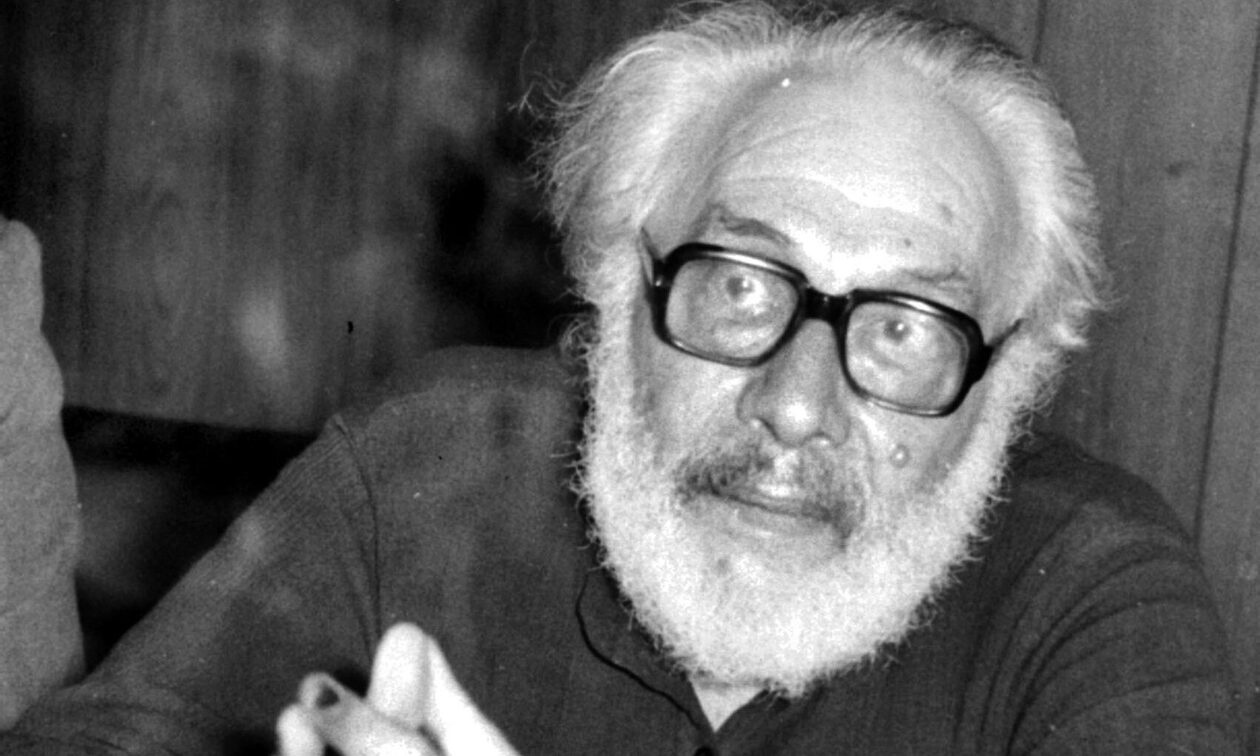
When the performance ended, the revered director Karolos Koun was brought on stage to receive a rousing applause. I sat stunned by what I had seen. It had transcended any theatrical piece I had been to see by multiples I can’t calculate even today. I felt the meaning of theatre not only the ancient Greek idea of ‘spectacle’ had been made clear to me, with meaning in my writing perhaps beginning that night as well.

Karolos Koun

It’s enough to be in Paris

BILD2186


I went to Paris for my birthday (had to say it at least once). Found a wonderful hotel, with the sort of market just two minutes away you can only find in France. Combination of food on sale and items and atmosphere. Checked the book in Shakespeare and Co. Have a look, too – Uncorrected Proof, under A for Alba.


BILD2132

BILD2070
BILD2080

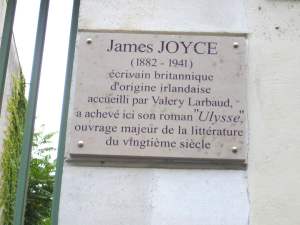
Walked the streets. Passed through, open-mouthed, the commercial alleys of the left bank. Should manic tourism do this to such a brilliant part of the city? Up and away through Montparnasse, by the Pantheon and back down by Joyce’s home (one of 13 while he was in Paris).* I  just found the address without any idea where it was, wasn’t even thinking of him. Now I’m asking myself what are the chances of chancing on it in a city the size of Paris.


BILD2123

Not one for tourist plaques or gravestones but this is worth lingering by.


BILD2177

Really didn’t do all that much in two days –  didn’t lunch or dinner at expensive restaurants, didn’t even tea or coffee in les deux magots. Just absorbed the sounds and sights from train to train. It’s enough to be in Paris.


BILD2159BILD2113
BILD2116

* As the New York Times tells us, it was Joyce’s “prettiest place…Valery Larbaud’s apartment in a kind of mews at 73 Rue Cardinal Lemoine, on the Contrescarpe behind the Pantheon and with curving view of Paris.”