“Was Life Simpler Back Then?” Vol. 1. The Sino-Vietnamese Border Impasse 1978

In the summer of 1978 I went to Tungshing and Pingshang on the border between China and Vietnam. I was the cine-cameraman for an Iranian husband and wife team for whom I was working in my first real job, running a state of the art film studio based in Hong Kong. I shot with an Eclair ACL using 16mm film stock, edited the film on a six plate Steenbeck and mixed sound on three Sondor recorders from the original sound my boss’s wife, Noushi, recorded on a Nagra reel to reel recorder. In August 1977 I had been given the chance to work in what seems today to be a far simpler media world. The Shah of Iran was still alive and Safa Haeri, a journalist, whose upbringing in France included schooling, was running one of the Shah’s network of world wide news bureaus. NIRT’s office in Hong Kong was the second smallest of these bureaus, yet became the second highest in terms of output.

In late February 1977 I had begun my film school studies at Curtin University, working under the tutoring of a theatre and then-aspiring film director, Steve Jodrell. I had just finished a three year English Literature degree at the University of Western Australia, a double major in literature Americans call it. I went straight on to a second degree, film. This is when my first career began. In my first year I concentrated on film and video production only, no academic subjects, doing only first and second year units in practical and video making. Five months later in August, I received a call saying there was a job going based in Hong Kong making films if I wanted it. I had a two days to decide.

I had just finished a twenty minute film “Lounge Bar” which I wrote, directed and produced. I was liking what I was doing enormously. 1977 was a good time to be in film in Australia. I was learning so much every day, getting to grips with the practical business of being a filmmaker. Yet this surreal offer to suddenly go to Hong Kong loomed large in my mind. What to do?

I went. I left the course, first landing in Kuala Lumpur to meet my new boss and his wife, Noushi. We flew to Thailand then drove to a point on the eastern Thai seaboard.

I became a documentary filmmaker on that day. We arrived just before a boatload of Vietnamese refugees motored in from the South China Sea, coming into the Gulf of Thailand to land at a place on the coast south east of Bangkok. On a very hot summer’s afternoon, raucous cheering and shouting all around me from other Vietnamese on other boats who had done the same thing, sweat running all over me, I clambered over beached and moored boats trying hard not to mess up my recording of the event. It was terrifying, my first real job at doing this kind of work and in the middle of hottest part of a Thai summer. With so much sweat in my eyes, I had trouble seeing what was I filming let alone focusing. Yet somehow I got it okay.

Flying to Hong Kong it was high summer typhoon season, and after processing the stock and preparing the footage for sending to Teheran for broadcast, I settled into adjusting to a completely new culture, city and lifestyle. I had never seen so many people in any street in my life as I did in Hong Kong that summer. The production money for the year had gone, so I sat around a little nervously wanting to make films, doing the occasional short Hong Kong film with Noushi.

I learned I had won the Young Filmmaker of the Year Award for 1977 at Curtin University and it gave me something to mull over, especially as I was so inactive in my new position. But with the new year and a renewed budget we began travelling again to make more films, going first into pre-modernised China, then to the Philippines, Japan, Bangladesh. In August 1978 we were invited to the Sino Vietnamese border to record a refugee impasse.

Chinese authorities took us to Tungshing and in the rain I filmed Vietnamese of Chinese origin forced out by the Vietnamese authorities. As refugees now these people stood in the rain plastic sheets over them waiting to be processed for entry into China. From Tungshing we went to Pingshang where more Vietnamese of Chinese origin were being processed by other mainland Chinese authorities. We filmed the interrogation of a man the Chinese said was a Vietnamese spy they had captured. We were the only film crew allowed in.

After the trip and the film was processed and cut in Hong Kong and sent to Teheran, I was asked by the South China Morning Post to write up what I saw. I had never been a newspaper reporter. I had no experience of writing a full page feature article. Write what you saw I was told. I did.

The following is my article and except for the cutting by a sub editor of my speculative conclusion at the end this is what I wrote, word for word, no changes, with my conclusion only removed by the SCMP – why? I’ll come back to that.

{Published 6 August, 1978 – under a title the newspaper chose, I wrote the piece in my birth name. I write now in my mother’s maiden surname of Collins – as Lew Collins.}

What was so difficult about my conclusion that it had to be cut? I speculated. I had asked myself why China was doing this and came to the conclusion they were:

  • 1) helping Chinese in need
  • 2) publishing to the world the harm the Vietnamese were doing
  • 3) claiming the moral high ground in order to take punitive retaliatory action against Vietnam which China saw as a legitimate action to take.

My speculative conclusion (3) was always going to be cut. I should have woven it into my article, but even if I had, it would have been cut. Writing that China intended to punish Vietnam for its actions sometime in the future was a bridge too far in journalism, certainly at my level back then. Though I was right. In January 1979, Deng Tsiao Ping (Deng Xiaoping) ordered an invasion of Vietnam, saying it was to punish Vietnam for their actions.

My role in the National Iranian Radio and Television office ended abruptly. In December 1978 I was told by Safa events in Iran meant closure of all the NIRT offices around the world were imminent. The Iranian Revolution under Khomeini swept the Shah from power. January 1979 Safa and Noushi returned to Teheran. From there they went to live in Paris.

Do we want to see Democracy die in America?

My current novel’s main theme was always Democracy from the earliest days I began to write it, but several years ago, deep in the writing I didn’t foresee how important Democracy would become in this era.

I decided early, writing ‘Out of Competition’ set in a film festival, that it would be comic because while I believed all processes of democracy could be better promoted everywhere I never foresaw democracy facing a serious existential threat.

Democracy has always been a major part of my life. My father was in the second world war so democracy always figured in my consciousness, and while I have never experienced totalitarianism I understood it wasn’t the way of the west, or a real threat, until now.

I never thought not even after the murder of John F. Kennedy that a U.S. president, however he got into power would try to destroy democracy in order to cling to power.

Democracy has never been perfect. It’s been manipulated, not just in the United States but its demise in the US, UK, France, Canada, Australia, or any western European nation is unthinkable. Democracy remains fundamental, especially in America.

The world is watching. Everything American was once received well. Cultural power is real. John F. Kennedy understood this.

These times need courage, unity, political skill.

One Writer’s Journey

I grew up watching Superman, The Cisco Kid, O.S.S., hearing war stories, chasing down moth-eaten army uniforms back when milk arrived in a horse and cart marvelling at the colour style of actual coca leaf sugarpop in Coke bottles blinking at motor cycles Dick Van Dyke falling over a couch cowboy films shot in daylight B/W then coloured nights of my father’s home-grown vegetables, born with words in my mouth – ‘gimme-that’ , ‘how-dare-you’,  ‘what-the-fuck’ –

– ideas as fixed and eternal as the motives for every war, growing into Kidnapped bicycles desert boots Seventy Seven Sunset Strip Disney Land Rear Window Psycho Lawrence of Arabia, the annual anxiety of packing the car at holiday time, each and every moment stilled in memory of the forever mysterious parodies of life or art even if parodies weren’t even an option back then. I knew the Beatles before the Monkees, Bogart before Belmondo, but I can’t say I recall the idea behind the Summer of ’42 before it was a film conjured into a Mad magazine parody or whether it co-existed in the smash crash and kill dinky toy mind of George W. Bush. I believe I’m not alone, even growing more bewildered year on year by the incoherence of images and texts surrounding me from birth arresting my natural river environment in the far southern climes the commercial and cultural ink-blotting over my childhood my natural world a parody of some story my mother told me, those seconds on a baked sidewalk hearing JFK was dead, pink socks on the rock ‘n rollers, moments things events sounds sent to make life even more dangerous curious frightening, a direct result of the industrial military complex, Elvis Presley Chuck Berry even, the jack shit political influences beaten into the worrying shame of death in the world, prejudice, organically connected and woven into a general valueness held dear by so many years on from that day when morality was gunned down in broad daylight.

What is Facebook really up to?

Initially this post was about Facebook dismantling its groups. The issue then: Many people spent an enormous amount of time developing them and asking people to join. Because of widespread concern and protest by Facebook members FB resolved this and groups could keep their members. At the time I wrote: “Facebook is fast acting like a corporation acting in concert with other corporate or shady political interests – not a borrowed idea from a dorm at Harvard existing only because a lot of people use it. If Facebook is about anything it is about each and every one of its members – Facebook is nothing without the people who bother to use its pages.”

Now Facebook wants, it seems, to use stored data of its members and make it public. This has been true for sometime of course. FB data-mines its users. But is the ante being upped with new moves? Does this breach the privacy terms implied in the original terms of use?

Facebookers should be informed of what this new FB policy is and what it means and then they should be asked whether they agree to the use of data that was once ‘private’ between FB members.

Facebook should reflect the members that make it up. Facebookers are not a resource to be exploited for profit in this way by Facebook’s founders (this was not the original ‘pitch’ or purpose of Facebook). If use of private data does happen, at the very least it should be only with prior full agreement of Facebook users.

If Facebook wants to charge for the service then they can and people can opt out of the FB site if they so wish – taking their data with them, not leaving it behind for commercial use.

If I buy a house I get the house and grounds, not the furniture and fittings inside and outside, unless it is in the contract of sale. Facebook do not own the data, (though I am sure their lawyers would say they do). They have already profited hugely from having such a huge number of users, but they don’t own Facebookers or their private and personal data.

Wikileaks and Politicians

Why are our elected governments so secretive with us? We employ them to act, we hope, in our interests and what do they do? They have so little respect for our intelligence, or our interests, that by default, as a matter of course, as if it is all entirely natural and justified, they keep the truth from us. Why, because we are not able to  handle the business of secrets as they can? Because we are stupid? Yes, we are stupid for voting for any of them.

When someone starts telling us what these self-interested ciphers are actually saying and thinking (they are self-interested and they are ciphers, most of them)  and we see what a bunch of jumpy, wimpy, vain, paranoid ciphers these politicians really are, they up and throw a fit only control freak cowards will throw when unmasked.

I never thought too much about Wikileaks until these last two days, or about this guy Julian Assange. Whatever you think of him, however you’ve allowed yourself to be swayed on his character and his actions by Big Media, he has done us a huge service. Seek out the facts of his case, the charges against him. Don’t let governments fool you on this – they are not interested in the morals of Julian Assange, only that the secrets they are keeping from you are not broadcast.

Small versus Big, and small must win

ElephantEars Press, my publisher in Hackney, a small, new and independent publishing press dedicated to bringing you good literature, fiction and non-fiction, at fair prices, is now offering FREE post and packing to ANYWHERE in the world.

These holidays ElephantEars Press wants to give readers a real and true deal.

Lately, I have been following Amazon’s attempt to monopolize Print On Demand, to force independent publishers to accept Amazon on terms designed to crush the life out of the independent publishers and booksellers. It’s a disgrace – Amazon only got where it is because readers like you and me helped them become a force. We supported them in the early days because we wanted diversity, because we believed they were for us. Not anymore they aint!

Amazon wants to monopolize bookselling and print on demand publishing. They want to to kill off publishing independents and consumer independence. Don’t let them. Buy from small independent presses like ElephantEars. Support small and ignore the big homogenizers of creative output.

For this holiday, for your gifts – Buy from the small dedicated publishers like ElephantEars Press determined to bring to you reading quality for your pound, dollar, and euro

SUPPORT SMALL against BIG.

Where we are

Linda Nylind
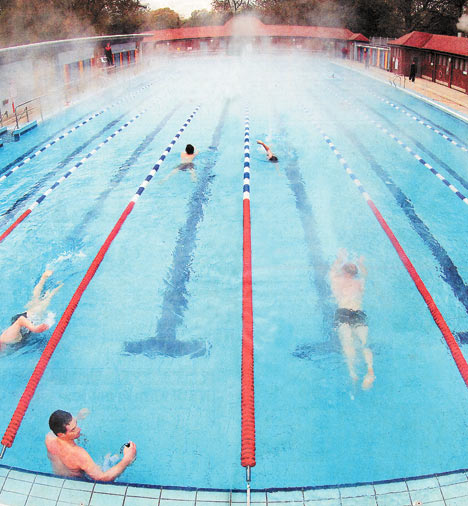
London Fields outdoor Pool - The Guardian. Photo by Linda Nylind

I was doing my 1500 metres in the pool yesterday, lap, swim, turn, lap, roll, stretch, concentrating on my breathing, thinking of what novelist, inventor, academic, Eric Willmot said to me on the phone the other day, talking of his recently written essay on human and planetary survival. I had read the pages he sent me, describing our progress of us all, the twenty third species of human on this planet..the story aint all pretty. Well, I think we know that, but where do we go from here? We seem to be running out of time. Eric is convinced that the global warming we are experiencing is a prelude to another ice age.

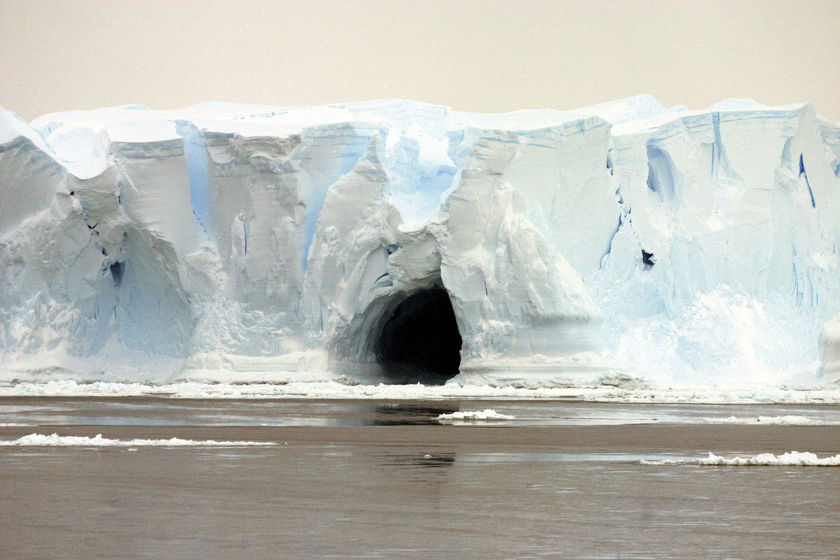
Ice with a black hole - see that's the proof!
Ice Age (with a black hole in it as well!)

Our nearest refuge, that is, nearest to our earthly conditions in toto, is Venus, but that planet is a green house gaseous inferno. So that’s out. Another solar system like our little ‘Goldilocks zone’ around the sun, surrounds the star Gliese 581, but that is twenty light years away, beyond our capacity to reach in all our lifetimes. Without some sort of quantum leap in our capacity to travel, our interplanetary air bus is going to run out of gas, if not time.

And even if we get there Gliese 581 may not be quite for us. It hasn’t sent us any kind of signal, let alone a welcome email they want us over for any holiday coming. We better find out then. We could send the executives of Fanny Mae and Freddi Mac and a few bank presidents, the whole of Wall Street in fact, on ahead to check it out, investigate the real estate and other markets and set up for us. In the meantime, we’ll sit it out and wait down here, glued to the telly for messages, filling our neighbourhoods (and the silent universe) with the sounds of humanity, eating, drinking and getting inordinately merry, all those goings on, as we use up the planet we’re whizzing around on.

Eric has some ideas on what we can and can’t do. Are we facing extinction? Are we staring into the abyss, not so blissfully un-a-ware as impotently more-than-scared? Rabbits in the headlights of some rogue comet or asteroid heading relentlessly our way? What should we do? Recycle our rubbish, turn off our appliances, walk to work, invest in nuclear reactors using Thorium (pronounced /ˈθɔːriəm/ wikipedia tells me).

Well, I think the first thing we should do is get up to speed on the actual conditions, educate ourselves. Get to know our options (even if the picture aint pretty). We’ve faced threats before – Hitler, the Cold War, the nuclear holcaust. Let’s face this one, form neighbourhood groups to discuss intra and interplanetary survival.

Well..okay…let’s do nothing then..just sit and wait and watch it happen. Let’s climb into the warming pot we call this world and boil slowly and then when the fuel burns out, slowly descend down into that big freeze.