“Was Life Simpler Back Then?” Vol. 2. Opening arguments.

Novelists don’t write alone. The unconscious does the heavy lifting. While conscious, many writers can be like stenographers with a flair for editing.

What we say about ourselves consciously in any life writing or self histories has always to be viewed sceptically. An insight that seemed to me profound hearing it many, many years ago: it’s not what we put in diaries that counts. It’s what we leave out.

Does the unsaid in life writing count for more than the said? Some people are remarkably honest about themselves, but would I consciously leave out things in any life writing? Yes.

Autobiography is too self-aggrandizing. Fiction is more fun to do. Fiction frees up writers to find and tell truths he/she wouldn’t admit to when writing about themselves.

January 1979, while Safa, my best boss ever, and Noushi were packing to leave Hong Kong, I was busy writing letters to find new work. I had received one offer from NBC’s American office manager in their Hong Kong office. He had seen my work. NBC meant to me prestige, but assembling footage shot by someone else seemed a backward step.

I received a reply to my letter to Radio Television Hong Kong and went out to meet Stuart W., a former UK Nationwide daily editor. He heard me out and liked my experience. I got the job and became the director/producer of a Monday night ten minute aired film for a program called, Here in Hong Kong.

I was over the moon. After meeting an affable freedom-giving executive producer, Chris H., I felt at home. The choice of a film each week was mine, well mostly.

I soon found subjects, some better than others. Most of my early films were reasonable, some quite good. One on an opaque (at least to me) Chinese festival was absolutely awful. Making a ten-minute film every week was a treadmill but I learnt very fast, that as researcher, writer, director and producer of my own program I had little room for error. Choice of subject was crucial. Monday and Tuesday initially I would be setting up a film, Wednesday, Thursday I was out filming and if I were lucky Friday after film stock processing I would begin editing the film. Most Saturdays I was editing, often Sunday, me in a tiny cubicle with a film editor, then Monday morning, I would take the film for telecine transfer for the Monday night program at 6.45pm. It was never easy.

To put this in an international television producing perspective, BBC’s Newsnight, Panorama or even Nationwide would assign a researcher and a producer to a subject for three months. Late in the process a director and reporter would come on board. Meanwhile, I did everything alone all inside a week. BBC’s programs were longer, maybe a full hour, which I later did as well, but I never had a luxury of three months – maximum, three weeks.

Ten minutes a week when you are everybody – producer, writer, director, reporter, interviewer can be very hard. Of course, the key is to find a subject in a single location and do it all in one day. I wasn’t so good at that. And I wasn’t a trained reporter. I made films and to do that for me who prized the visuals above all else it meant multiple locations.

Occasionally though I had no say in what I was doing. One such project involved Chinese refugees pouring across the border. The Hong Kong Government wanted to tell the world what was happening. Stuart wrote the text to my film. I was sent with my film crew to meet a Colonel at a British army barracks near the Chinese border. During the afternoon we filmed general parade ground organisation, then after dinner with the Gurkha soldiers under command of a very affable Colonel of the regiment, we drove out to the border.

My crew and I had to document this all at night – if we found any refugees climbing the wire fence into Hong Kong New Territories, the land that adjoined China. We had one go at this. We sat nervously in the pitch-black night in a gully yards from the fence, where the soldiers said was a major crossing point, watching the motionless Gurkha with his nightscope. Except for the Colonel snoring, we had heard nothing. He was woken when a spotter began raising finger after finger. A few seconds afterwards we were told to get going!

My film crew was brilliant, camera shots sharp as portable lights lit up the night. We filmed of a terrified group of young Chinese, sixteen to mid-twenties, in traditional dark-blue Mao era outfits after having just climbed the wire.

The images of their startled faces that night are etched into my brain. One or two apparently held the fence to an iron pole as the others climbed silently up and down. The fence was at least twenty feet high. Stuart W. wrote the piece and Visnews sent the night’s film of ‘the capture’ around the world.

It was my second international news coup.

One Writer’s Journey

I grew up watching Superman, The Cisco Kid, O.S.S., hearing war stories, chasing down moth-eaten army uniforms back when milk arrived in a horse and cart marvelling at the colour style of actual coca leaf sugarpop in Coke bottles blinking at motor cycles Dick Van Dyke falling over a couch cowboy films shot in daylight B/W then coloured nights of my father’s home-grown vegetables, born with words in my mouth – ‘gimme-that’ , ‘how-dare-you’,  ‘what-the-fuck’ –

– ideas as fixed and eternal as the motives for every war, growing into Kidnapped bicycles desert boots Seventy Seven Sunset Strip Disney Land Rear Window Psycho Lawrence of Arabia, the annual anxiety of packing the car at holiday time, each and every moment stilled in memory of the forever mysterious parodies of life or art even if parodies weren’t even an option back then. I knew the Beatles before the Monkees, Bogart before Belmondo, but I can’t say I recall the idea behind the Summer of ’42 before it was a film conjured into a Mad magazine parody or whether it co-existed in the smash crash and kill dinky toy mind of George W. Bush. I believe I’m not alone, even growing more bewildered year on year by the incoherence of images and texts surrounding me from birth arresting my natural river environment in the far southern climes the commercial and cultural ink-blotting over my childhood my natural world a parody of some story my mother told me, those seconds on a baked sidewalk hearing JFK was dead, pink socks on the rock ‘n rollers, moments things events sounds sent to make life even more dangerous curious frightening, a direct result of the industrial military complex, Elvis Presley Chuck Berry even, the jack shit political influences beaten into the worrying shame of death in the world, prejudice, organically connected and woven into a general valueness held dear by so many years on from that day when morality was gunned down in broad daylight.

Where we are

Linda Nylind
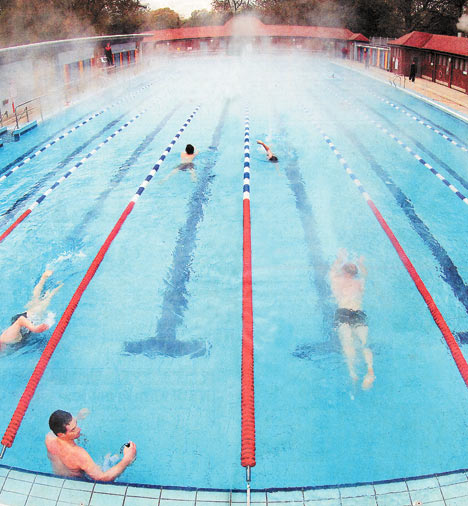
London Fields outdoor Pool - The Guardian. Photo by Linda Nylind

I was doing my 1500 metres in the pool yesterday, lap, swim, turn, lap, roll, stretch, concentrating on my breathing, thinking of what novelist, inventor, academic, Eric Willmot said to me on the phone the other day, talking of his recently written essay on human and planetary survival. I had read the pages he sent me, describing our progress of us all, the twenty third species of human on this planet..the story aint all pretty. Well, I think we know that, but where do we go from here? We seem to be running out of time. Eric is convinced that the global warming we are experiencing is a prelude to another ice age.

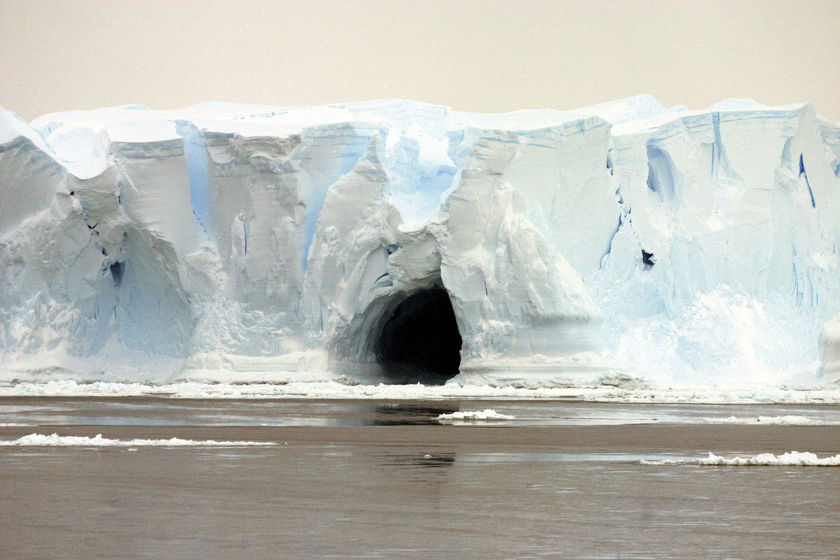
Ice with a black hole - see that's the proof!
Ice Age (with a black hole in it as well!)

Our nearest refuge, that is, nearest to our earthly conditions in toto, is Venus, but that planet is a green house gaseous inferno. So that’s out. Another solar system like our little ‘Goldilocks zone’ around the sun, surrounds the star Gliese 581, but that is twenty light years away, beyond our capacity to reach in all our lifetimes. Without some sort of quantum leap in our capacity to travel, our interplanetary air bus is going to run out of gas, if not time.

And even if we get there Gliese 581 may not be quite for us. It hasn’t sent us any kind of signal, let alone a welcome email they want us over for any holiday coming. We better find out then. We could send the executives of Fanny Mae and Freddi Mac and a few bank presidents, the whole of Wall Street in fact, on ahead to check it out, investigate the real estate and other markets and set up for us. In the meantime, we’ll sit it out and wait down here, glued to the telly for messages, filling our neighbourhoods (and the silent universe) with the sounds of humanity, eating, drinking and getting inordinately merry, all those goings on, as we use up the planet we’re whizzing around on.

Eric has some ideas on what we can and can’t do. Are we facing extinction? Are we staring into the abyss, not so blissfully un-a-ware as impotently more-than-scared? Rabbits in the headlights of some rogue comet or asteroid heading relentlessly our way? What should we do? Recycle our rubbish, turn off our appliances, walk to work, invest in nuclear reactors using Thorium (pronounced /ˈθɔːriəm/ wikipedia tells me).

Well, I think the first thing we should do is get up to speed on the actual conditions, educate ourselves. Get to know our options (even if the picture aint pretty). We’ve faced threats before – Hitler, the Cold War, the nuclear holcaust. Let’s face this one, form neighbourhood groups to discuss intra and interplanetary survival.

Well..okay…let’s do nothing then..just sit and wait and watch it happen. Let’s climb into the warming pot we call this world and boil slowly and then when the fuel burns out, slowly descend down into that big freeze.