“Was Life Simpler Back Then?” Vol. 1. The Sino-Vietnamese Border Impasse 1978

In the summer of 1978 I went to Tungshing and Pingshang on the border between China and Vietnam. I was the cine-cameraman for an Iranian husband and wife team for whom I was working in my first real job, running a state of the art film studio based in Hong Kong. I shot with an Eclair ACL using 16mm film stock, edited the film on a six plate Steenbeck and mixed sound on three Sondor recorders from the original sound my boss’s wife, Noushi, recorded on a Nagra reel to reel recorder. In August 1977 I had been given the chance to work in what seems today to be a far simpler media world. The Shah of Iran was still alive and Safa Haeri, a journalist, whose upbringing in France included schooling, was running one of the Shah’s network of world wide news bureaus. NIRT’s office in Hong Kong was the second smallest of these bureaus, yet became the second highest in terms of output.

In late February 1977 I had begun my film school studies at Curtin University, working under the tutoring of a theatre and then-aspiring film director, Steve Jodrell. I had just finished a three year English Literature degree at the University of Western Australia, a double major in literature Americans call it. I went straight on to a second degree, film. This is when my first career began. In my first year I concentrated on film and video production only, no academic subjects, doing only first and second year units in practical and video making. Five months later in August, I received a call saying there was a job going based in Hong Kong making films if I wanted it. I had a two days to decide.

I had just finished a twenty minute film “Lounge Bar” which I wrote, directed and produced. I was liking what I was doing enormously. 1977 was a good time to be in film in Australia. I was learning so much every day, getting to grips with the practical business of being a filmmaker. Yet this surreal offer to suddenly go to Hong Kong loomed large in my mind. What to do?

I went. I left the course, first landing in Kuala Lumpur to meet my new boss and his wife, Noushi. We flew to Thailand then drove to a point on the eastern Thai seaboard.

I became a documentary filmmaker on that day. We arrived just before a boatload of Vietnamese refugees motored in from the South China Sea, coming into the Gulf of Thailand to land at a place on the coast south east of Bangkok. On a very hot summer’s afternoon, raucous cheering and shouting all around me from other Vietnamese on other boats who had done the same thing, sweat running all over me, I clambered over beached and moored boats trying hard not to mess up my recording of the event. It was terrifying, my first real job at doing this kind of work and in the middle of hottest part of a Thai summer. With so much sweat in my eyes, I had trouble seeing what was I filming let alone focusing. Yet somehow I got it okay.

Flying to Hong Kong it was high summer typhoon season, and after processing the stock and preparing the footage for sending to Teheran for broadcast, I settled into adjusting to a completely new culture, city and lifestyle. I had never seen so many people in any street in my life as I did in Hong Kong that summer. The production money for the year had gone, so I sat around a little nervously wanting to make films, doing the occasional short Hong Kong film with Noushi.

I learned I had won the Young Filmmaker of the Year Award for 1977 at Curtin University and it gave me something to mull over, especially as I was so inactive in my new position. But with the new year and a renewed budget we began travelling again to make more films, going first into pre-modernised China, then to the Philippines, Japan, Bangladesh. In August 1978 we were invited to the Sino Vietnamese border to record a refugee impasse.

Chinese authorities took us to Tungshing and in the rain I filmed Vietnamese of Chinese origin forced out by the Vietnamese authorities. As refugees now these people stood in the rain plastic sheets over them waiting to be processed for entry into China. From Tungshing we went to Pingshang where more Vietnamese of Chinese origin were being processed by other mainland Chinese authorities. We filmed the interrogation of a man the Chinese said was a Vietnamese spy they had captured. We were the only film crew allowed in.

After the trip and the film was processed and cut in Hong Kong and sent to Teheran, I was asked by the South China Morning Post to write up what I saw. I had never been a newspaper reporter. I had no experience of writing a full page feature article. Write what you saw I was told. I did.

The following is my article and except for the cutting by a sub editor of my speculative conclusion at the end this is what I wrote, word for word, no changes, with my conclusion only removed by the SCMP – why? I’ll come back to that.

{Published 6 August, 1978 – under a title the newspaper chose, I wrote the piece in my birth name. I write now in my mother’s maiden surname of Collins – as Lew Collins.}

What was so difficult about my conclusion that it had to be cut? I speculated. I had asked myself why China was doing this and came to the conclusion they were:

  • 1) helping Chinese in need
  • 2) publishing to the world the harm the Vietnamese were doing
  • 3) claiming the moral high ground in order to take punitive retaliatory action against Vietnam which China saw as a legitimate action to take.

My speculative conclusion (3) was always going to be cut. I should have woven it into my article, but even if I had, it would have been cut. Writing that China intended to punish Vietnam for its actions sometime in the future was a bridge too far in journalism, certainly at my level back then. Though I was right. In January 1979, Deng Tsiao Ping (Deng Xiaoping) ordered an invasion of Vietnam, saying it was to punish Vietnam for their actions.

My role in the National Iranian Radio and Television office ended abruptly. In December 1978 I was told by Safa events in Iran meant closure of all the NIRT offices around the world were imminent. The Iranian Revolution under Khomeini swept the Shah from power. January 1979 Safa and Noushi returned to Teheran. From there they went to live in Paris.

Gene Hackman

The films featuring Gene Hackman are unique. From his life filled with experiences he had to overcome through to one of his best performances in Unforgiven, he quietly made acting history. His work on David Webb Peoples screenplay under Clint Eastwood’s direction, whose technique encouraged contributors to be how they saw fit to be, created a Hollywood “white page” screenplay legend, a rare production – a film screening as the writer intended it to be when he first wrote it.

Unforgiven was perfect for Gene nearing the end of his career, and it won him his second Oscar. If Joyce wrote a novel about him its title would be, “A Portrait of the Actor as a Working Professional”.

A Rainy Day in New York

From the moment in Annie Hall when he led Marshall McLuhan out from behind a film hoarding in a New York cinema I have been a huge fan of Woody Allen. He is America’s best writer director of ensemble urban comedies – truly a unique filmmaker.

Being a Film Critic (in Cannes)

http://www.guardian.co.uk/film/video/2009/may/22/cannes-film-festival


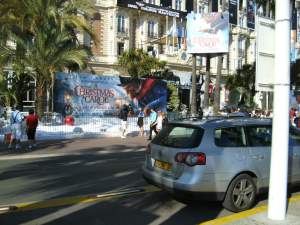
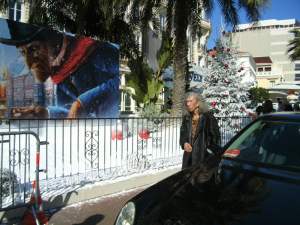
Watching the video of the Guardian’s group of UK film critics on their annual junket to Cannes, sitting around a half empty glass of blanche, un bicchiere di bianco, mezza affogata nell’alcol doing the Guardian’s wrap up video Cannes film festival roundup: ‘A year of Prophets and Basterds, scandals and stars’, watching them get it so completely and utterly and horribly wrong on what and who would win, with at least one expert exhibiting an ‘Oh oh I’m gedding a liddle tipthsy’ half giggle, was one of the best laughs at Cannes 2009 in a year that seemed notably spare of the real thing up on screen.

The film hardheads guarding our take and hold on the fourth dimensional art form, displayed zero-none insight into the Cannes Festival Jury’s collective mind or political process of selection. It had me wondering if they ever got out of the UK film village at all over the two weeks. They weren’t idiots, don’t get me wrong. Intelligent, personable, likable almost – they just didn’t know anymore than you or me, their comments about as good as yours or mine on any given film at any given glassy-eyed moment. I mean who really knows what’s good or not in cinema? God only knows why or how anyone wins awards at these events – what really does go on behind those draped windows? Can you imagine the jury, sorry, The Jury, sitting around seriously trying to be serious about their role. I mean it’s a junket, an annual film publicity junket in a lovely breezy May-warm part of the French Mediterranean. Time to get the sunglasses and floppy linen out and the dingly-dangly things and say words from romance languages almost as the French do…okay, simulate the French.

BILD1156

BILD1158BILD1154

But after being there and getting back and seeing the Guardian get it horribly, no, miserably, wrong, I thought I’ll have a go at being a film critic too. I went and sat through Synecdoche at the Rio Cinema and here’s my review:

It was an interesting film, an interesting two hours plus of my time spent indoors on a warmish rainless spring afternoon in London. I left the cinema thinking: real life aint so bad after all.

For me Charlie Kaufman is a genius, or the closest thing to true genius that film, well, the closest thing to true genius that American film… well, there’s also Woody Allen, an influence on him and his work Kaufman said. So who’s first and who’s better? Well…See it all gets very silly, very quickly, not just the genius tagging bit but film criticism all round.

Synecdoche is an uncompromising portrait of a human being doing everything but slip down the toilet before your eyes, all written and directed by someone who wrote Being John M, Adaptation and Eternal Sunshine – we are talking serious film writing ability here. But Synecdoche is tough to watch. Not impossible, not horrible or miserable, well yes it is miserable – and between Woody Allen’s division of the world, “miserable” or “horrible”, this is Kaufman’s “miserable”.

It brought Woody Allen to mind, it brought Fellini back to me, Coppola, really anyone who made a film that was a tough ask, a tough sit, at least once, in their hey or other days. Bring on the heh heh days I say, because there seems to be a moment in many famous filmmaking careers when the auteur inside says screw the audience, screw entertainment, screw the laughs I’m going to give them a piece of my art, one from the heart ART.

It also brought to mind a scene in Woody Allen’s Anything Else, David Dobel (Woody Allen) and his protege Jerry Falk (Jason Biggs) walking, nutty Dobel giving Falk some more sage advice.

DOBEL What goals.. wh-what are these goals?

FALK I want to write a novel, Dobel, a novel about man’s fate in the empty universe, no god, no hope, just human suffering and loneliness.

DOBEL Yeah well I’d stick to the jokes if I were you, that’s where the money is.


….Okay I’m a philistine, so what else is new.

Cannes Film Festival

– The Big Time

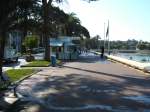
You’re in the south of France.

BILD1328

BILD1322

You arrive on the TGV, in a bit of a blur…

BILD1282

Right, where’s your place then. Christ, you hope you haven’t been conned. You walk out of the station, get lost in two minutes. How do you get lost in Cannes when you’ve been there ten times. You just do. But up the hill you go, eventually, get there, find the place…believe you me, well away from the hoy palloy.

BILD1140

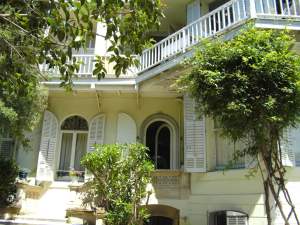
Not bad, you think, for something off the Internet, okay, away from the action, on the other side of the train line, but it has a beautiful garden…

BILD1187

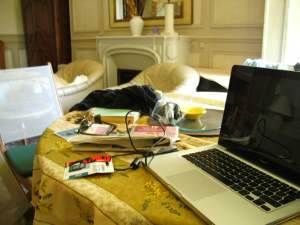
A bit Graham Greenish, even. But you are here to work, not to sit in a garden deck chair, sip pink gins, complain about being an Anglophone abroad all day long. You are here to take photos. You get started right away..

BILD1213

Get the writing tools set up…BILD1177

Right then, down to the Croisette..

BILD1266

To do what? Gawk at the stars…

BILD1218

Where are the stars anyway? Up on bill boards or hiding in hotels. Maybe the key is to be a star yourself…get yourself somehow onto one of these bill boards even…but how do you do that?

BILD1229

You could simulate the process..

BILD1232

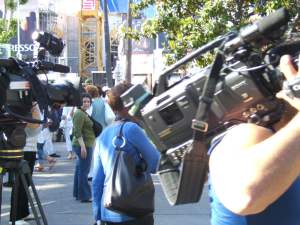
Or take a leaf out of the books of others, mix in with the media..

BILD1244

Wait, maybe you don’t look the part. Do  you need a special pair of shoes, a hat even?

BILD1280

At these prices, forget it. But you know how to climb all over the competition, get head and shoulders above the crowd.

BILD1251

But what are you looking for anyway, or at, what do you hope to see?

BILD1305

Is cinema just another empty business?

BILD1246

Or is that all just a bit too serious.

What to do? You could dress up, give someone a laugh, at least..

BILD1307

BILD1309

Or get drunk…

BILD1127

…or find yourself an empty chair.

BILD1302

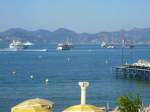
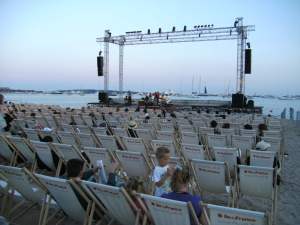
Stare at the scenery..

BILD1310

BILD1311

…yr mind all out to sea.

BILD1312

BILD1297

This site’s content is copyright. All Rights reserved.

Easy Rider is back in Cannes

BILD1052

It might be raining on the Cannes parade, and security out of hand, some of the films, well, but there’s still one bright note on a gray, rain-spitting Riviera first festival Friday. The bike of the film, Easy Rider, forty one years old this week, is back at the film festival that gave the film life, once more at the festival where the film and cast – Peter Fonda, Dennis Hopper, Jack Nicholson and Karen Black earned a vital critical reprieve from the Cannes film festival. In fact, Cannes put Easy Rider into orbit.

BILD1064

BILD1069

The master builder of the easy rider Captain America replica, Jack Lepler, is here with the bike as well. The secrets behind the film, the legend behind the story (what Jack “doesn’t know” he isn’t telling, not about the bike nor the original film, no how. ‘It aint worth saying nor knowing,’ he says with a wink.

BILD1073

So the sequel, Easy Rider II, has that bike back on the Cote D’Azur, at Cannes again.

If it weren’t for the 22nd Cannes Film festival – the festival after 1968, the year students and filmmakers with Godard and Truffaut stopped Cannes and France in its tracks – the original Easy Rider might not have seen the light of day. American distributors would not touch the film, said they were embarrassed by it. More fool them, because this game-changer budgeted at $400,000 took $60 million at the box office. Easy Rider is a large part of the reason behind independent American cinema’s regeneration of Hollywood’s power in the late 1960s, a movement that took a tired LA studio-system filled with failure and excess and lit a fire under it.

And it was Cannes that gave the story of the bike its traction, a new way its market tread. Easy Rider was a key independent production – turning a savvy creative low-budget know-how into a creative trend that saved Hollywood from a crippling decline. More power to Peter Fonda and Dennis Hopper. More power to Easy Rider sequels.

BILD1068