The advocate for voting rights, Marc Elias, posted this on Democracy Docket.
Marc writes:
Four years ago, on Jan. 27, 2022, Black Alabama voters notched a significant victory when a federal court ordered a new congressional map to be put in place with two, rather than one, minority opportunity districts.
Ten days later, at the request of the Republican state officials, the Supreme Court blocked that victory. “Late judicial tinkering with election laws can lead to disruption and to unanticipated and unfair consequences for candidates, political parties, and voters, among others,” Justices Kavanaugh and Alito wrote. The primary was nearly four months away.
On Nov. 21, 2025, Black and Latino voters successfully blocked Texas’ new gerrymandered map in federal court.
Two weeks later, the Supreme Court stayed that order, holding that in granting minority voters relief, “the District Court improperly inserted itself into an active primary campaign, causing much confusion and upsetting the delicate federal-state balance in elections.” The Texas congressional primary was not until March 3, 2026.
Last night, at approximately 7:20 p.m., the Supreme Court expedited its normal process to allow Louisiana to take advantage of last week’s decision gutting the Voting Rights Act. The election in Louisiana is already underway — voting has started, and ballots have been cast.
Justices Alito, Gorsuch and Thomas explained that they were required to act because otherwise the “2026 congressional elections in Louisiana [will] be held under a map that has been held to be unconstitutional.”
The same Court that blocked relief for Black Alabamians because the primary was four months away, and stayed a Texas order because it might disrupt an ongoing primary campaign, had no such concerns when the beneficiaries were Republican politicians rather than minority voters.
The fallout was instantaneous. Louisiana Republicans can now redistrict to replace at least one Black Democratic member of Congress with a Republican. And they can do it on very short notice.
It was not enough for the Supreme Court to gut the Voting Rights Act. When push came to shove, the conservative majority rushed to do it in time to impact the 2026 election.
The damage the Court has done is incalculable.
I am under no illusions that the Supreme Court applies the law without regard to political outcome. I understand that the deck is stacked against us. But I am embarrassed to say that I was surprised by this outcome.
I expected the Supreme Court to gut the Voting Rights Act. I was prepared for it to do so under the cynical guise of redefining what it means to discriminate against minority voters.
But I confess that I did not think the Supreme Court — even this Supreme Court — would short-circuit its normal process to allow Louisiana to suspend ongoing elections after ballots had been cast in furtherance of enabling Republican gerrymandering.
We expect politicians to act in their partisan interest. But we expect Courts to at least hide their own preferences.
Courts typically wax poetic about voters and the foundational importance of their rights. But in this instance, the citizens of Louisiana are an afterthought. Black voters are simply an obstacle to be diminished and overcome. The masks are off.
For the last 60 years, as conservative politicians have thrown up barriers and silenced their own citizens, courts have been the last line of defense for voting rights. That backstop is now gone. What we are witnessing is not just a legal setback. Rather, the Court is undergoing a fundamental realignment of who it is willing to protect.
I have won and lost important cases. I know that Courts can be unpredictable and disappointing. I know that justices are not merely neutral arbiters, and justice is not always served.
But the events of the last week are painful in a different way. It is not that the Court ruled against what I believe the law and Constitution require, but for the first time, it seems the justices have given up even trying to hide what they are doing. Maybe because society no longer requires the facade.
If I am honest, there is a part of me that wants to just give up. I found myself awake last night asking, what is the point of litigating voting and election cases if the scales of justice are this tilted against you and your clients?
But that is not an option for me, for my clients or those who care about democracy.
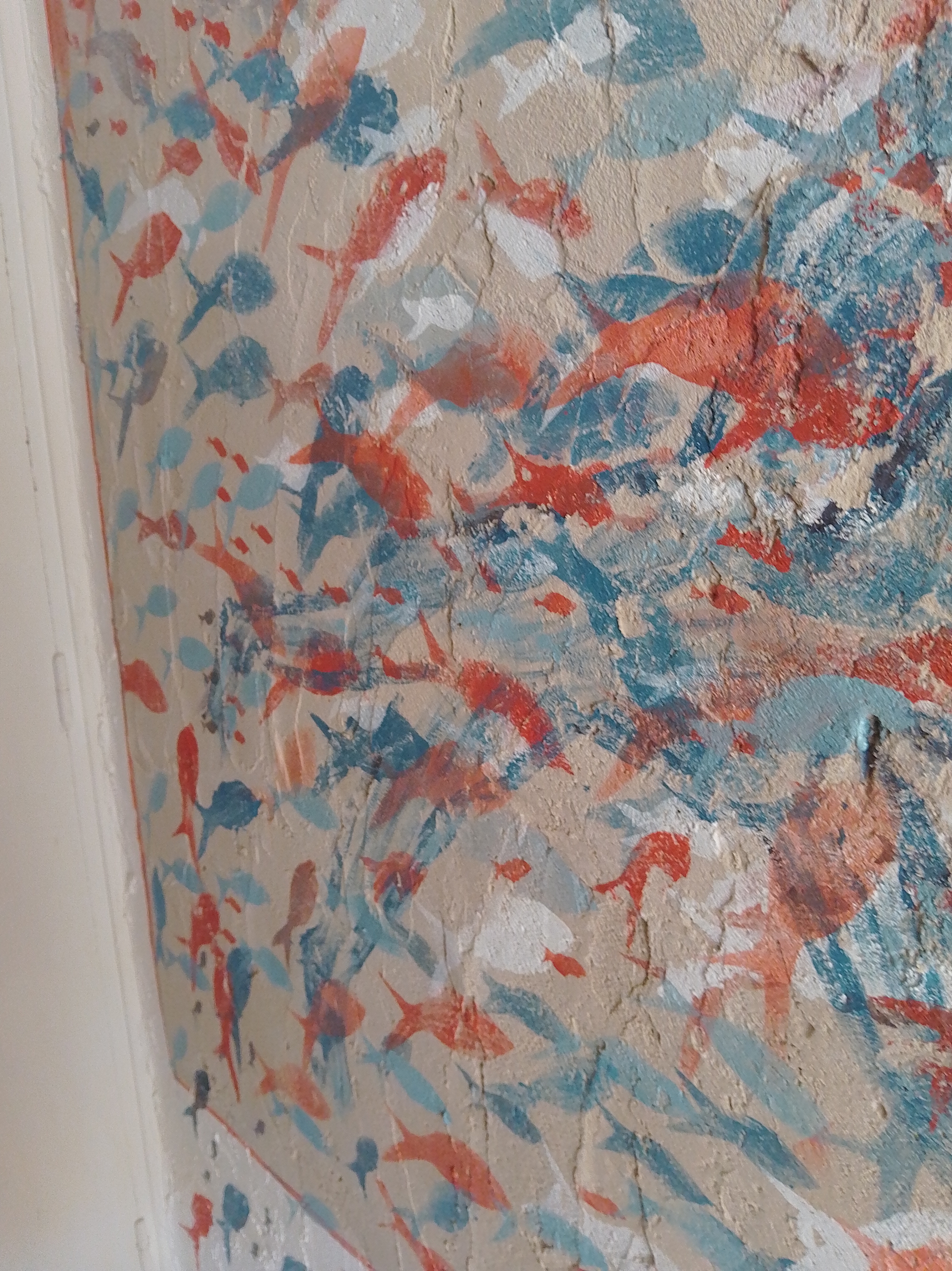
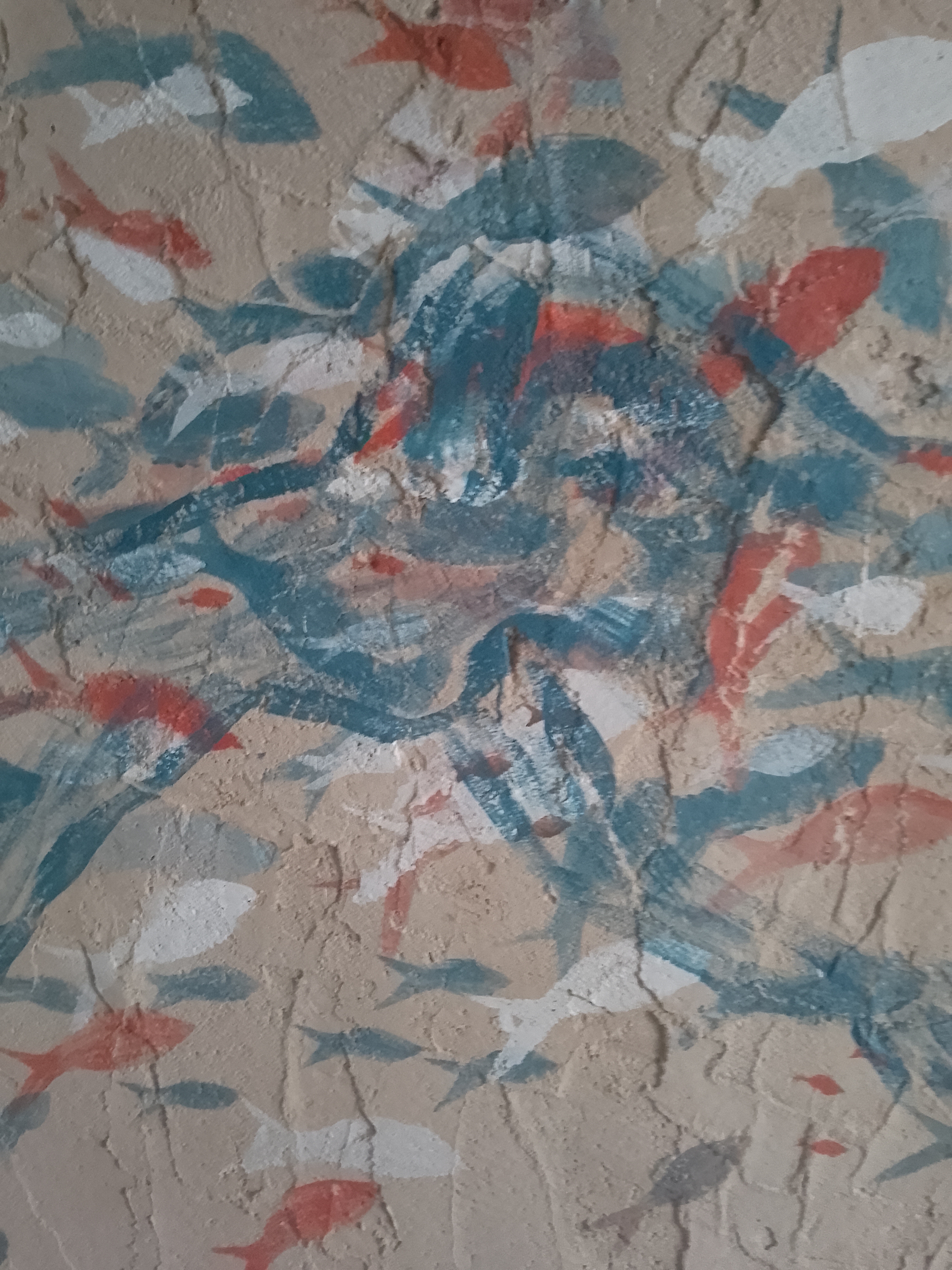
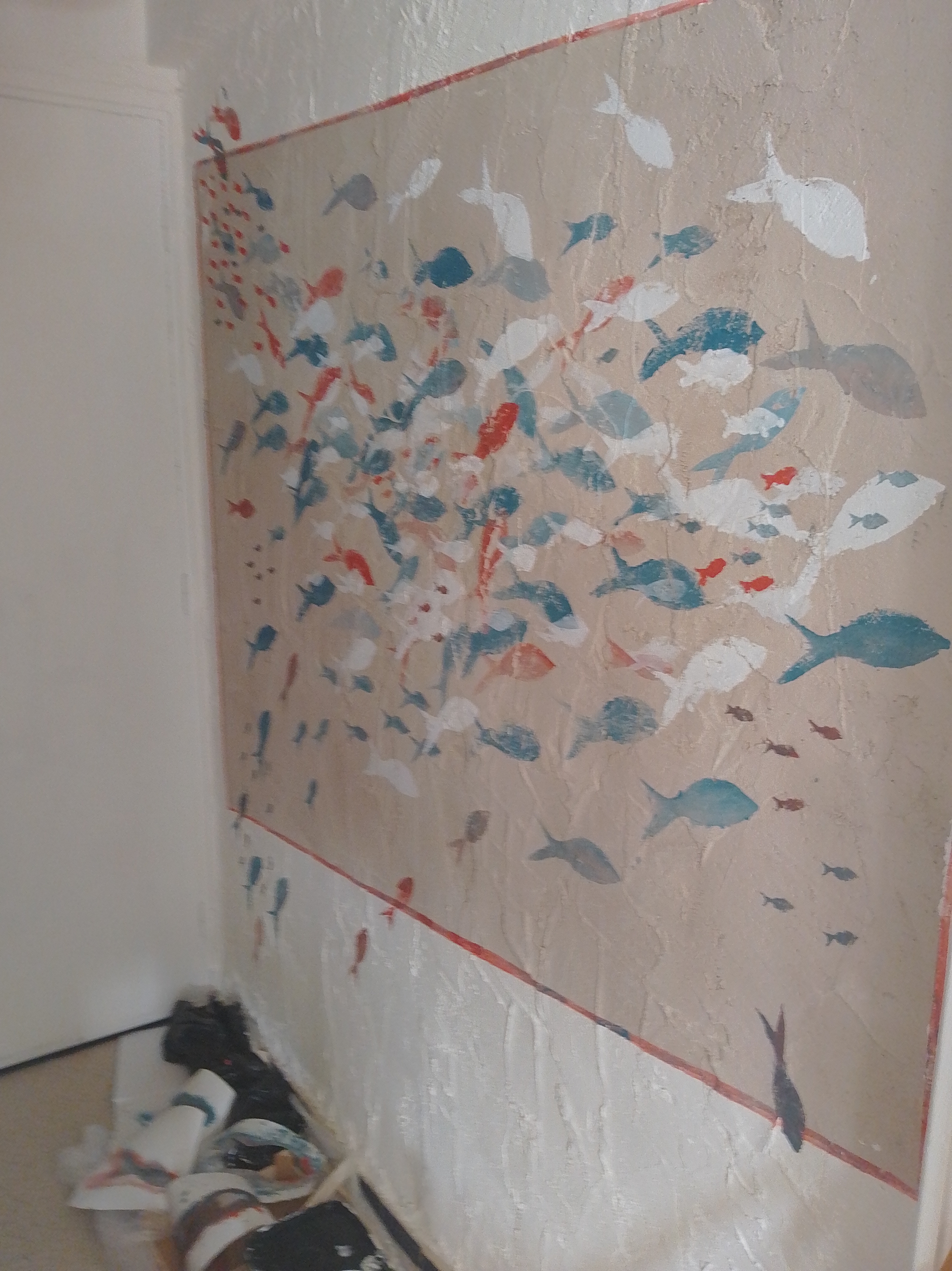
Detail on final – One With the FishesUpdate morning of 24 April 2026
This trapezium presents itself in a phone photo as the opposite of reality, the upper and lower perimeters coming together on the right side not expanding apart. Some cameras just don’t get it, or maybe some camera users simply don’t get it.
Where will we get critique and truth if Larry Ellison gets his way?
The Ellison take over is analysed by Forbes. Does he have the money? It seems not. So what is the mega deal all about? Control of free speech for people, news and creative products and outlets.
Watching the Meidas Touch coverage Youtube on Larry Ellison’s current take over of so much in Los Angeles film and other communication media I remember reading Exposure and then seeing the film of it Dark Waters and how important it is to have books, news and drama that are brave enough to stand up for truth and bring corporations to account. I was deeply impressed by the book and the film.
Exposure and Dark Waters took on DuPont’s production and sale of teflon, and the pollution of the forever PFAs chemicals used in the industrial process that affects us all. Effectively it meant death to many Americans and their livestock in Ohio and West Virginia as DuPont’s killer chemicals seeped into the rivers and water supplies. The effects were devastating.
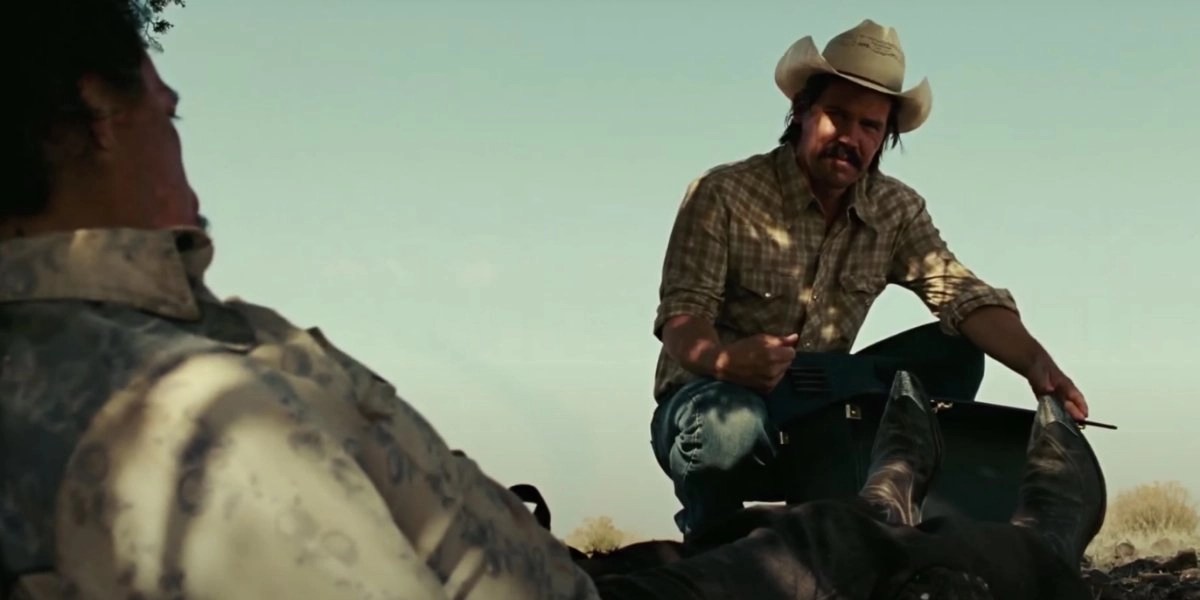
While out hunting in west Texas Llewelyn Moss finds the drug deal gone wrong, then discovers the “last man standing” dead with the brief case under a tree. Llewelyn removes the trace, buries it at the feet of the man and goes home to tell his wife it’s time for a new life in a new state, where they go and live a wonderful life happily ever after.
The Fugitive
Doctor Kimble is charged with murder by a DA who didn’t do his homework. Kimble’s defence counsel proves to the judge and jury that Kimble couldn’t have done it, had no motive to kill her. Case is dismissed, leaving the police to DNA trace the one-armed man – they do. He leads them to Dr Nicholls. He and the one-armed man go to jail for life
The Godfather
Michael Corleone at the marriage reception of his sister decides life as a mafioso is not for him. His father at a loss out buying oranges is shot and dies in hospital, apparently by suffocation. Sad but resolute Michael marries his girlfriend joins the Democrats, goes into politics and is elected to Congress. The Corleones divide their father’s fortune between family members and decide on a side by side middleclass Condo existence down in Florida.
Novelistsdon’t write alone. The unconscious does the heavy lifting. While conscious, many writers can be like stenographers with a flair for editing.
What we say about ourselves consciously in any life writing or self histories has always to be viewed sceptically. An insight that seemed to me profound hearing it many, many years ago: it’s not what we put in diaries that counts. It’s what we leave out.
Does the unsaid in life writing count for more than the said? Some people are remarkably honest about themselves, but would I consciously leave out things in any life writing? Yes.
Autobiography is too self-aggrandizing. Fiction is more fun to do. Fiction frees up writers to find and tell truths he/she wouldn’t admit to when writing about themselves.
January 1979, while Safa, my best boss ever, and Noushi were packing to leave Hong Kong, I was busy writing letters to find new work. I had received one offer from NBC’s American office manager in their Hong Kong office. He had seen my work. NBC meant to me prestige, but assembling footage shot by someone else seemed a backward step.
I received a reply to my letter to Radio Television Hong Kong and went out to meet Stuart W., a former UK Nationwide daily editor. He heard me out and liked my experience. I got the job and became the director/producer of a Monday night ten minute aired film for a program called, Here in Hong Kong.
I was over the moon. After meeting an affable freedom-giving executive producer, Chris H., I felt at home. The choice of a film each week was mine, well mostly.
I soon found subjects, some better than others. Most of my early films were reasonable, some quite good. One on an opaque (at least to me) Chinese festival was absolutely awful. Making a ten-minute film every week was a treadmill but I learnt very fast, that as researcher, writer, director and producer of my own program I had little room for error. Choice of subject was crucial. Monday and Tuesday initially I would be setting up a film, Wednesday, Thursday I was out filming and if I were lucky Friday after film stock processing I would begin editing the film. Most Saturdays I was editing, often Sunday, me in a tiny cubicle with a film editor, then Monday morning, I would take the film for telecine transfer for the Monday night program at 6.45pm. It was never easy.
To put this in an international television producing perspective, BBC’s Newsnight, Panorama or even Nationwide would assign a researcher and a producer to a subject for three months. Late in the process a director and reporter would come on board. Meanwhile, I did everything alone all inside a week. BBC’s programs were longer, maybe a full hour, which I later did as well, but I never had a luxury of three months – maximum, three weeks.
Of course, the key is to find a subject in a single location and do it in one day. I wasn’t so good at that. And I wasn’t a trained reporter. I made films and to do that for me who prized the visuals above all else it meant multiple locations.
Occasionally though I had no say in what I was doing. One such project involved Chinese refugees pouring across the border. The Hong Kong Government wanted to tell the world what was happening. Stuart wrote the text to my film. I was sent with my film crew to meet a Colonel at a British army barracks near the Chinese border. During the afternoon we filmed general parade ground organisation, then after dinner with the Gurkha soldiers under command of a very affable Colonel of the regiment, we drove out to the border.
My crew and I had to document this all at night – if we found any refugees climbing the wire fence into Hong Kong New Territories, the land that adjoined China. We had one go at this. We sat nervously in the pitch-black night in a gully yards from the fence, where the soldiers said was a major crossing point, watching the motionless Gurkha with his nightscope. Except for the Colonel snoring, we had heard nothing. He was woken when a spotter began raising finger after finger. A few seconds afterwards we were told to get going!
My film crew was brilliant, camera shots sharp as portable lights lit up the night. We filmed a terrified group of young Chinese, sixteen to mid-twenties, dressed in traditional dark-blue Mao era outfits.
After having just climbed the wire, the images of their startled faces that night are etched into my brain. One or two held the fence to an iron pole as the others climbed silently up and down a fence that was at least twenty feet high. Stuart W. wrote the piece and Visnews sent the night’s filmwork of ‘the capture’ around the world.
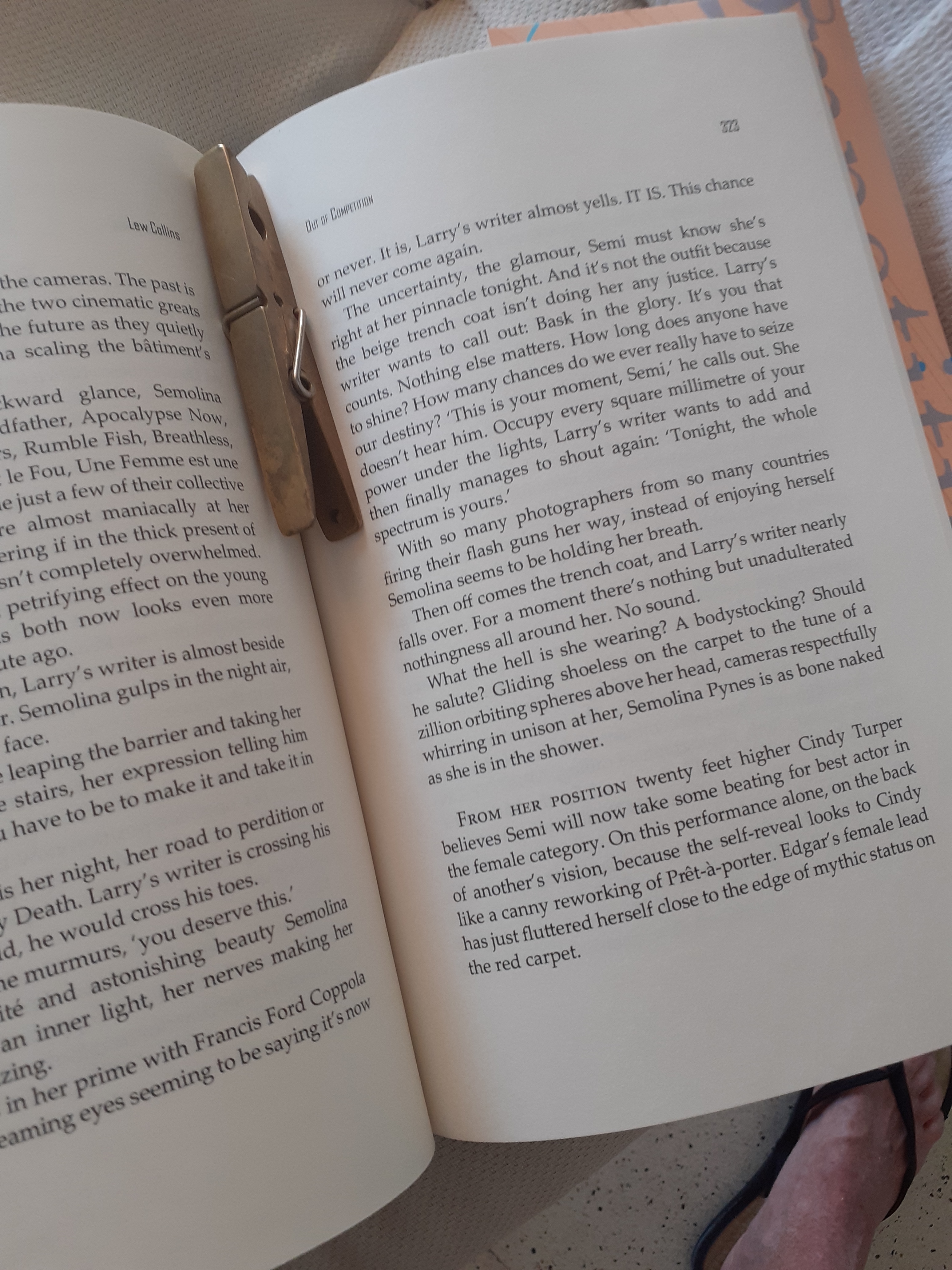
Grifters, sharks, wannabes, liars, creativors cruise the seaside Promenade as an enfranchising of an entire festival grows out of protest, taking voting from annual juries and giving it to the fans, without whom the festival would not be.
When I was writing this the second invasion of Ukraine hadn’t happened. When I was in the the final draft oligarchs lived only in Russia. Now they’re hard at gaming America. When I was in the final draft, political sycophancy was in its infancy now it’s fully grown.
When I was in the final draft there was still an operational Democratic Party, now a couple State governors are performing CPR on its seemingly lifeless body. When I began writing this most of America believed in habeas corpus, personal and civil rights, accountability and independence of the judiciary.
When I was writing this novel it wasn’t clear how much damage the right wing of the Supreme Court could inflict on America.