Skip to content

Swimanög

  • Home
  • Out of Competition
  • Uncorrected Proof
  • Lew Collins

Category: politics

Posted on November 1, 2025December 16, 2025

“Was Life Simpler Back Then?” Vol. 1. The Sino-Vietnamese Border Impasse 1978

In the summer of 1978 I went to Tungshing and Pingshang on the border between China and Vietnam. I was the cine-cameraman for an Iranian husband and wife team for whom I was working in my first real job, running a state of the art film studio based in Hong Kong. I shot with an Eclair ACL using 16mm film stock, edited the film on a six plate Steenbeck and mixed sound on three Sondor recorders from the original sound my boss’s wife, Noushi, recorded on a Nagra reel to reel recorder. In August 1977 I had been given the chance to work in what seems today to be a far simpler media world. The Shah of Iran was still alive and Safa Haeri, a journalist, whose upbringing in France included schooling, was running one of the Shah’s network of world wide news bureaus. NIRT’s office in Hong Kong was the second smallest of these bureaus, yet became the second highest in terms of output.

In late February 1977 I had begun my film school studies at Curtin University, working under the tutoring of a theatre and then-aspiring film director, Steve Jodrell. I had just finished a three year English Literature degree at the University of Western Australia, a double major in literature Americans call it. I went straight on to a second degree, film. This is when my first career began. In my first year I concentrated on film and video production only, no academic subjects, doing only first and second year units in practical and video making. Five months later in August, I received a call saying there was a job going based in Hong Kong making films if I wanted it. I had a two days to decide.

I had just finished a twenty minute film “Lounge Bar” which I wrote, directed and produced. I was liking what I was doing enormously. 1977 was a good time to be in film in Australia. I was learning so much every day, getting to grips with the practical business of being a filmmaker. Yet this surreal offer to suddenly go to Hong Kong loomed large in my mind. What to do?

I went. I left the course, first landing in Kuala Lumpur to meet my new boss and his wife, Noushi. We flew to Thailand then drove to a point on the eastern Thai seaboard.

I became a documentary filmmaker on that day. We arrived just before a boatload of Vietnamese refugees motored in from the South China Sea, coming into the Gulf of Thailand to land at a place on the coast south east of Bangkok. On a very hot summer’s afternoon, raucous cheering and shouting all around me from other Vietnamese on other boats who had done the same thing, sweat running all over me, I clambered over beached and moored boats trying hard not to mess up my recording of the event. It was terrifying, my first real job at doing this kind of work and in the middle of hottest part of a Thai summer. With so much sweat in my eyes, I had trouble seeing what was I filming let alone focusing. Yet somehow I got it okay.

Flying to Hong Kong it was high summer typhoon season, and after processing the stock and preparing the footage for sending to Teheran for broadcast, I settled into adjusting to a completely new culture, city and lifestyle. I had never seen so many people in any street in my life as I did in Hong Kong that summer. The production money for the year had gone, so I sat around a little nervously wanting to make films, doing the occasional short Hong Kong film with Noushi.

I learned I had won the Young Filmmaker of the Year Award for 1977 at Curtin University and it gave me something to mull over, especially as I was so inactive in my new position. But with the new year and a renewed budget we began travelling again to make more films, going first into pre-modernised China, then to the Philippines, Japan, Bangladesh. In August 1978 we were invited to the Sino Vietnamese border to record a refugee impasse.

Chinese authorities took us to Tungshing and in the rain I filmed Vietnamese of Chinese origin forced out by the Vietnamese authorities. As refugees now these people stood in the rain plastic sheets over them waiting to be processed for entry into China. From Tungshing we went to Pingshang where more Vietnamese of Chinese origin were being processed by other mainland Chinese authorities. We filmed the interrogation of a man the Chinese said was a Vietnamese spy they had captured. We were the only film crew allowed in.

After the trip and the film was processed and cut in Hong Kong and sent to Teheran, I was asked by the South China Morning Post to write up what I saw. I had never been a newspaper reporter. I had no experience of writing a full page feature article. Write what you saw I was told. I did.

The following is my article and except for the cutting by a sub editor of my speculative conclusion at the end this is what I wrote, word for word, no changes, with my conclusion only removed by the SCMP – why? I’ll come back to that.

{Published 6 August, 1978 – under a title the newspaper chose, I wrote the piece in my birth name. I write now in my mother’s maiden surname of Collins – as Lew Collins.}

What was so difficult about my conclusion that it had to be cut? I speculated. I had asked myself why China was doing this and came to the conclusion they were:

  • 1) helping Chinese in need
  • 2) publishing to the world the harm the Vietnamese were doing
  • 3) claiming the moral high ground in order to take punitive retaliatory action against Vietnam which China saw as a legitimate action to take.

My speculative conclusion (3) was always going to be cut. I should have woven it into my article, but even if I had, it would have been cut. Writing that China intended to punish Vietnam for its actions sometime in the future was a bridge too far in journalism, certainly at my level back then. Though I was right. In January 1979, Deng Tsiao Ping (Deng Xiaoping) ordered an invasion of Vietnam, saying it was to punish Vietnam for their actions.

My role in the National Iranian Radio and Television office ended abruptly. In December 1978 I was told by Safa events in Iran meant closure of all the NIRT offices around the world were imminent. The Iranian Revolution under Khomeini swept the Shah from power. January 1979 Safa and Noushi returned to Teheran. From there they went to live in Paris.

Posted on October 18, 2025October 21, 2025

Worth remembering that most things

Collaboration – Salvador Dalí and photographer, Philippe Halsman, New York, 1948

Posted on September 28, 2024April 24, 2025

Oh dear, oh dear

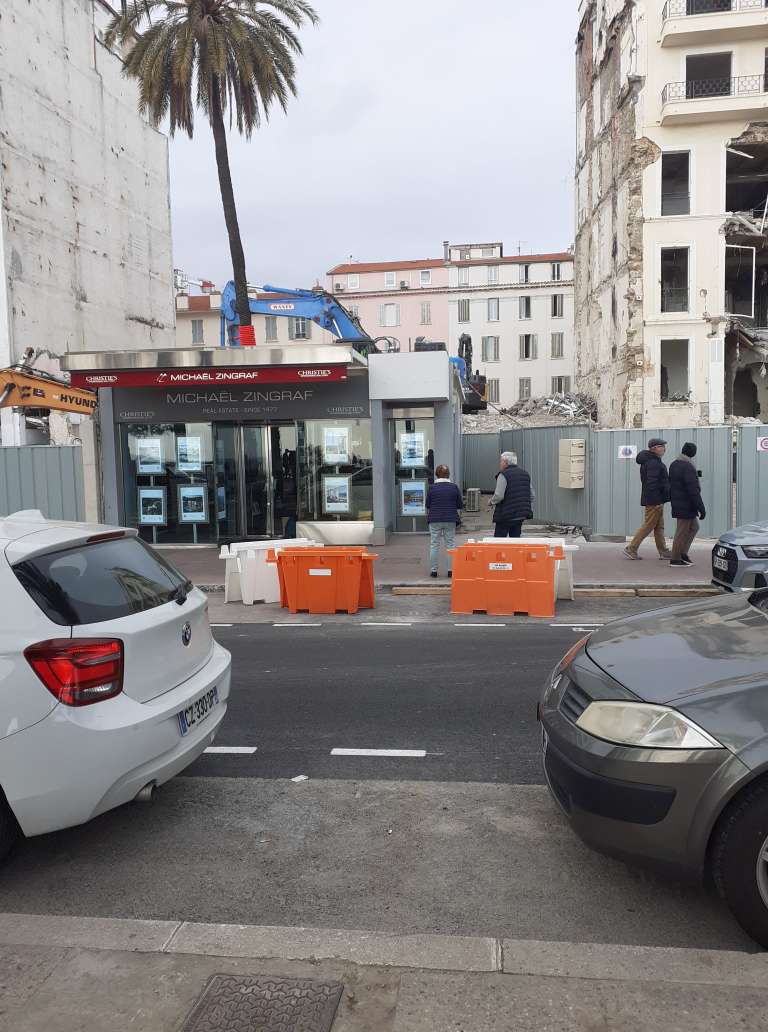
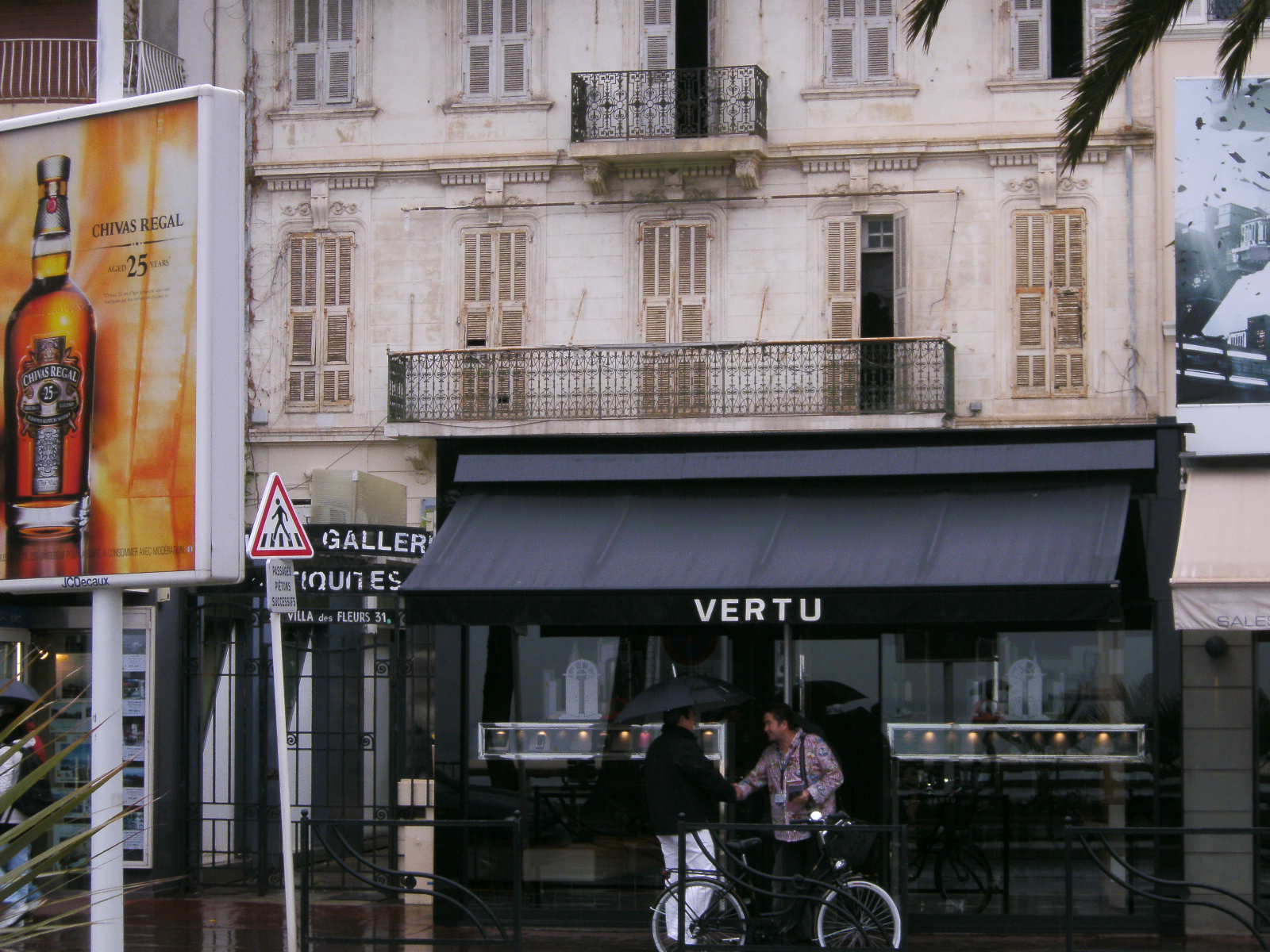
This old block of apartments was once one of the few examples of an older more interesting building along Cannes’s waterfront. There seems little virtue in destroying interesting architecture, especially with original wrought-iron balcony railings, high ceilings, old shutters. But now it’s gone – while Antibes has kept its past.

Except for the Carlton, what historic buildings are left on Cannes’s waterfront? Why not remodel a site like this?

Well they have.

The developer’s sign says the new offering will provide a private treated heated pool for two penthouse apartments – just a hop, step and tiny jump away from the Mediterranean.

Posted on February 20, 2021February 20, 2021

69 + 1 films -Missing

Posted on October 16, 2020October 13, 2025

‘Ace in the Hole’ dialog that resonates in 2025

“When they bleached your hair, they must have bleached your brain too.”

“I’ve done a lot of lying in my time. …”
Posted on October 16, 2020October 13, 2025

‘Nashville’ dialog that resonates in 2025

“Does it makes sense that a multi-million dollar income should go untaxed year after year?”

“…it’s time to pause and do some accounting.”

Posted on November 5, 2019December 15, 2019

Tuscan Retreat

With Brexit still breathing down Britain’s neck, I wanted to revisit a blog I did some time ago, to celebrate the very best of British production, in my view – the Landrover – and how this journey back (together with the journey down) opened up Europe for me, travelling across France and in to Italy.

bild1711.jpg (1600×1200)

So many journeys so many memories, to and from London and our place in Tuscany, Italy. Nostalgia? Absolutely, completely. I feel the need to revisit these memories before the Brexit maniacs get their way and destroy what is beautiful and sustainable in Freedom of Movement. The camping grounds I stopped at in France were extraordinarily well-managed, great facilities, and so reasonable in price. It made driving the long hours an absolute joy.

The first trip back to London took me up through Italy from Tuscany up through Piemonte to Valle d’Aosta, which led me (countless times) to les Alpes, driving up over the Great St Bernard Pass (il Passo del Gran San Bernardo) that first time down into Switzerland in brilliant sunshine, at four on a September afternoon. Around Lake Geneva to Lausanne I went, arriving at Pontarlier in the dark. I found a parking spot just outside the entrance to a Péage, heading to God knows where. I was absolutely exhausted. After a night of waking up, dozing in the front seat of the old beast, I shook myself conscious and crawled on toward Troyes (seeing the periphery), going on, then around in circles late afternoon south-east of Paris struggling to discover a municipal campsite. Finally I did, coming upon Méry-sur-Seine, a tiny hamlet south-east of Paris.

I parked on the grass and walked in to the village, got something to eat – do I remember what I ordered? No, but whatever it was it was very, very good. I know that. I walked back and set up my mattress in the back of the beast, extending out over a table top I had made especially with a trestle to support it. With a tarpaulin attached to the roof rack and reaching down and pegged in to to the ground all around, fresh country air flowed in all around me. I slept the sleep of angels. To this day I can’t recall a sleep so sound (maybe one other). It rained all night and I never felt a drop.

Waking up at six I packed up like a single person army on the march. I was gone in minutes, driving around to find the right route north, until I stopped at a café for breakfast, café au lait, a croissant and advice how to drive en direction de Meaux skirting north-east Paris, on through the northern cities. I reached Calais at four in the afternoon. Crossing the channel by ferry to Dover, I arrived home in east London at around ten at night. My old landrover only did fifty miles an hour.

bild1682.jpg (1402×1051)

That voyage in 2006 I will never forget. I have done the same trip many times in the years since then, in two separate Landrovers (old and new). My last defender model (2013), took me via different routes, but the first trip from Tuscany in the battered old Series Three has never ever been bettered.

tuscanretreat.wordpress.com

Skip to content
  • Home
  • About
  • In and around Pitigliano
  • More images


Posted on November 1, 2019October 28, 2023

Lee, JFK and Stephen King

It’s tough being a writer in this organised politically-controlled oligarchic world of ours. Publishing is a strategic asset in a stable of assets essential to a well-tuned oligarchic universe. The message, whatever it is, must be edited. That seems to be the last law of the universe, the one Scientists haven’t yet owned up to.

Try thwarting it and you will be edited out of existence says a footnote on the first page of the Oligarch’s Manual. Try beating the system and your Sun will shine no more.

So, I guess even the great Stephen King obeys this largely hidden law of our Oligarchic Universe. (I say great because book sales obviously equate with greatness, right?) It has nothing to do with well-oiled sales machines. Sales = Greatness and vice versa. So, I went, I must say with hope, to read 11.22.63 by the undoubtedly great Stephen King. And what did I find? Well, my mother always said: if you can’t say anything nice don’t say anything at all. But when did I ever listen to my mother?

What on earth was King thinking about?

Not the truth clearly. His novel is fiction, okay I get it. Only he put an awful lot of real people in it as well. Like poor old Lee Harvey. Poor old very dead and much maligned Lee Harvey Oswald. A feckless man and near hopeless rifleman who some people keep saying was guiltier than his own much imagined sin. Lee Harvey Osward with his Carcano Model 91/38 rifle with which he probably couldn’t have hit a barn-door from 100 metres. No, not probably, maybe definitely. The man who somehow reverse-actioned Newtonian physics—with that minor impediment of a tree blocking-out his vision—hitting a moving target from the wrong direction.

From how far was it?

The man who ended in history as being responsible for killing a President. Go figure. Many have tried. I don’t need to debate this anymore. To my mind at least, if Lee were on the sixth floor of the Book Depository that fate-filled day and fated time and was pointing a rifle at the back of the President’s head, he would have had more chance of hitting Parkland Hospital, than as is claimed, he murdered JFK, in the still so far un-investigated—at State Law level—crime of homicide.

The make-believe myth come mystery in Dallas, 22 November 1963.

All now co-signed by bestselling-author Stephen King.

Posted on May 31, 2012June 1, 2012

NormanLloyd@CANNES

Norman Lloyd’s talk in the Salle Buñuel was a lesson in theatre, film technique, Shakespeare, Renoir, Brecht, Chaplin, Welles, Hitchcock and Kazan, and how to keep your mind a steel trap well into your nineties. I don’t know if he eats nothing but blueberries but he must be doing something right.

In an age when aging (see Haneke’s Amour) is often told in tales of sad decline, this man stands out as an object lesson of hope for all. The session was one of the highlights of Cannes in 2012. Holding his audience spellbound, Lloyd, a 97 year-old veteran of acting, directing and production, took listeners through the best part of the pantheon of cinema (the first 60 years of it). What and who he didn’t know simply wasn’t worth pursuing.

         Lloyd,  stage and film actor

It wasn’t just that he knew so many of those who were crucial to the development of 20th century cinema, it was he knew what they knew and why they knew it – and above all he could tell us how and why he knew what they knew. He understood their brilliance with exacting modesty, placing himself in the role of pupil to all of them. Yet for all intents and purposes he was their equal in collaboration, a creative confidant in so many ways; he travelled through film history with them not because of them. Lloyd’s contribution to film is real, tangible and deep. When he recounted how Hitchcock – a decidedly unpolitical man – with three words to NBC, “I want him” dissolved the McCarthy blacklist era, the entire audience in the Salle was stilled. Lloyd’s part in McCarthy’s ruination was just one anecdote in many. Politically involved and motivated throughout his career, Lloyd was a close friend to Jean Renoir, Chaplin, Welles and Hitchcock. Lloyd was at the heart of theatre and cinema for nearly fifty years. One of the best moments of the night was his recollection of the lines of Bertolt Brecht: “Since the people are displeased by the government, the people must be replaced.”  The sharpness of wit, his breadth of cinematic knowledge was stunning.

Posted on February 19, 2012February 21, 2012

Great Theme Photos

ImageThe Seat of Human Justice

http://elephantearspress.com

Posts pagination

Page 1 Page 2 Next page

Pages

  • Contact
  • Lew Collins
  • Out of Competition
  • Uncorrected Proof

Archives

  • January 2026
  • December 2025
  • November 2025
  • October 2025
  • August 2025
  • May 2025
  • March 2025
  • December 2024
  • October 2024
  • September 2024
  • October 2021
  • July 2021
  • February 2021
  • October 2020
  • June 2020
  • April 2020
  • March 2020
  • February 2020
  • November 2019
  • May 2015
  • August 2013
  • December 2012
  • November 2012
  • October 2012
  • September 2012
  • July 2012
  • June 2012
  • May 2012
  • April 2012
  • March 2012
  • February 2012
  • January 2012
  • December 2011
  • November 2011
  • September 2011
  • July 2011
  • June 2011
  • March 2011
  • December 2010
  • September 2010
  • August 2010
  • July 2010
  • February 2010
  • December 2009
  • November 2009
  • October 2009
  • August 2009
  • June 2009
  • May 2009
  • March 2009
  • January 2009
  • December 2008
  • November 2008
  • October 2008
  • September 2008
  • June 2008
  • April 2008

Meta

  • Create account
  • Log in
  • Entries feed
  • Comments feed
  • WordPress.com

Top Posts

  • “Was Life Simpler Back Then?” Vol. 3. Brittle realities-1.
  • Three Films that Could Have Been Over Early
  • “Was Life Simpler Back Then?” Vol. 2. Opening arguments.
  • The Plain Truth
  • "Was Life Simpler Back Then?" Vol. 1. The Sino-Vietnamese Border Impasse 1978
  • No Kings
  • Worth remembering that most things
  • Out of Competition and Democracy
  • Beginnings
  • Do we want to see Democracy die in America?

Blogroll

  • ElephantEars Press
  • I could have cats
  • jhoyzkie81
  • Just A (Reading) Fool
  • LiteraryMinded
  • luminog
  • Margaret and Helen
  • tuscanretreat.wordpress.com
  • WordPress.com
  • Zoran's blog

Recent Posts

  • “Was Life Simpler Back Then?” Vol. 3. Brittle realities-1.
  • Three Films that Could Have Been Over Early
  • “Was Life Simpler Back Then?” Vol. 2. Opening arguments.
  • The Plain Truth
  • “Was Life Simpler Back Then?” Vol. 1. The Sino-Vietnamese Border Impasse 1978
Blog at WordPress.com.
Swimanög
Blog at WordPress.com.
  • Subscribe Subscribed
    • Swimanög
    • Join 46 other subscribers
    • Already have a WordPress.com account? Log in now.
    • Swimanög
    • Subscribe Subscribed
    • Sign up
    • Log in
    • Report this content
    • View site in Reader
    • Manage subscriptions
    • Collapse this bar
 

Loading Comments...