Novelistsdon’t write alone. The unconscious does the heavy lifting. While conscious, many writers can be like stenographers with a flair for editing.
What we say about ourselves consciously in the life writing or self histories has always to be viewed sceptically. An insight that seemed to me profound hearing it many, many years ago: it’s not what we put in diaries that counts. It’s what we leave out.
Does the unsaid in life writing count for more than the said? Some people are remarkably honest about themselves, but would I consciously leave out things in any life writing? Yes.
Autobiography is too self-aggrandizing. Fiction is more fun to do. Fiction frees up writers to find and tell truths he/she wouldn’t admit to when writing about themselves.
In the summer of 1981, my first trip to Greece, one late hot July evening, I wandered up the road from my Plaka hotel to the Acropolis, a young filmmaker on holiday, a working resident from Hong Kong visiting Europe.
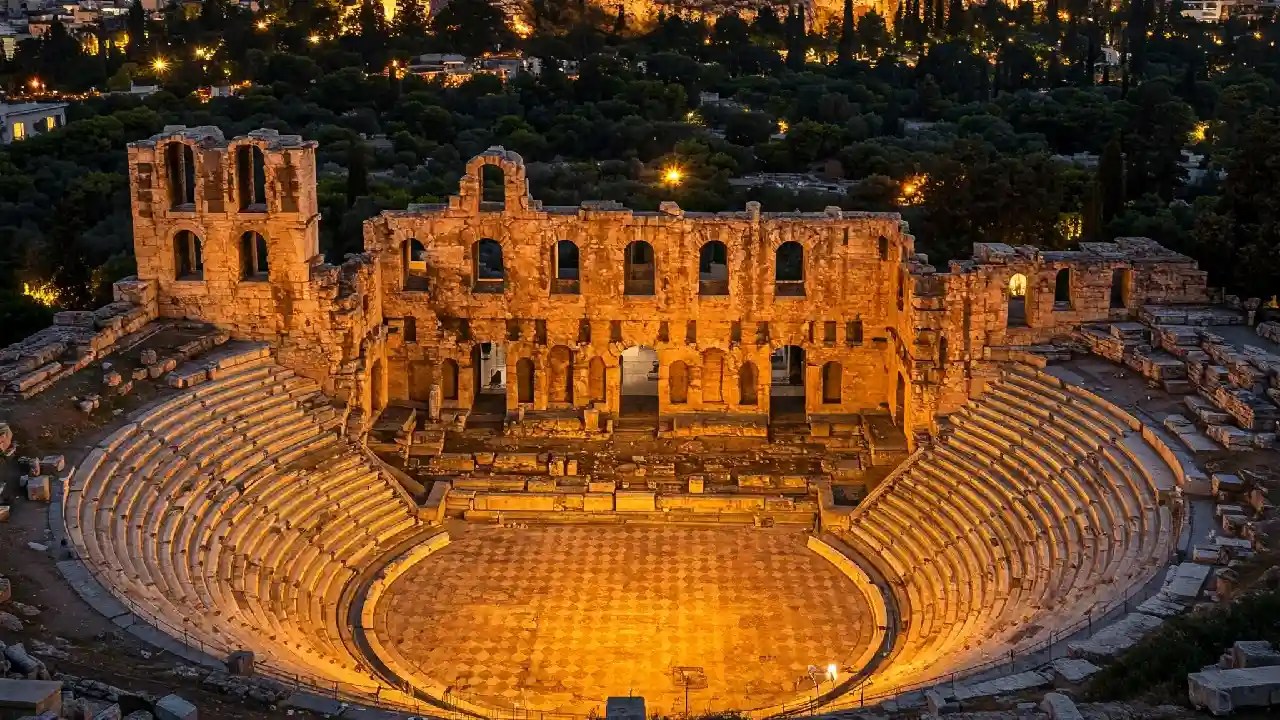
As darkness gathered I sat on a perimeter wall and took in the summer dusk scenery all around. Facing the seaward south I stared down from my spot at the lit up Odeon of Herodes Atticus theatre way down below me. A rehearsal was going on. After watching for a short while I walked back to the entrance road, took another path the other way, hiking down the hill to find out what it was I had just seen.
A poster outside the Odeon announced that the Athens Summer Festival was showing Aristophanes’ The Acharnians. Had I seen a play by Aristophanes before? No.
I returned to my hotel, and the next day found a ticket seller in Athens. I bought a seat for the play – prices of the day ranging from $1.20 to $6. I bought a Penguin translation of the play in a bookshop and read it, and certainly no wiser, set off the following night to see the performance.
The Acharnians was first performed in 426 BC. A strident anti-war play it is credited as the oldest staging of a western threatrical (Greek) comedy. I didn’t know what to expect because the Penguin version, translated into English, did not make it clear. Still, I had seen the rehearsal. I had seen something intriguing. The play would do the rest.
The Odeon theatre is an extraordinary space but on a hot July summer’s night it is other-worldly, the night air made translucent by light alive with what looked like tiny floating tippy tips of flowers, rising in the lit-up warm evening air all throughout the amphitheatre.
In jeans, t-shirt and sandals, surrounded by Greeks in evening dress I was an outsider but nobody cared about me. They were there to see a play, an important play in the ancient Greek canon.
What truly resonates with me most now forty plus years later, is how an ancient play, interpreted, performed and directed as it was, was so relevant to me and that 1981 audience. I spoke no Greek yet the production literally lifted me off my seat. This was not a stilted ancient classic, the sort of production I remembered too well from university productions. The Penguin translation was swept from my mind.
Dicæopolis, a native of Acharnæ, and an ex-soldier, returns utterly disillusioned and deeply angered by the Persian wars, heartsick at the misery and stupidity of conflict. Not shy in making his anti-war views known he railed against his fellow citizens chastising them with lewd gestures while a chorus of indignant citizens in white masks, odd hats and fantastic sewn quilt-like costumes, rushed from one side of the stage to the other, all this happening in a cacophony of startling music and sound effects, the chorus remonstrating and arguing with Dicæopolis and each other. The audience was in stitches. I didn’t understand a word, yet understood everything.
As a writer it’s hard to communicate the effect this experience has had on me from that hot July Athenian summer’s night onward. The Archarnians is the western world’s most ancient staged comedy, its performance having Greeks no doubt in ancient times, almost rolling in aisles as Greeks were doing around me.
When the performance ended, the revered director Karolos Koun was brought on stage to receive a rousing applause. I sat stunned by what I had seen. It had transcended any theatrical piece I had been to see by multiples I can’t calculate even today. I felt the meaning of theatre not only the ancient Greek idea of ‘spectacle’ had been made clear to me, with meaning in my writing perhaps beginning that night as well.
My current novel’s main theme was always Democracy from the earliest days I began to write it, but several years ago, deep in the writing I didn’t foresee how important Democracy would become in this era.
I decided early, writing ‘Out of Competition’ set in a film festival, that it would be comic because while I believed all processes of democracy could be better promoted everywhere I never foresaw democracy facing a serious existential threat.
Democracy has always been a major part of my life. My father was in the second world war so democracy always figured in my consciousness, and while I have never experienced totalitarianism I understood it wasn’t the way of the west, or a real threat, until now.
I never thought not even after the murder of John F. Kennedy that a U.S. president, however he got into power would try to destroy democracy in order to cling to power.
Democracy has never been perfect. It’s been manipulated, not just in the United States but its demise in the US, UK, France, Canada, Australia, or any western European nation is unthinkable. Democracy remains fundamental, especially in America.
The world is watching. Everything American was once received well. Cultural power is real. John F. Kennedy understood this.
I am a writer, novelist, living and writing on the south coast of France, where I swim and continue renovating my apartment.
I am very close to finishing a novel set in 1963. My recently published novel Out of Competition, published by JEF Books, Illinois, October 1, 2024 won the Kenneth Patchen Award for the Innovative Novel.
Humorously subversive. It goes so fast I read it in two days. A must for anyone with a love of cinema and its festivals. And the most irreverent novel written about the South of France
5 OUT OF 5 STARS
Ten Years is Enough!
Read-fest UK, 9 September 2025
A sharp satire about democracy set in a Riviera Film Festival facing collapse as young cineastes demonstrate against privilege and lack of transparency in the annual voting shakedown, the novel opening with the kidnap off the streets of a desperate bankrupt Hollywood producer cadging money wherever he can
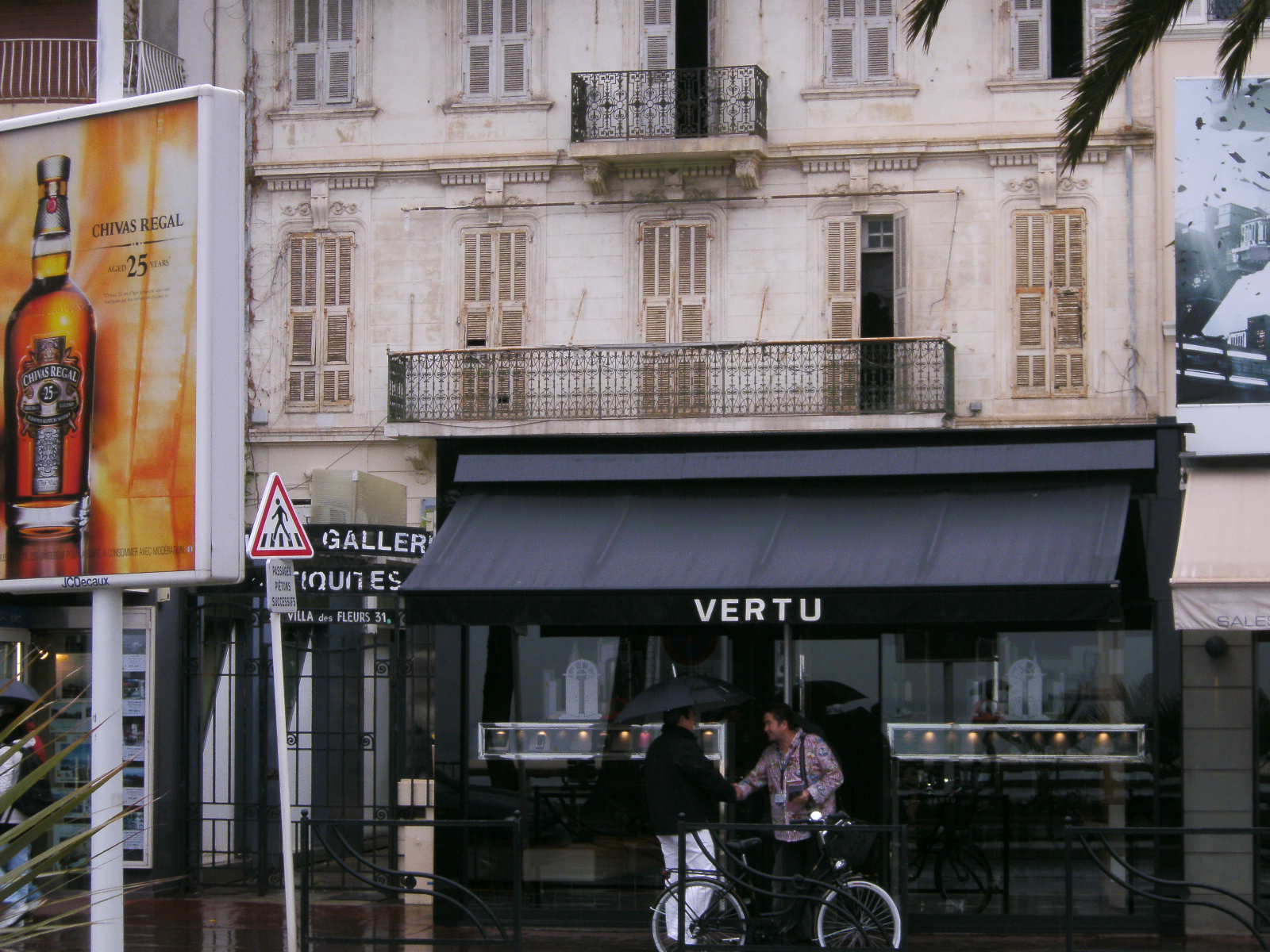
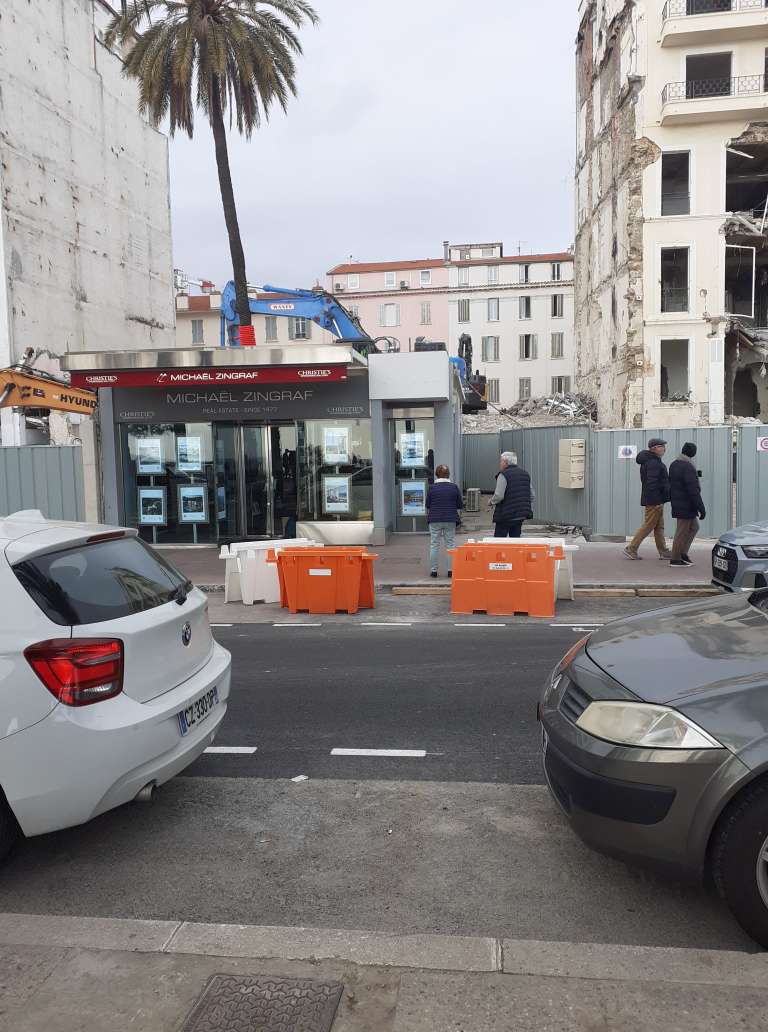
This old block of apartments was once one of the few examples of an older more interesting building along Cannes’s waterfront. There seems little virtue in destroying interesting architecture, especially with original wrought-iron balcony railings, high ceilings, old shutters. But now it’s gone – while Antibes has kept its past.
Except for the Carlton, what historic buildings are left on Cannes’s waterfront? Why not remodel a site like this?
Well they have.
The developer’s sign says the new offering will provide a private treated heated pool for two penthouse apartments – just a hop, step and tiny jump away from the Mediterranean.
Oliver Stone’s film Alexander shows the power of war as a means to extend power. With JFK, Stone followed and unravelled at least part of the story of how Jack Kennedy – who began a process of rolling back war as the means for the extending and using power exporting America’s cultural power peacefully – was brutally cut down in his prime.
Christian Mihai discusses his ideas on unreliable narrators, something he likes to see writers use, and a technique he says he uses himself. Still, he misses a fundamental point – all narrators, storytellers, dramatists, poets, are unreliable. From Homer, Shakespeare to Sartre, no writer tells, gets close to ‘the truth’, even if he or she is prepared to die in the process of collecting all the observable details of a factually based fiction.
Do we trust Tolstoy’s account of Napoleon in War and Peace? Perhaps… if we are Russian.
Narrator unreliability doesn’t have to be a first person account, though the most obvious modernist exploitations of narrator unreliability in fiction use that form. The best approach – for this writer at least – is when the writer sets out to deceive us, and by convincing us that he or she has told the truth, transfers any doubt on narratorial reliability to a reader’s interpretation of the tale.
..handheld shaky cam, found footage, ultra-violence, meta-storylines, etc., all becoming part of the broad pop cultural landscape and assimilated into the commercial marketplace. This translates across all cultural lines – music, art, technology, etc. as the outsiders and untouchables of yesteryear are today’s TV spokesmen and tastemakers..
…experimental film seems to represent more fully the true potential and magic of cinema
…for brief moments in history, think the ‘beats’, the real ground-shakers, the true risk-takers, manage to do something that is life and culture affecting, their minds drafting the future…