Novelistsdon’t write alone. The unconscious does the heavy lifting. While conscious, many writers can be like stenographers with a flair for editing.
What we say about ourselves consciously in the life writing or self histories has always to be viewed sceptically. An insight that seemed to me profound hearing it many, many years ago: it’s not what we put in diaries that counts. It’s what we leave out.
Does the unsaid in life writing count for more than the said? Some people are remarkably honest about themselves, but would I consciously leave out things in any life writing? Yes.
Autobiography is too self-aggrandizing. Fiction is more fun to do. Fiction frees up writers to find and tell truths he/she wouldn’t admit to when writing about themselves.
In the summer of 1978 I went to Tungshing and Pingshang on the border between China and Vietnam. I was the cine-cameraman for an Iranian husband and wife team for whom I was working in my first real job, running a state of the art film studio based in Hong Kong. I shot with an Eclair ACL using 16mm film stock, edited the film on a six plate Steenbeck and mixed sound on three Sondor recorders from the original sound my boss’s wife, Noushi, recorded on a Nagra reel to reel recorder. In August 1977 I had been given the chance to work in what seems today to be a far simpler media world. The Shah of Iran was still alive and Safa Haeri, a journalist, whose upbringing in France included schooling, was running one of the Shah’s network of world wide news bureaus. NIRT’s office in Hong Kong was the second smallest of these bureaus, yet became the second highest in terms of output.
In late February 1977 I had begun my film school studies at Curtin University, working under the tutoring of a theatre and then-aspiring film director, Steve Jodrell. I had just finished a three year English Literature degree at the University of Western Australia, a double major in literature Americans call it. I went straight on to a second degree, film. This is when my first career began. In my first year I concentrated on film and video production only, no academic subjects, doing only first and second year units in practical and video making. Five months later in August, I received a call saying there was a job going based in Hong Kong making films if I wanted it. I had a two days to decide.
I had just finished a twenty minute film “Lounge Bar” which I wrote, directed and produced. I was liking what I was doing enormously. 1977 was a good time to be in film in Australia. I was learning so much every day, getting to grips with the practical business of being a filmmaker. Yet this surreal offer to suddenly go to Hong Kong loomed large in my mind. What to do?
I went. I left the course, first landing in Kuala Lumpur to meet my new boss and his wife, Noushi. We flew to Thailand then drove to a point on the eastern Thai seaboard.
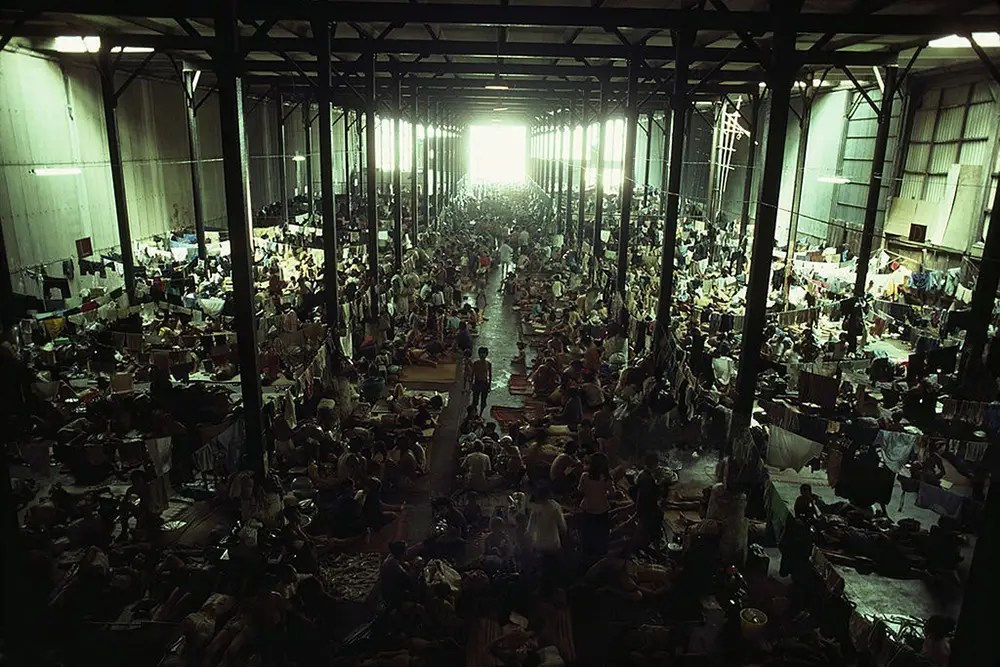
I became a documentary filmmaker on that day. We arrived just before a boatload of Vietnamese refugees motored in from the South China Sea, coming into the Gulf of Thailand to land at a place on the coast south east of Bangkok. On a very hot summer’s afternoon, raucous cheering and shouting all around me from other Vietnamese on other boats who had done the same thing, sweat running all over me, I clambered over beached and moored boats trying hard not to mess up my recording of the event. It was terrifying, my first real job at doing this kind of work and in the middle of hottest part of a Thai summer. With so much sweat in my eyes, I had trouble seeing what was I filming let alone focusing. Yet somehow I got it okay.
Flying to Hong Kong it was high summer typhoon season, and after processing the stock and preparing the footage for sending to Teheran for broadcast, I settled into adjusting to a completely new culture, city and lifestyle. I had never seen so many people in any street in my life as I did in Hong Kong that summer. The production money for the year had gone, so I sat around a little nervously wanting to make films, doing the occasional short Hong Kong film with Noushi.
I learned I had won the Young Filmmaker of the Year Award for 1977 at Curtin University and it gave me something to mull over, especially as I was so inactive in my new position. But with the new year and a renewed budget we began travelling again to make more films, going first into pre-modernised China, then to the Philippines, Japan, Bangladesh. In August 1978 we were invited to the Sino Vietnamese border to record a refugee impasse.
Chinese authorities took us to Tungshing and in the rain I filmed Vietnamese of Chinese origin forced out by the Vietnamese authorities. As refugees now these people stood in the rain plastic sheets over them waiting to be processed for entry into China. From Tungshing we went to Pingshang where more Vietnamese of Chinese origin were being processed by other mainland Chinese authorities. We filmed the interrogation of a man the Chinese said was a Vietnamese spy they had captured. We were the only film crew allowed in.
After the trip and the film was processed and cut in Hong Kong and sent to Teheran, I was asked by the South China Morning Post to write up what I saw. I had never been a newspaper reporter. I had no experience of writing a full page feature article. Write what you saw I was told. I did.
The following is my article and except for the cutting by a sub editor of my speculative conclusion at the end this is what I wrote, word for word, no changes, with my conclusion only removed by the SCMP – why? I’ll come back to that.
{Published 6 August, 1978 – under a title the newspaper chose, I wrote the piece in my birth name. I write now in my mother’s maiden surname of Collins – as Lew Collins.}
What was so difficult about my conclusion that it had to be cut? I speculated. I had asked myself why China was doing this and came to the conclusion they were:
1) helping Chinese in need
2) publishing to the world the harm the Vietnamese were doing
3) claiming the moral high ground in order to take punitive retaliatory action against Vietnam which China saw as a legitimate action to take.
My speculative conclusion (3) was always going to be cut. I should have woven it into my article, but even if I had, it would have been cut. Writing that China intended to punish Vietnam for its actions sometime in the future was a bridge too far in journalism, certainly at my level back then. Though I was right. In January 1979, Deng Tsiao Ping (Deng Xiaoping) ordered an invasion of Vietnam, saying it was to punish Vietnam for their actions.
My role in the National Iranian Radio and Television office ended abruptly. In December 1978 I was told by Safa events in Iran meant closure of all the NIRT offices around the world were imminent. The Iranian Revolution under Khomeini swept the Shah from power. January 1979 Safa and Noushi returned to Teheran. From there they went to live in Paris.
Oliver Stone’s film Alexander shows the power of war as a means to extend power. With JFK, Stone followed and unravelled at least part of the story of how Jack Kennedy – who began a process of rolling back war as the means for the extending and using power exporting America’s cultural power peacefully – was brutally cut down in his prime.
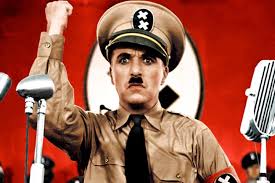
“Let us fight to free the world to do away with greed, with hate and intolerance. Let us fight for a world of reason, a world where science and progress will lead to all people’s happiness.”
“The hate of men will pass, and dictators die, and the power they took from the people will return to the people… liberty will never perish.”
From the moment in Annie Hall when he led Marshall McLuhan out from behind a film hoarding in a New York cinema I have been a huge fan of Woody Allen. He is America’s best writer director of ensemble urban comedies – truly a unique filmmaker.
“Believe it or not – Joe Strummer actually ran the London marathon in 1983. “I didn’t fuckin’ train. Not once. Just turned up and did it,” Strummer said. His keep-fit regime for success– “Drink 10 pints of beer the night before the race. Ya got that? And don’t run a single step at least 4 weeks before the race.” Got it, Joe…”
Well Selvedge – Believe it or not I ran the London Marathon with him – only I needed a beer so ran on ahead getting to the finishing line and over to Earl’s Court an hour earlier – finishing at 3hrs and 3 minutes.
I didn’t train either … tho’ I did for another one six months earlier
… I heard the Clash were running out of steam and wanted to give some moral support …
… Well partly not true. I didn’t know we were in the same stream of humanity on that given day – tho’ always liked them & their music … London Calling and all that … but then who gives a fuck about me and that time … Though one day I might run the London Marathon again …Just so I can say Lou (Lew) Alba (Collins) died right here on this spot on the road which Joe Strummer ran over as well … R.I.P. Joe
Robert Bilott’s ‘self-documenting’ book, Exposure, on Du Pont’s chemical pollution in Parkersburg, West Virginia, is a sobering study of the immorality of corporate America in recent times.
This searing book shows how greed drives so much economic activity in America. Robert Bilott’s story was first revealed to me when I recently saw the film Dark Waters – a Todd Hayes (directed) and Mark Ruffalo (produced and acted) film, well worthy of several nominations in this year Hollywood awards round. It received none. I think we get the picture why.
Bilott tells us the whole story. It begins his ‘unusual’ jumping the fence from his law firm’s usual corporate defence work to take on a plaintiff’s case, for a West Virginia farmer, Earl Tennant, who showed up at his office with a mountain of supporting evidence.
Rob Bilott discovers how Du Pont had been for years dumping poisonous waste from its Washington Works plant at Parkersburg, West Virginia, into landfills which leached into rivers, streams, ponds, killing cattle and compromising the health of inhabitants in a wide area.
This story of corporate harm shows the casual, arrogant and ugly ease with which a powerful corporation can engage in immoral practices, in the name of business as usual. Initially rebuffed by Du Pont, Bilott convinced the courts to order the company to agree to settle, following an independent scientific investigation into the harm done by a chemical PFOA, used for many products, famously in Teflon, gathering huge worldwide profit source and spinner for Du Pont.
It takes years for results from an exhaustive scientific study of the blood samples of nearly 70,000 people in the immediate and surrounding areas, to come back with findings of clear probable cause links to several major life threatening and life-altering diseases and conditions. Du Pont ruined natural water and piped-water supplies meaning that many were already suffering, some dying, from directly associated diseases and conditions.
A jury finally finds for a class civil action against the company – who put up a fierce and at times devious public relations & legal defence – the plaintiffs awarded a 670 million dollar settlement against a corporate giant. Du Pont appealed and appealed then in the face of the unshifting evidence folded and accepted the decision.
This ‘environmental crime’ was aided and abetted by the EPA who worked in tandem with Du Pont to obfuscate key facts of a chemical dumping program from the public, Du Pont carrying on its harmful activities for years in plain sight, abusing the basic trust its economic stranglehold had over the small trusting community. Being the town’s main employer Du Pont had the town cold, knowing all along PFOA was an extremely dangerous substance for all life forms.
In summary, this is a fine book and a necessary read for people who want clean land, air and water, people who a reasonable chance of living their live without corporations callously poisoning them, providing them with cancer. This book is for anyone who believes that accountability over corporate activities is sorely needed, so are lawyers who hold to decent norms, working in a soundly and honourably (democratically) governed society in the 21st century.
Without Earl Tennant bringing this to Robert Bilott’s attention and Bilott deciding to take the career risk of bringing a civil action on behalf of Earl and many others, facing with the victims so many stress-filled years, we may never have even heard about Du Pont’s malfeasance.
Note: In a run up to the class-actiontrial, Du Pont spun off its Washington Works plant into a new company, Chemours, a spin-off technique many companies use to limit financial damage, placing the offending product range under another firm, a firm that can easily be tipped in bankruptcy thus preventing a payout. After years of seeing how Du Pont operated Robert Bilott was ready for the tactic.