In 2019 the Neon released Korean film Parasite, directed by Boon Joon Ho, won the Palme d’or at the Cannes Film Festival, going on to be awarded Best Film at the annual Academy Awards. A rare double.
This year another Neon release Fjord won the Palme d’or, this time with another Korean director, Park Chan-wook, a friend of the director of Parasite, as jury president.
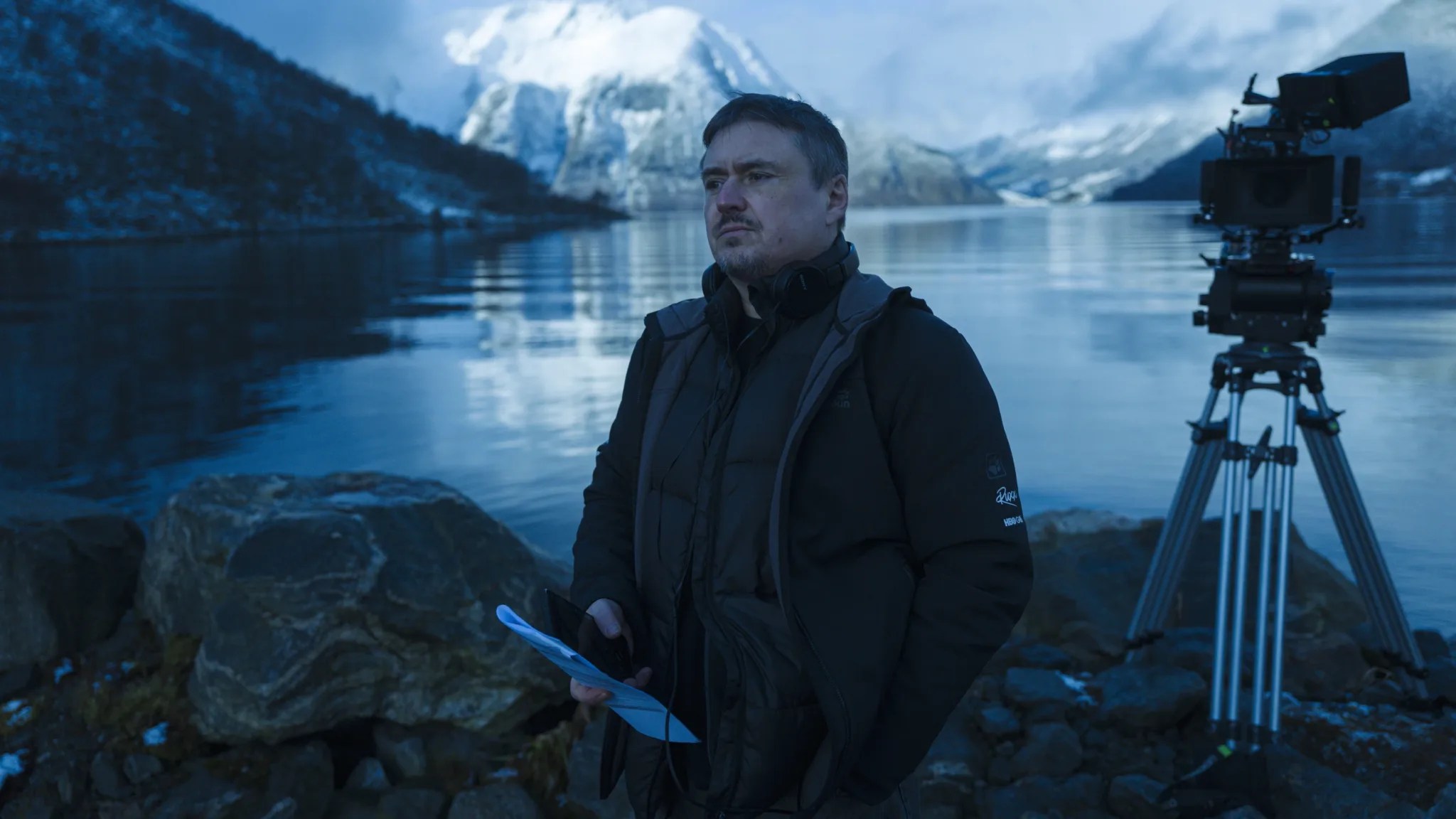
Photo during filming of FJORD by Director, Cristian Mungiu
NEON released films have now won all last six Palme d’ors from 2019 to 2026 (Cannes 2020 was cancelled due to Covid. )
Should we be concerned at this winning trend by Neon and should we examine the human connections in the Jury’s choice for 2026?
Critics are divided on Fjord. The Guardian’s film critic, Peter Bradshaw called it ‘a disappointment’ awarding it 2 stars out of 5.
Have juries at the annual Cannes festival ever been corrupted?
Are Cannes juries ever influenced by outside forces?
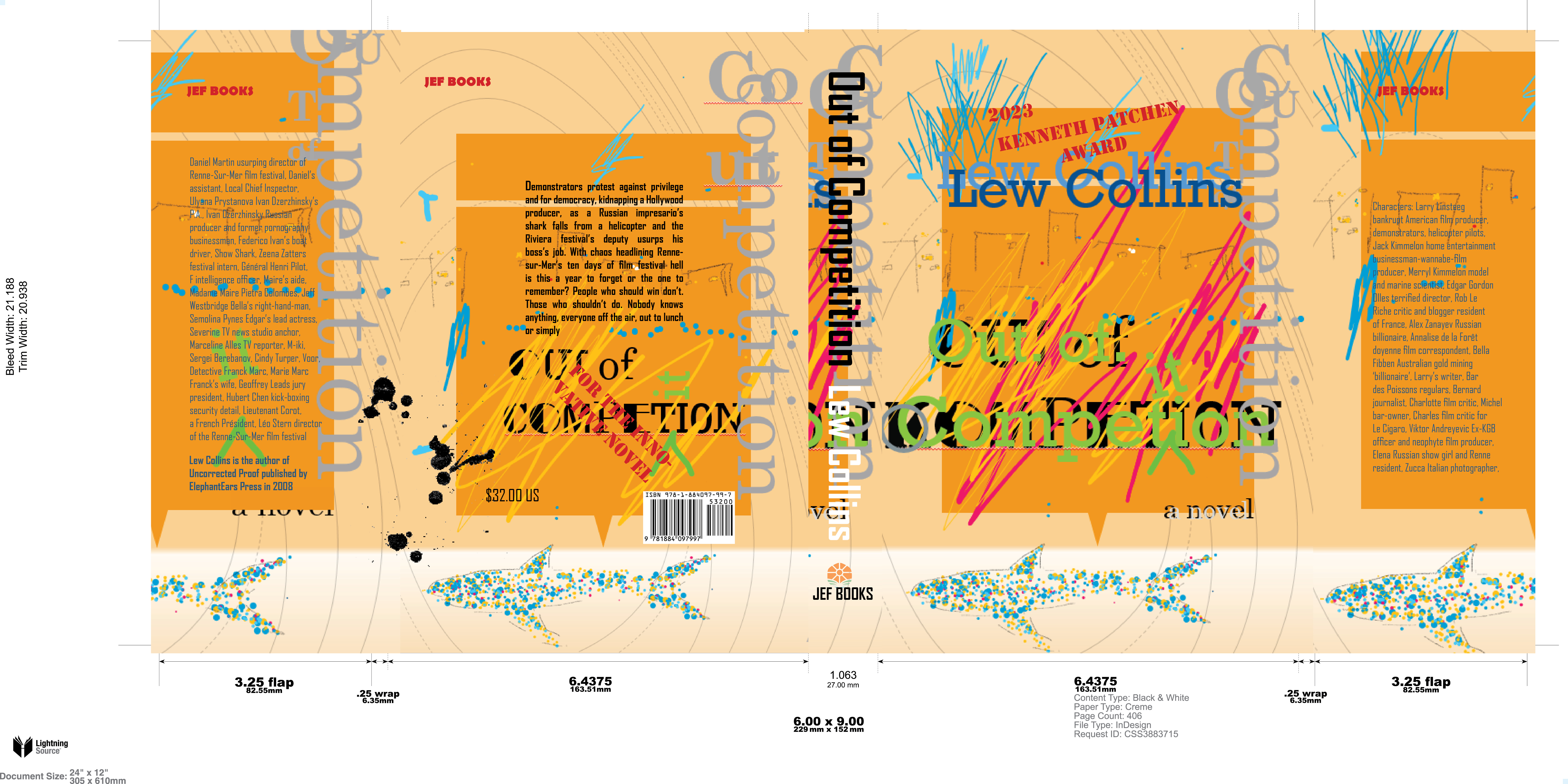
In my novel Out of Competition democracy is used in a one view, one vote method of choosing festival winners in that other famous Côte d’Azur event, the Renne-Sur-Mer Film Festival.
Kidnapped off a street by demonstrators calling for juries to end and democracy begin at a famous film festival, producer Larry Linsteeg joins the marchers who dragged him into a cinema demanding one view one vote.
Watching this on TV from a Renne flat, a former KGB agent with a film idea to hock at Renne, panics over the occupation chaos thinking he’ll get the blame.
This is not Cannes. Or the Cannes Film Festival. Let me say that upfront. It’s Renne-Sur-Mer, a far better film festival by the way, a film festival not many get to see because they are blinded by the tinsel razzle-dazzle of Cannes’ annual event, or so it seems.
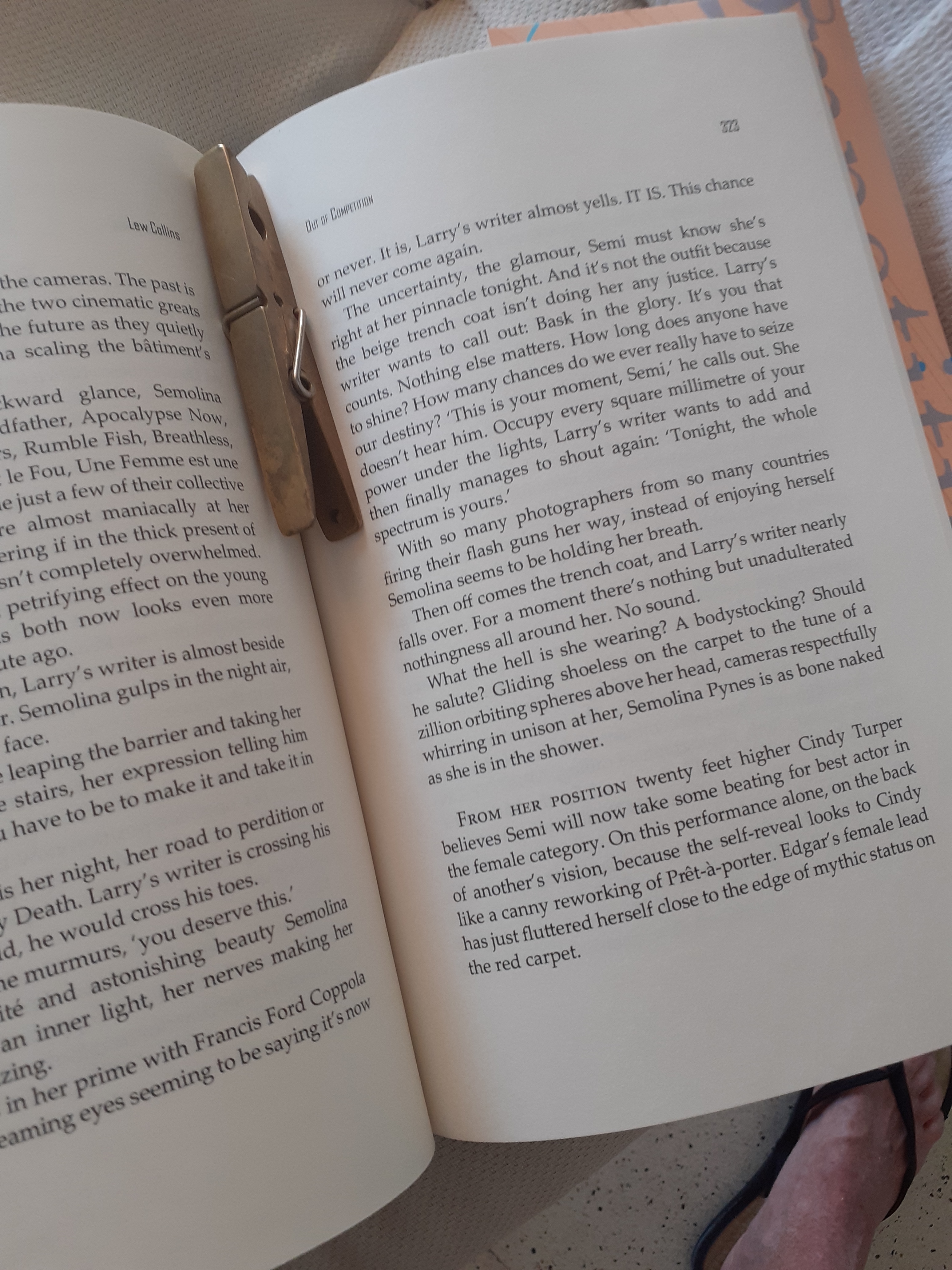
I documented a year in Renne-Sur-Mer’s historical progress when some unfortunate things happened. It was sad and bit funny at times. But was it fair to portray Renne in such a, well, dubious light. I can say I documented what happened. You work it out. What year was it. You know I can’t remember but it wasn’t that long ago in the future. Here’s ten pages to give you an idea of how chaotic festivals can be when the wheels fly off.
Where will we get critique and truth if Larry Ellison gets his way?
The Ellison take over is analysed by Forbes. Does he have the money? It seems not. So what is the mega deal all about? Control of free speech for people, news and creative products and outlets.
Watching the Meidas Touch coverage Youtube on Larry Ellison’s current take over of so much in Los Angeles film and other communication media I remember reading Exposure and then seeing the film of it Dark Waters and how important it is to have books, news and drama that are brave enough to stand up for truth and bring corporations to account. I was deeply impressed by the book and the film.
Exposure and Dark Waters took on DuPont’s production and sale of teflon, and the pollution of the forever PFAs chemicals used in the industrial process that affects us all. Effectively it meant death to many Americans and their livestock in Ohio and West Virginia as DuPont’s killer chemicals seeped into the rivers and water supplies. The effects were devastating.
by Austin Williams, Director of The Future Cities Project
It is fifty years since Spielberg’s movie, Jaws, first reached the big screen. It was described by film critic, Mark Kermode as a “genre-defining blockbuster that changed the face of modern cinema.” Indeed, a new theatre production, The Shark Is Broken, reflecting on the making of that movie is playing in UK theatres today. Lew Collins’ new book “Out of Competition” makes a few nods to the film – one of the characters is proposing yet another remake of the Jaws franchise – and to film-making per se, in a novel of intrigue, murder, and protest set in the murky world of international-finance in the film industry. Within the first chapter, a motor-boat driver is killed by a real shark falling from a promotional helicopter stunt. And so it begins.
The story is told in chronological order, day by day, over the course of a Film Festival in the south of France. A central protagonist Larry Linsteeg, a failing Hollywood film producer, kicks things off and within the first few pages we see him manhandled in a street in the south of France and bundled into a rowdy, radical, pro-democracy meeting. He’d been on his way to close a film-deal, and this opening chapter is fast-paced, and scripted in a manner of a Tarantino-esque film-edit. And equally confusing.
This book has been acclaimed as the 2023 Kenneth Patchen Award-winner (a prize celebrated by the Journal of Experimental Fiction). The author, Lew Collins relocated to France several years ago and his love of the country and especially its language comes across in the text that mixes French language freely into the dialogue. Maybe it’s a little too much for this GCSE-level reader. I found myself reaching for the Google Translate app across several paragraphs (but perhaps that says more about me than the average reader).
Adding to the need for concentration while reading this book, a number of characters appear with few flags or signature and we are confronted by a growing cast in rapid succession: a dodgy Russian oligarch, a film correspondent, a freelance photographer, a chief inspector, an ex-KGB agent with a heart condition, an outgoing festival director, critics, journalists, billionaires and showgirls. Along the way, there is a disappearance and a murder; there are Chinese kickboxers, Japanese artists and leftist demonstrators. It’s a lot for the reader to take in, and it is clearly a strain in the author’s character-naming inventiveness; culminating in Semolina Pynes, the out-of-her-depth, lead actress; or Zena Zatters, the festival gofer. Where characterisations are made, they are a little laboured, for example, sign-posting the “LA-based American audiovisual expert and putative film producer” or describing the oligarch’s boat as “a three hundred and twenty foot welded steel and aluminium moulded fibre-glass… ocean-going, part-solar-powered ship cruiser.”
That said, the story settles, and intrigue ensues. With so many characters, they rise and fall, appear and disappear all too easily and it is hard to relate to the characters in sufficient depth. But the pace is cinematic. Indeed, the filmic ambitions of the novel seem to have drawn characters from movie references: I pictured Rollergirl in Boogie Nights, or Alain Delon in La Piscine, and one can imagine a script for the big screen that emphasises the “homage“, as they say in France, towards updated Bogart detective noir. Maybe even a hint of Get Shorty… about a loan shark after all.
“Out of Competition” by Lew Collins, Jef Books, 2024. pp407.
Watching the video of the Guardian’s group of UK film critics on their annual junket to Cannes, sitting around a half empty verre de vin,un bicchiere di bianco, mezza affogata nell’alcol doing the Guardian’s wrap up video Cannes film festival roundup: ‘A year of Prophets and Basterds, scandals and stars’, watching them get it so completely and utterly and horribly wrong on what and who would win, with at least one expert exhibiting an ‘Oh oh I’m gedding a liddle tipthsy’ half giggle, was one of the best laughs at Cannes 2009 in a year that seemed notably spare of the real thing up on screen.
The film hardheads guarding our take and hold on the fourth dimensional art form, displayed zero-none insight into the Cannes Festival Jury’s collective mind or political process of selection. It had me wondering if they ever got out of the UK film village at all over the two weeks. They weren’t idiots, don’t get me wrong. Intelligent, personable, likable almost – they just didn’t know anymore than you or me, their comments about as good as yours or mine on any given film at any given glassy-eyed moment. I mean who really knows what’s good or not in cinema? God only knows why or how anyone wins awards at these events – what really does go on behind those draped windows? Can you imagine the jury, sorry, The Jury, sitting around seriously trying to be serious about their role. I mean it’s a junket, an annual film publicity junket in a lovely breezy May-warm part of the French Mediterranean. Time to get the sunglasses and floppy linen out and the dingly-dangly things and say words from romance languages almost as the French do…okay, simulate the French.
But after being there and getting back and seeing the Guardian get it horribly, no, miserably, wrong, I thought I’ll have a go at being a film critic too. I went and sat through Synecdoche at the Rio Cinema and here’s my review:
It was an interesting film, an interesting two hours plus of my time spent indoors on a warmish rainless spring afternoon in London. I left the cinema thinking: real life aint so bad after all.
For me Charlie Kaufman is a genius, or the closest thing to true genius that film, well, the closest thing to true genius that American film… well, there’s also Woody Allen, an influence on him and his work Kaufman said. So who’s first and who’s better? Well…See it all gets very silly, very quickly, not just the genius tagging bit but film criticism all round.
Synecdoche is an uncompromising portrait of a human being doing everything but slip down the toilet before your eyes, all written and directed by someone who wrote Being John M, Adaptation and Eternal Sunshine – we are talking serious film writing ability here. But Synecdoche is tough to watch. Not impossible, not horrible or miserable, well yes it is miserable – and between Woody Allen’s division of the world, “miserable” or “horrible”, this is Kaufman’s “miserable”.
It brought Woody Allen to mind, it brought Fellini back to me, Coppola, really anyone who made a film that was a tough ask, a tough sit, at least once, in their hey or other days. Bring on the heh heh days I say, because there seems to be a moment in many famous filmmaking careers when the auteur inside says screw the audience, screw entertainment, screw the laughs I’m going to give them a piece of my art, one from the heart ART.
It also brought to mind a scene in Woody Allen’s Anything Else, David Dobel (Woody Allen) and his protege Jerry Falk (Jason Biggs) walking, nutty Dobel giving Falk some more sage advice.
DOBEL What goals.. wh-what are these goals?
FALK I want to write a novel, Dobel, a novel about man’s fate in the empty universe, no god, no hope, just human suffering and loneliness.
DOBEL Yeah well I’d stick to the jokes if I were you, that’s where the money is.