Writing OUT OF COMPETITION – part one: the idea

Out of Competition began as an idea in 2000. It was written in France. Attending a French film festival I saw a film producer grandstanding his way through a series of well-constructed lies. Present that day in a film tent, I thought to myself: this guy needs analysis. At the same time, the recently-ended Soviet Union was embarking upon an economic march over to join in with the West.

Pencilling down ideas I came up with a couple of sketchy characters, one American, one Russian, similar and unique – types who wanted attention, enjoyed power, and were destined to meet, maybe do business together.

Other ideas and characters came into my head as a story began shaping up, but I couldn’t find a central idea to unify everything.

As the novel’s progress slowed my idea faded into the background. Where to begin and what is this about stalled me. I moved on to writing two other books and stopped thinking about the film tent inspired idea. Then in 2010 I read the translation of War and Peace by Richard Pevear and Lara Volokonsky. Hooked immediately, I read it once, then twice.

The translating team’s stated intention was to return War and Peace to Tolstoy’s original Russian language style. It was time. A series of English translators had turned Leo Tolstoy into a copy of a 19th century English novelist. The now well-known Tolstoy test: “The children rode the chairs to Moscow” showed Tolstoy not mutating chairs into carriages. Tolstoy’s children needed no linguistic bridge for their imagination. Pevear & Volokonsky understood this clearly, and translating simply, translated Tolstoy carefully following the original Russian of W&P. Bursts of French appeared again. Then the French culture and language influencing Russian life were torn asunder when Napoleon invaded in 1812.

I had my novel’s subject: Russians invading a French film festival.

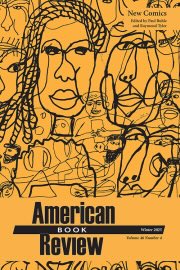
OUT OF COMPETITION

Kenneth Patchen Award for the innovative novel

‘Laugh out loud funny’

Carla M. Wilson

5 OUT OF 5 STARS

Intelligent, provocative and fun

Cherry Jam UK, October 16, 2024 Review

Humorously subversive. It goes so fast I read it in two days. A must for anyone with a love of cinema and its festivals. And the most irreverent novel written about the South of France

5 OUT OF 5 STARS

Ten Years is Enough!

Read-fest UK, 9 September 2025

A sharp satire about democracy set in a Riviera Film Festival facing collapse as young cineastes demonstrate against privilege and lack of transparency in the annual voting shakedown, the novel opening with the kidnap off the streets of a desperate bankrupt Hollywood producer cadging money wherever he can

Out of Competition Ingram distributing, found at:

JEF Books

https://www.experimentalfiction.com/products/out-of-competition

Bookshop.org, bricks & mortar bookstores and online booksellers

Shining a light on Neon

In 2019 the Neon released Korean film Parasite, directed by Boon Joon Ho, won the Palme d’or at the Cannes Film Festival, going on to be awarded Best Film at the annual Academy Awards. A rare double.

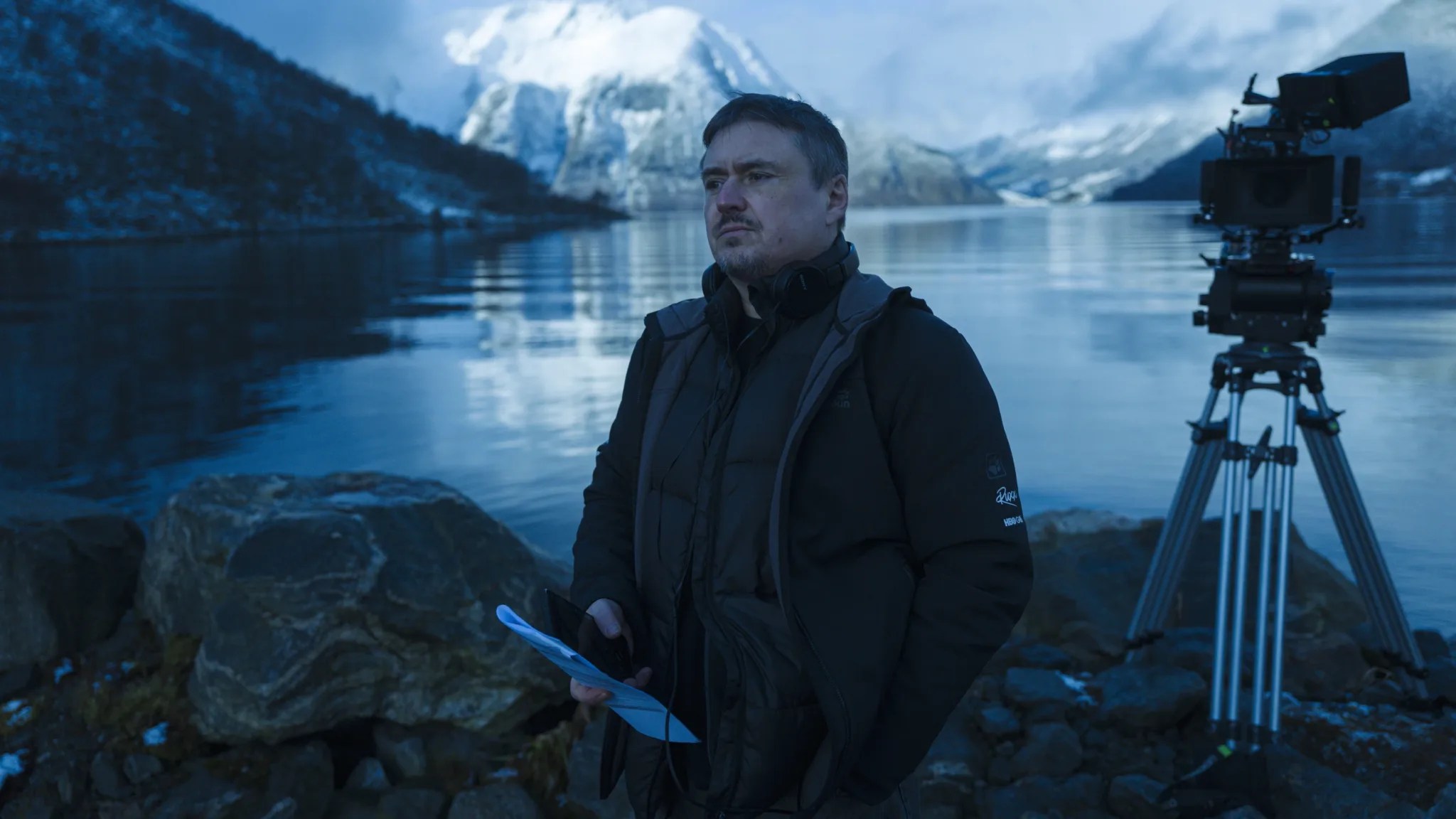
This year another Neon release Fjord won the Palme d’or, this time with another Korean director, Park Chan-wook, a friend of the director of Parasite, as jury president.

Photo during filming of FJORD by Director, Cristian Mungiu

NEON released films have now won all last six Palme d’ors from 2019 to 2026 (Cannes 2020 was cancelled due to Covid. )

Should we be concerned at this winning trend by Neon and should we examine the human connections in the Jury’s choice for 2026?

Critics are divided on Fjord. The Guardian’s film critic, Peter Bradshaw called it ‘a disappointment’ awarding it 2 stars out of 5.

Have juries at the annual Cannes festival ever been corrupted?

Are Cannes juries ever influenced by outside forces?

In my novel Out of Competition democracy is used in a one view, one vote method of choosing festival winners in that other famous Côte d’Azur event, the Renne-Sur-Mer Film Festival.

Is a democratic vote a better way of choosing?

Out of Competition and Democracy

Grifters, sharks, wannabes, liars, creativors cruise the seaside Promenade as an enfranchising of an entire festival grows out of protest, taking voting from annual juries and giving it to the fans, without whom the festival would not be.

When I was writing this the second invasion of Ukraine hadn’t happened. When I was in the the final draft oligarchs lived only in Russia. Now they’re hard at gaming America. When I was in the final draft, political sycophancy was in its infancy now it’s fully grown.

When I was in the final draft there was still an operational Democratic Party, now a couple State governors are performing CPR on its seemingly lifeless body. When I began writing this most of America believed in habeas corpus, personal and civil rights, accountability and independence of the judiciary.

When I was writing this novel it wasn’t clear how much damage the right wing of the Supreme Court could inflict on America.

Is American democracy at death’s door …..

The No Kings Protest, and then what happens..

Beginnings

In the summer of 1981, my first trip to Greece, one late hot July evening, I wandered up the road from my Plaka hotel to the Acropolis, a young filmmaker on holiday, a working resident from Hong Kong visiting Europe.

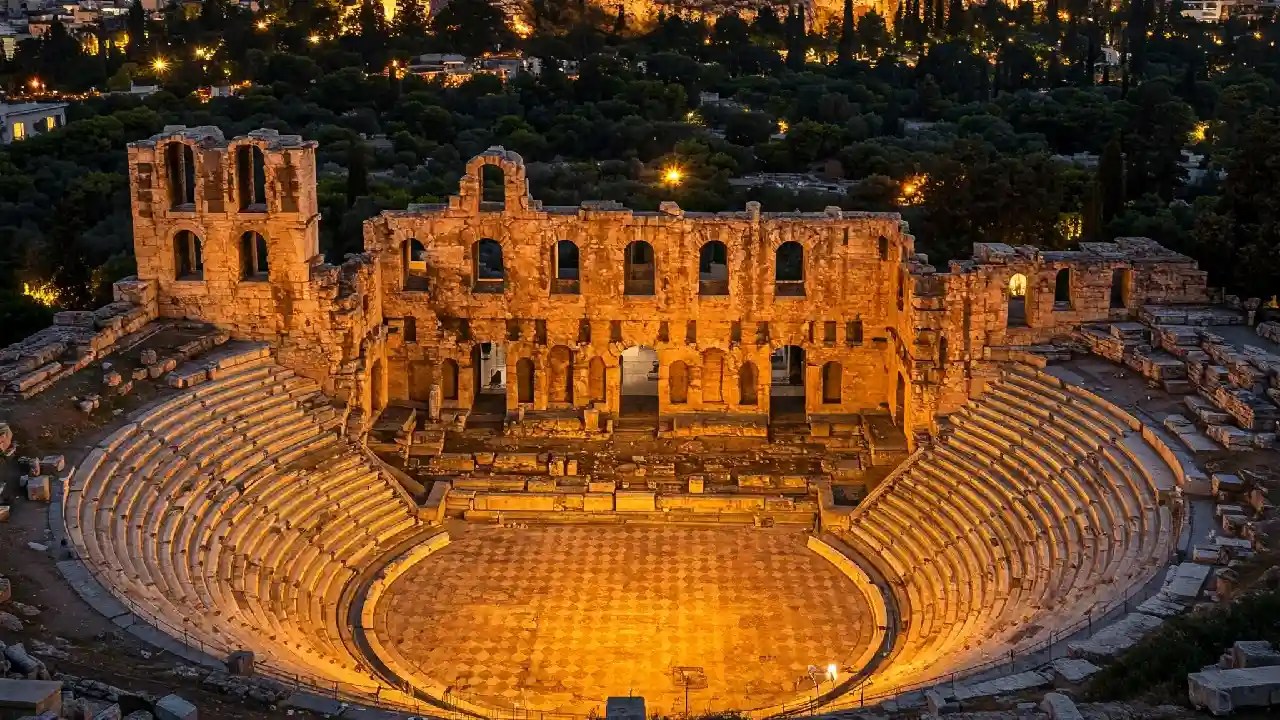
As darkness gathered I sat on a perimeter wall and took in the summer dusk scenery all around. Facing the seaward south I stared down from my spot at the lit up Odeon of Herodes Atticus theatre way down below me. A rehearsal was going on. After watching for a short while I walked back to the entrance road, took another path the other way, hiking down the hill to find out what it was I had just seen.

A poster outside the Odeon announced that the Athens Summer Festival was showing Aristophanes’ The Acharnians. Had I seen a play by Aristophanes before? No.

I returned to my hotel, and the next day found a ticket seller in Athens. I bought a seat for the play – prices of the day ranging from $1.20 to $6. I bought a Penguin translation of the play in a bookshop and read it, and certainly no wiser, set off the following night to see the performance.

The Acharnians was first performed in 426 BC. A strident anti-war play it is credited as the oldest staging of a western threatrical (Greek) comedy. I didn’t know what to expect because the Penguin version, translated into English, did not make it clear. Still, I had seen the rehearsal. I had seen something intriguing. The play would do the rest.

The Odeon theatre is an extraordinary space but on a hot July summer’s night it is other-worldly, the night air made translucent by light alive with what looked like tiny floating tippy tips of flowers, rising in the lit-up warm evening air all throughout the amphitheatre.

In jeans, t-shirt and sandals, surrounded by Greeks in evening dress I was an outsider but nobody cared about me. They were there to see a play, an important play in the ancient Greek canon.

What truly resonates with me most now forty plus years later, is how an ancient play, interpreted, performed and directed as it was, was so relevant to me and that 1981 audience. I spoke no Greek yet the production literally lifted me off my seat. This was not a stilted ancient classic, the sort of production I remembered too well from university productions. The Penguin translation was swept from my mind.

Dicæopolis, a native of Acharnæ, and an ex-soldier, returns utterly disillusioned and deeply angered by the Persian wars, heartsick at the misery and stupidity of conflict. Not shy in making his anti-war views known he railed against his fellow citizens chastising them with lewd gestures while a chorus of indignant citizens in white masks, odd hats and fantastic sewn quilt-like costumes, rushed from one side of the stage to the other, all this happening in a cacophony of startling music and sound effects, the chorus remonstrating and arguing with Dicæopolis and each other. The audience was in stitches. I didn’t understand a word, yet understood everything.

As a writer it’s hard to communicate the effect this experience has had on me from that hot July Athenian summer’s night onward. The Archarnians is the western world’s most ancient staged comedy, its performance having Greeks no doubt in ancient times, almost rolling in aisles as Greeks were doing around me. 

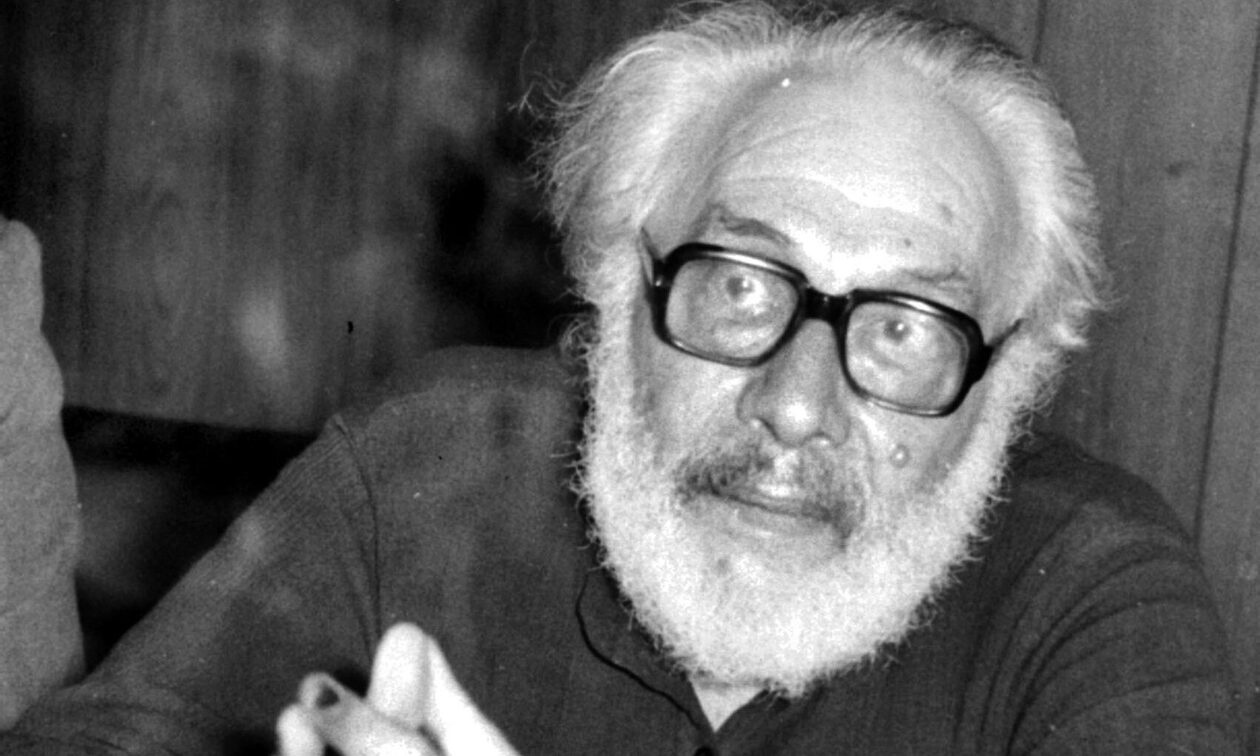
When the performance ended, the revered director Karolos Koun was brought on stage to receive a rousing applause. I sat stunned by what I had seen. It had transcended any theatrical piece I had been to see by multiples I can’t calculate even today. I felt the meaning of theatre not only the ancient Greek idea of ‘spectacle’ had been made clear to me, with meaning in my writing perhaps beginning that night as well.

Karolos Koun