Beginnings

In the summer of 1981, my first trip to Greece, one late hot July evening, I wandered up the road from my Plaka hotel to the Acropolis, a young filmmaker on holiday, a working resident from Hong Kong visiting Europe.

As darkness gathered I sat on a perimeter wall and took in the summer dusk scenery all around. Facing the seaward south I stared down from my spot at the lit up Odeon of Herodes Atticus theatre way down below me. A rehearsal was going on. After watching for a short while I walked back to the entrance road, took another path the other way, hiking down the hill to find out what it was I had just seen.
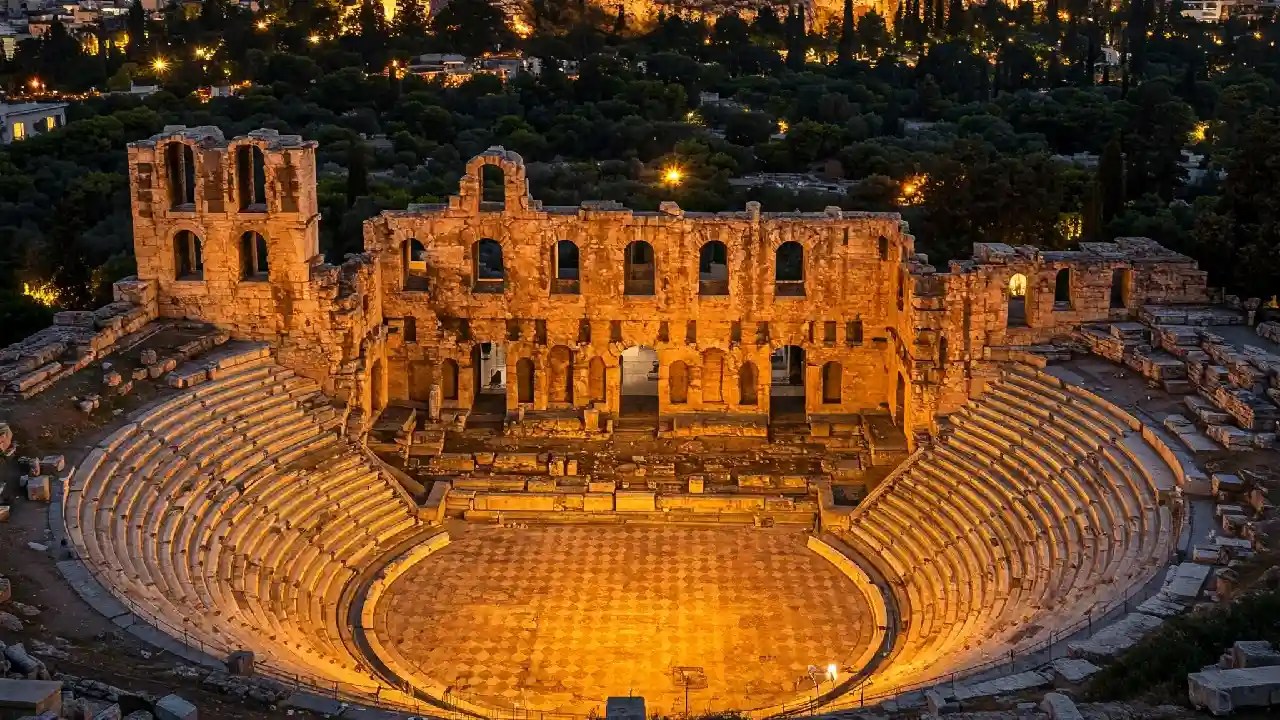
A poster outside the Odeon announced that the Athens Summer Festival was showing Aristophanes’ The Acharnians. Had I seen a play by Aristophanes before? No.

I returned to my hotel, and the next day found a ticket seller in Athens. I bought a seat for the play – prices of the day ranging from $1.20 to $6. I bought a Penguin translation of the play in a bookshop and read it, and certainly no wiser, set off the following night to see the performance.

The Acharnians was first performed in 426 BC. A strident anti-war play it is credited as the oldest staging of a western threatrical (Greek) comedy. I didn’t know what to expect because the Penguin version, translated into English, did not make it clear. Still, I had seen the rehearsal. I had seen something intriguing. The play would do the rest.

The Odeon theatre is an extraordinary space but on a hot July summer’s night it is other-worldly, the night air made translucent by light alive with what looked like tiny floating tippy tips of flowers, rising in the lit-up warm evening air all throughout the amphitheatre.

In jeans, t-shirt and sandals, surrounded by Greeks in evening dress I was an outsider but nobody cared about me. They were there to see a play, an important play in the ancient Greek canon.

What truly resonates with me most now forty plus years later, is how an ancient play, interpreted, performed and directed as it was, was so relevant to me and that 1981 audience. I spoke no Greek yet the production literally lifted me off my seat. This was not a stilted ancient classic, the sort of production I remembered too well from university productions. The Penguin translation was swept from my mind.

Dicæopolis, a native of Acharnæ, and an ex-soldier, returns utterly disillusioned and deeply angered by the Persian wars, heartsick at the misery and stupidity of conflict. Not shy in making his anti-war views known he railed against his fellow citizens chastising them with lewd gestures while a chorus of indignant citizens in white masks, odd hats and fantastic sewn quilt-like costumes, rushed from one side of the stage to the other, all this happening in a cacophony of startling music and sound effects, the chorus remonstrating and arguing with Dicæopolis and each other. The audience was in stitches. I didn’t understand a word, yet understood everything.

As a writer it’s hard to communicate the effect this experience has had on me from that hot July Athenian summer’s night onward. The Archarnians is the western world’s most ancient staged comedy, its performance having Greeks no doubt in ancient times, almost rolling in aisles as Greeks were doing around me. 

When the performance ended, the revered director Karolos Koun was brought on stage to receive a rousing applause. I sat stunned by what I had seen. It had transcended any theatrical piece I had been to see by multiples I can’t calculate even today. I felt the meaning of theatre not only the ancient Greek idea of ‘spectacle’ had been made clear to me, with meaning in my writing perhaps beginning that night as well.
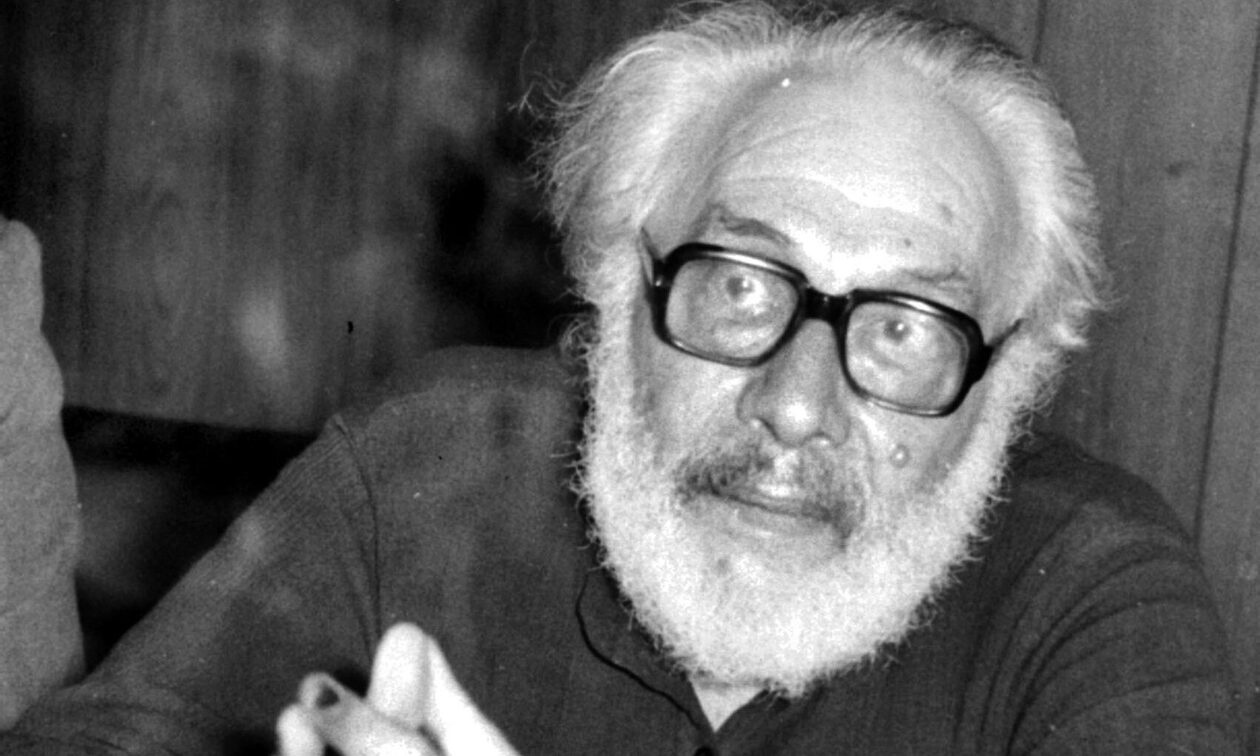
Karolos Koun
Do we want to see Democracy die in America?

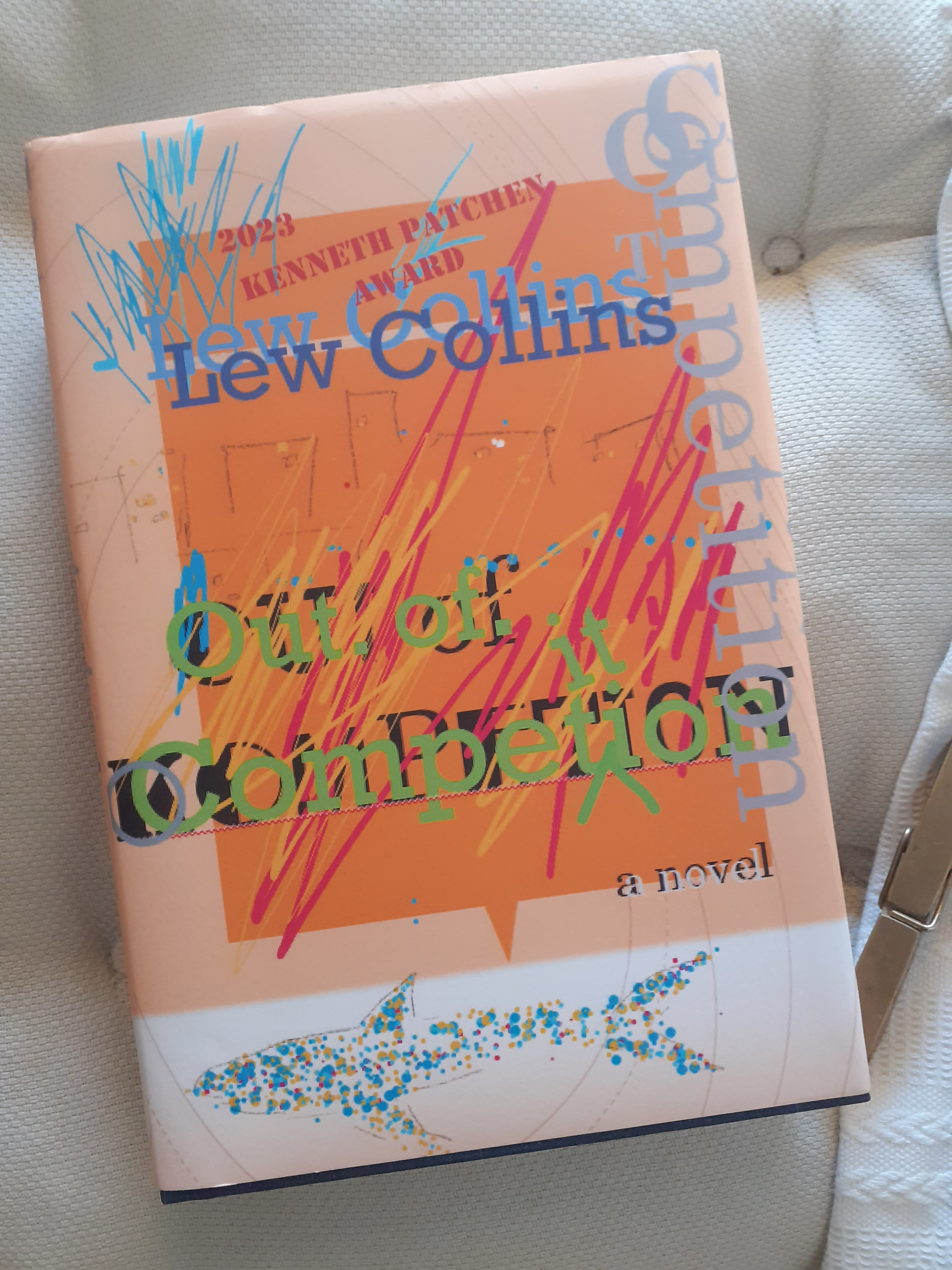
My current novel’s main theme was always Democracy from the earliest days I began to write it, but several years ago, deep in the writing I didn’t foresee how important Democracy would become in this era.

I decided early, writing ‘Out of Competition’ set in a film festival, that it would be comic because while I believed all processes of democracy could be better promoted everywhere I never foresaw democracy facing a serious existential threat.

Democracy has always been a major part of my life. My father was in the second world war so democracy always figured in my consciousness, and while I have never experienced totalitarianism I understood it wasn’t the way of the west, or a real threat, until now.

I never thought not even after the murder of John F. Kennedy that a U.S. president, however he got into power would try to destroy democracy in order to cling to power.

Democracy has never been perfect. It’s been manipulated, not just in the United States but its demise in the US, UK, France, Canada, Australia, or any western European nation is unthinkable. Democracy remains fundamental, especially in America.

The world is watching. Everything American was once received well. Cultural power is real. John F. Kennedy understood this.

These times need courage, unity, political skill.

Let’s stop and think

We live in a digital, post-automated mechanical world, when once many centuries ago books were written and bound by hand.

Then with some ingenious reworking by Gutenberg and others in reimagining winepress and jewellery making techniques and technologies, metal type was created and off we went to the mass-printing races. So we thought. Because it only took a few centuries to really perfect the “mass” part of it all.

It makes me treasure the hardcover more, because it is the closest we still have to the wholly hand made book. Don’t get me wrong, I too saw a lot in the 1990s advent of the digital book, for its democratisation of information potentialities, which somehow could have brought to light many texts that publishers couldn’t be bothered thinking about re-printing. Only it didn’t happen for reasons we know. Free and fair and open competition is simply a myth, with publishers even sighing and throwing withering side glances at the “damnable” used book market.

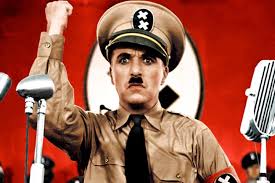
‘The Great Dictator’ resonating in 2025

“Let us fight to free the world to do away with greed, with hate and intolerance. Let us fight for a world of reason, a world where science and progress will lead to all people’s happiness.”

“The hate of men will pass, and dictators die, and the power they took from the people will return to the people… liberty will never perish.”

Experiment, what experiment?

..handheld shaky cam, found footage, ultra-violence, meta-storylines, etc., all becoming part of the broad pop cultural landscape and assimilated into the commercial marketplace. This translates across all cultural lines – music, art, technology, etc. as the outsiders and untouchables of yesteryear are today’s TV spokesmen and tastemakers..

…experimental film seems to represent more fully the true potential and magic of cinema

…for brief moments in history, think the ‘beats’, the real ground-shakers, the true risk-takers, manage to do something that is life and culture affecting, their minds drafting the future…

Calling all photographers

Join with us in a People’s Justice Publication

Send us your photos accompanied by your own description – EEP will initially make a digital publication and if there is demand do one in print – ALL proceeds to a charity of our collective contributing creative choice.

This initiative is not for profit, this is for Justice.. We are sure you will have many to show us that are extraordinary…
…All rights to photos reserved to creators..

http://elephantearspress.com/

‘The Seat of Human Justice’

Inside Job and The Euro

See the documentary Inside Job – a forensically researched, superbly delivered film about the 2008/2009 financial collapse – to see what the Euro leaders really have to deal with, the rating agencies delivering them an ultimatum.

Why haven’t we had a detailed analysis as we see in Inside Job presented to us by big media?

Some empirical facts to ponder: “The financial services industry’s share of profits increased from 10% in the 1980s to 40% in 2007, and the value of its shares (in the overall) went from 6% to 23%, while the industry only accounts for 5% of private sector employment.” Household debt in the U.S. grew from 3% of disposable income in 1998 to 130% in 2008. Prime mortgage delinquency as a percentage of loans increased from 2.5% in 1998 to 118% in 2008 – Manuel Castells.

What is Facebook really up to?

Initially this post was about Facebook dismantling its groups. The issue then: Many people spent an enormous amount of time developing them and asking people to join. Because of widespread concern and protest by Facebook members FB resolved this and groups could keep their members. At the time I wrote: “Facebook is fast acting like a corporation acting in concert with other corporate or shady political interests – not a borrowed idea from a dorm at Harvard existing only because a lot of people use it. If Facebook is about anything it is about each and every one of its members – Facebook is nothing without the people who bother to use its pages.”

Now Facebook wants, it seems, to use stored data of its members and make it public. This has been true for sometime of course. FB data-mines its users. But is the ante being upped with new moves? Does this breach the privacy terms implied in the original terms of use?

Facebookers should be informed of what this new FB policy is and what it means and then they should be asked whether they agree to the use of data that was once ‘private’ between FB members.

Facebook should reflect the members that make it up. Facebookers are not a resource to be exploited for profit in this way by Facebook’s founders (this was not the original ‘pitch’ or purpose of Facebook). If use of private data does happen, at the very least it should be only with prior full agreement of Facebook users.

If Facebook wants to charge for the service then they can and people can opt out of the FB site if they so wish – taking their data with them, not leaving it behind for commercial use.

If I buy a house I get the house and grounds, not the furniture and fittings inside and outside, unless it is in the contract of sale. Facebook do not own the data, (though I am sure their lawyers would say they do). They have already profited hugely from having such a huge number of users, but they don’t own Facebookers or their private and personal data.