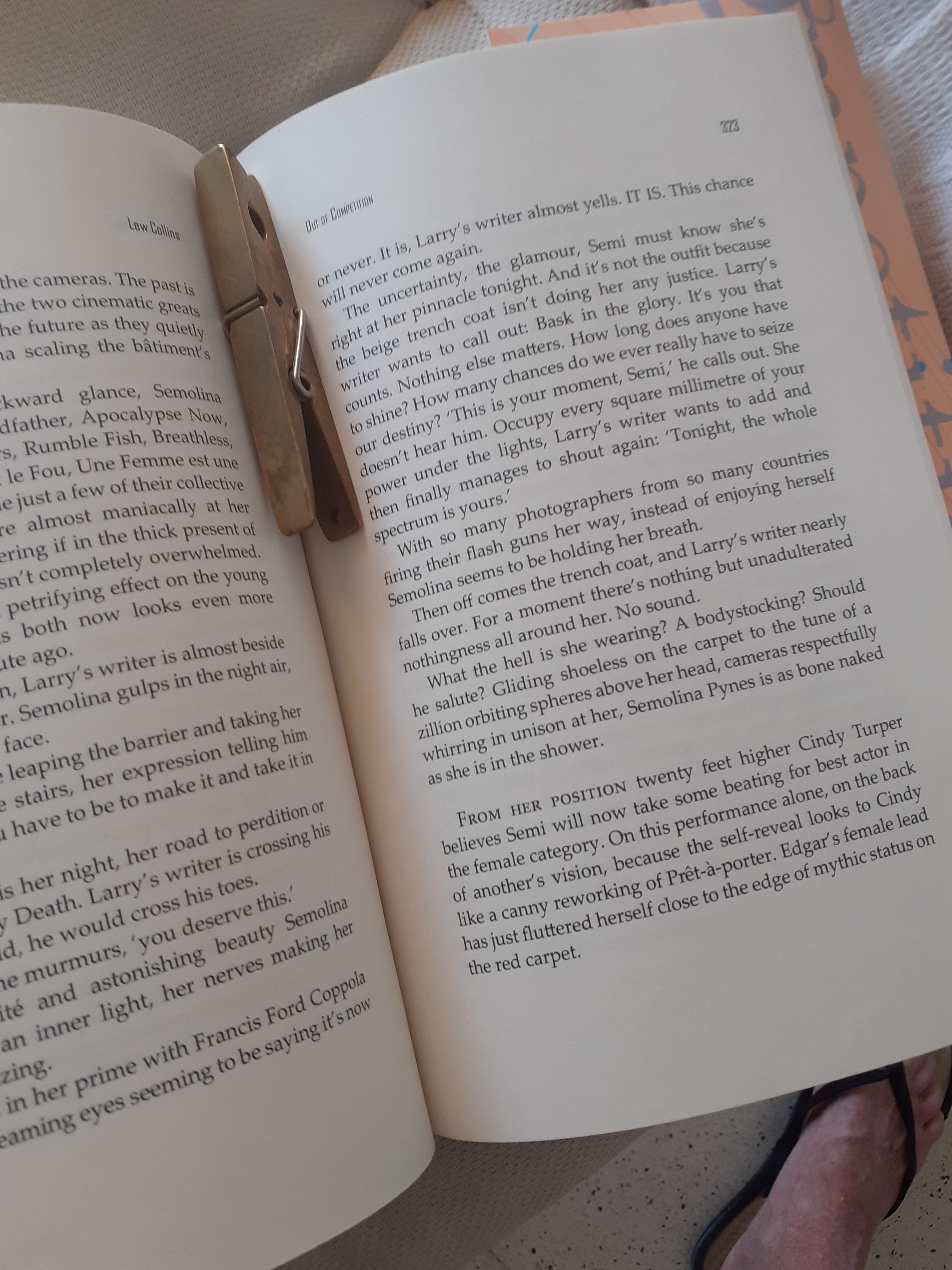
Grifters, sharks, wannabes, liars, creativors cruise the seaside Promenade as an enfranchising of an entire festival grows out of protest, taking voting from annual juries and giving it to the fans, without whom the festival would not be.
When I was writing this the second invasion of Ukraine hadn’t happened. When I was in the the final draft oligarchs lived only in Russia. Now they’re hard at gaming America. When I was in the final draft, political sycophancy was in its infancy now it’s fully grown.
When I was in the final draft there was still an operational Democratic Party, now a couple State governors are performing CPR on its seemingly lifeless body. When I began writing this most of America believed in habeas corpus, personal and civil rights, accountability and independence of the judiciary.
When I was writing this novel it wasn’t clear how much damage the right wing of the Supreme Court could inflict on America.
In the summer of 1981, my first trip to Greece, one late hot July evening, I wandered up the road from my Plaka hotel to the Acropolis, a young filmmaker on holiday, a working resident from Hong Kong visiting Europe.
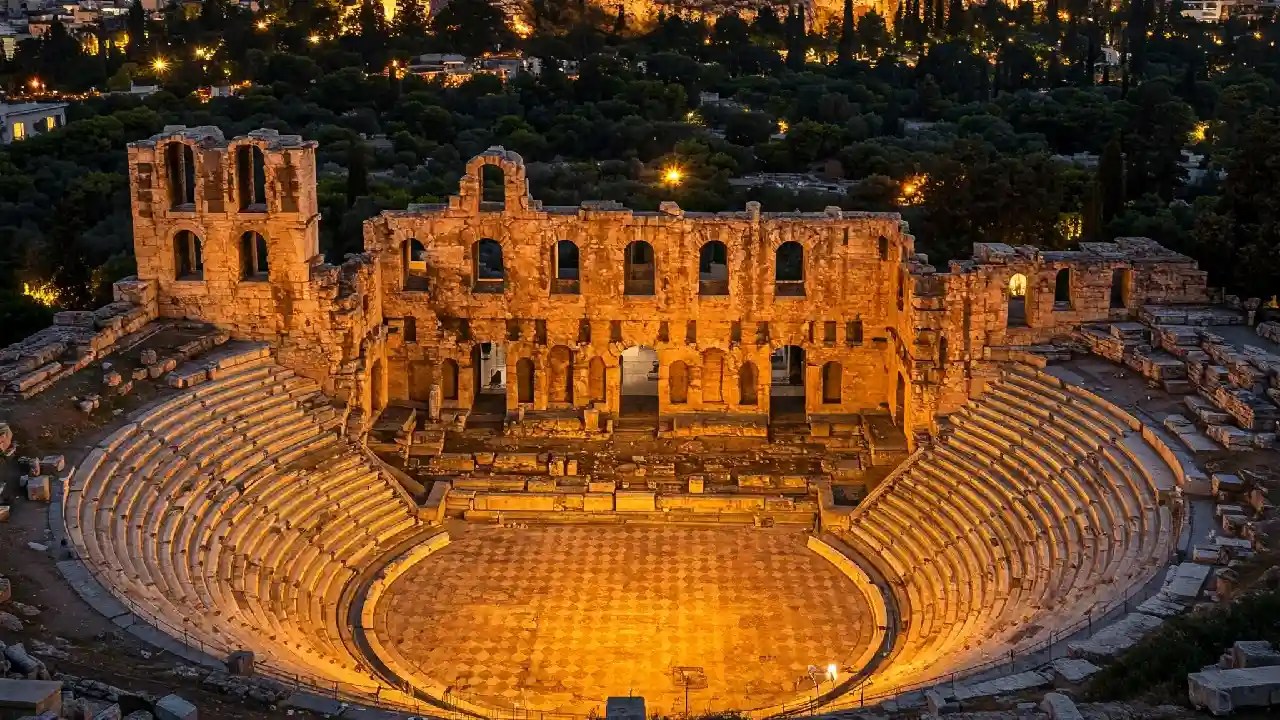
As darkness gathered I sat on a perimeter wall and took in the summer dusk scenery all around. Facing the seaward south I stared down from my spot at the lit up Odeon of Herodes Atticus theatre way down below me. A rehearsal was going on. After watching for a short while I walked back to the entrance road, took another path the other way, hiking down the hill to find out what it was I had just seen.
A poster outside the Odeon announced that the Athens Summer Festival was showing Aristophanes’ The Acharnians. Had I seen a play by Aristophanes before? No.
I returned to my hotel, and the next day found a ticket seller in Athens. I bought a seat for the play – prices of the day ranging from $1.20 to $6. I bought a Penguin translation of the play in a bookshop and read it, and certainly no wiser, set off the following night to see the performance.
The Acharnians was first performed in 426 BC. A strident anti-war play it is credited as the oldest staging of a western threatrical (Greek) comedy. I didn’t know what to expect because the Penguin version, translated into English, did not make it clear. Still, I had seen the rehearsal. I had seen something intriguing. The play would do the rest.
The Odeon theatre is an extraordinary space but on a hot July summer’s night it is other-worldly, the night air made translucent by light alive with what looked like tiny floating tippy tips of flowers, rising in the lit-up warm evening air all throughout the amphitheatre.
In jeans, t-shirt and sandals, surrounded by Greeks in evening dress I was an outsider but nobody cared about me. They were there to see a play, an important play in the ancient Greek canon.
What truly resonates with me most now forty plus years later, is how an ancient play, interpreted, performed and directed as it was, was so relevant to me and that 1981 audience. I spoke no Greek yet the production literally lifted me off my seat. This was not a stilted ancient classic, the sort of production I remembered too well from university productions. The Penguin translation was swept from my mind.
Dicæopolis, a native of Acharnæ, and an ex-soldier, returns utterly disillusioned and deeply angered by the Persian wars, heartsick at the misery and stupidity of conflict. Not shy in making his anti-war views known he railed against his fellow citizens chastising them with lewd gestures while a chorus of indignant citizens in white masks, odd hats and fantastic sewn quilt-like costumes, rushed from one side of the stage to the other, all this happening in a cacophony of startling music and sound effects, the chorus remonstrating and arguing with Dicæopolis and each other. The audience was in stitches. I didn’t understand a word, yet understood everything.
As a writer it’s hard to communicate the effect this experience has had on me from that hot July Athenian summer’s night onward. The Archarnians is the western world’s most ancient staged comedy, its performance having Greeks no doubt in ancient times, almost rolling in aisles as Greeks were doing around me.
When the performance ended, the revered director Karolos Koun was brought on stage to receive a rousing applause. I sat stunned by what I had seen. It had transcended any theatrical piece I had been to see by multiples I can’t calculate even today. I felt the meaning of theatre not only the ancient Greek idea of ‘spectacle’ had been made clear to me, with meaning in my writing perhaps beginning that night as well.
My current novel’s main theme was always Democracy from the earliest days I began to write it, but several years ago, deep in the writing I didn’t foresee how important Democracy would become in this era.
I decided early, writing ‘Out of Competition’ set in a film festival, that it would be comic because while I believed all processes of democracy could be better promoted everywhere I never foresaw democracy facing a serious existential threat.
Democracy has always been a major part of my life. My father was in the second world war so democracy always figured in my consciousness, and while I have never experienced totalitarianism I understood it wasn’t the way of the west, or a real threat, until now.
I never thought not even after the murder of John F. Kennedy that a U.S. president, however he got into power would try to destroy democracy in order to cling to power.
Democracy has never been perfect. It’s been manipulated, not just in the United States but its demise in the US, UK, France, Canada, Australia, or any western European nation is unthinkable. Democracy remains fundamental, especially in America.
The world is watching. Everything American was once received well. Cultural power is real. John F. Kennedy understood this.
We live in a digital, post-automated mechanical world, when once many centuries ago books were written and bound by hand.
Then with some ingenious reworking by Gutenberg and others in reimagining winepress and jewellery making techniques and technologies, metal type was created and off we went to the mass-printing races. So we thought. Because it only took a few centuries to really perfect the “mass” part of it all.
It makes me treasure the hardcover more, because it is the closest we still have to the wholly hand made book. Don’t get me wrong, I too saw a lot in the 1990s advent of the digital book, for its democratisation of information potentialities, which somehow could have brought to light many texts that publishers couldn’t be bothered thinking about re-printing. Only it didn’t happen for reasons we know. Free and fair and open competition is simply a myth, with publishers even sighing and throwing withering side glances at the “damnable” used book market.
I am a writer, novelist, living and writing on the south coast of France, where I swim and continue renovating my apartment.
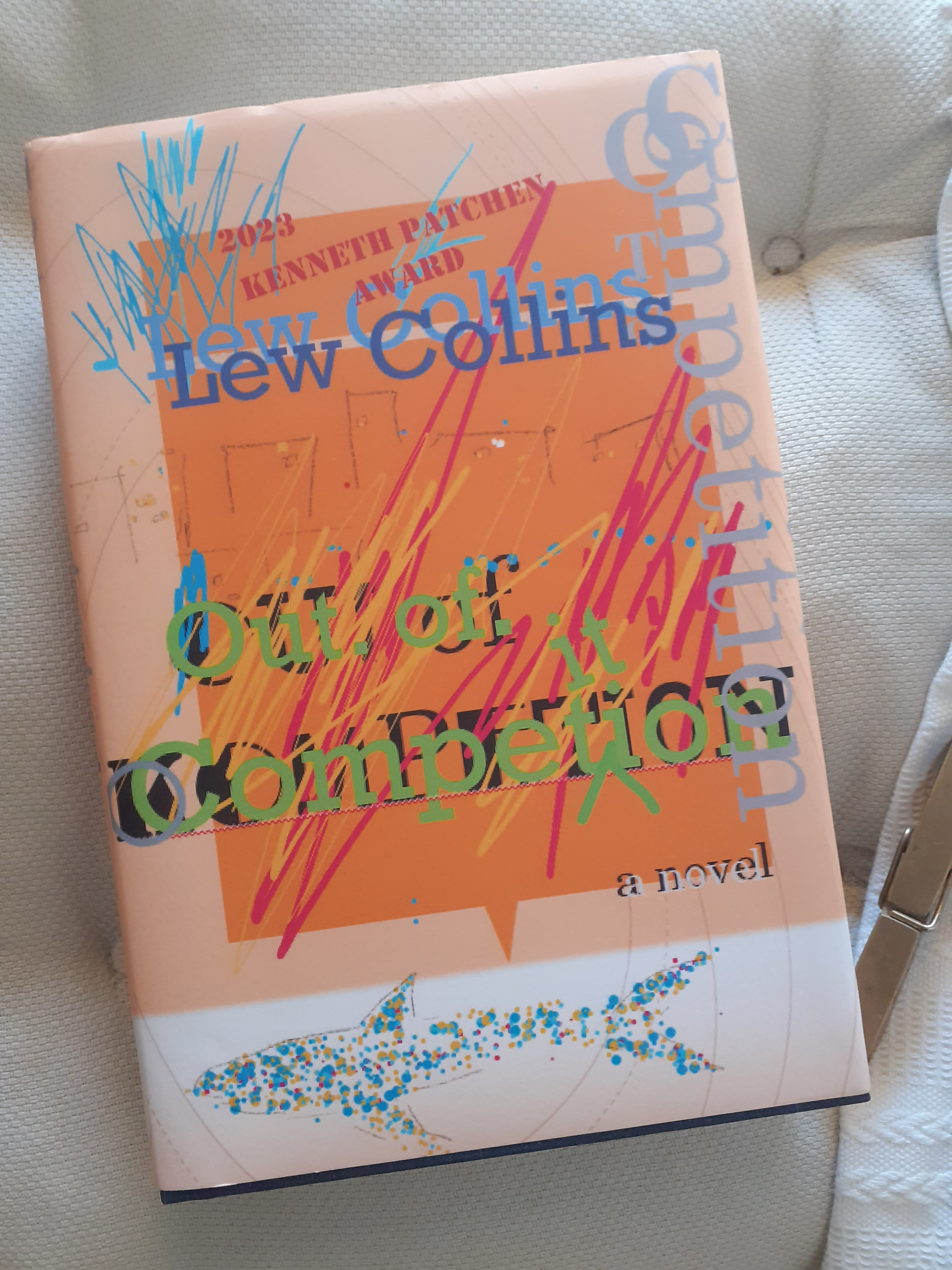
I am very close to finishing a novel set in 1963. My recently published novel Out of Competition, published by JEF Books, Illinois, October 1, 2024 won the Kenneth Patchen Award for the Innovative Novel.
Oliver Stone’s film Alexander shows the power of war as a means to extend power. With JFK, Stone followed and unravelled at least part of the story of how Jack Kennedy – who began a process of rolling back war as the means for the extending and using power exporting America’s cultural power peacefully – was brutally cut down in his prime.