
“Does it makes sense that a multi-million dollar income should go untaxed year after year?”

“Does it makes sense that a multi-million dollar income should go untaxed year after year?”
“The Committee’s not an independent operation. Everything is cleared with the White House.”


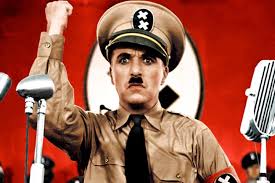
“Let us fight to free the world to do away with greed, with hate and intolerance. Let us fight for a world of reason, a world where science and progress will lead to all people’s happiness.”

Robert Bilott’s ‘self-documenting’ book, Exposure, on Du Pont’s chemical pollution in Parkersburg, West Virginia, is a sobering study of the immorality of corporate America in recent times.
This searing book shows how greed drives so much economic activity in America. Robert Bilott’s story was first revealed to me when I recently saw the film Dark Waters – a Todd Hayes (directed) and Mark Ruffalo (produced and acted) film, well worthy of several nominations in this year Hollywood awards round. It received none. I think we get the picture why.
Bilott tells us the whole story. It begins his ‘unusual’ jumping the fence from his law firm’s usual corporate defence work to take on a plaintiff’s case, for a West Virginia farmer, Earl Tennant, who showed up at his office with a mountain of supporting evidence.
Rob Bilott discovers how Du Pont had been for years dumping poisonous waste from its Washington Works plant at Parkersburg, West Virginia, into landfills which leached into rivers, streams, ponds, killing cattle and compromising the health of inhabitants in a wide area.
This story of corporate harm shows the casual, arrogant and ugly ease with which a powerful corporation can engage in immoral practices, in the name of business as usual. Initially rebuffed by Du Pont, Bilott convinced the courts to order the company to agree to settle, following an independent scientific investigation into the harm done by a chemical PFOA, used for many products, famously in Teflon, gathering huge worldwide profit source and spinner for Du Pont.
It takes years for results from an exhaustive scientific study of the blood samples of nearly 70,000 people in the immediate and surrounding areas, to come back with findings of clear probable cause links to several major life threatening and life-altering diseases and conditions. Du Pont ruined natural water and piped-water supplies meaning that many were already suffering, some dying, from directly associated diseases and conditions.
A jury finally finds for a class civil action against the company – who put up a fierce and at times devious public relations & legal defence – the plaintiffs awarded a 670 million dollar settlement against a corporate giant. Du Pont appealed and appealed then in the face of the unshifting evidence folded and accepted the decision.
This ‘environmental crime’ was aided and abetted by the EPA who worked in tandem with Du Pont to obfuscate key facts of a chemical dumping program from the public, Du Pont carrying on its harmful activities for years in plain sight, abusing the basic trust its economic stranglehold had over the small trusting community. Being the town’s main employer Du Pont had the town cold, knowing all along PFOA was an extremely dangerous substance for all life forms.
In summary, this is a fine book and a necessary read for people who want clean land, air and water, people who a reasonable chance of living their live without corporations callously poisoning them, providing them with cancer. This book is for anyone who believes that accountability over corporate activities is sorely needed, so are lawyers who hold to decent norms, working in a soundly and honourably (democratically) governed society in the 21st century.
Without Earl Tennant bringing this to Robert Bilott’s attention and Bilott deciding to take the career risk of bringing a civil action on behalf of Earl and many others, facing with the victims so many stress-filled years, we may never have even heard about Du Pont’s malfeasance.
Note: In a run up to the class-action trial, Du Pont spun off its Washington Works plant into a new company, Chemours, a spin-off technique many companies use to limit financial damage, placing the offending product range under another firm, a firm that can easily be tipped in bankruptcy thus preventing a payout. After years of seeing how Du Pont operated Robert Bilott was ready for the tactic.

As a filmmaker and writer everything I saw and heard in Dark Waters was pitch perfect for me. Is this the point when an already very, very good filmmaker makes something so significant it and he cannot be ignored? On my one viewing I would say definitely yes. So, how did Todd Haynes, and the cast and crew, not receive any Oscar nominations? The answer to that is unfortunately in the film itself.
Mark Ruffalo is exceptional as the initially unsure advocate (should I, shouldn’t I take this case?) the reluctant hero turning crusading lawyer travelling deeper into the lies and cover up world of Du Pont’s immoral practices, as he takes them on in the courts. The journey is long and far from easy.
Based on the New York Times Magazine’s “The Lawyer Who Became DuPont’s Worst Nightmare” by Nathaniel Rich, the story is real, the deaths associated with teflon and the poisoned waters from chemical spill run-off are countable, coupled to another important fact—the film narrative is so well managed and un-histrionic in its style and delivery that it makes watching dramatic and very affecting.
The mantra told often to us by lecturers in JD units: ‘a lawyer reads, that’s what a lawyer does’ hit home as I watched the many boxes of incriminating documents and records being wheeled into Mark Ruffalo’s (Rob Bilott’s) law offices.
How was Bilott not removed from his firm? It’s to my relief and all our benefit that he kept his position and kept on fighting the actions. A roomful of long applause for all involved.
With Brexit still breathing down Britain’s neck, I wanted to revisit a blog I did some time ago, to celebrate the very best of British production, in my view – the Landrover – and how this journey back (together with the journey down) opened up Europe for me, travelling across France and in to Italy.

So many journeys so many memories, to and from London and our place in Tuscany, Italy. Nostalgia? Absolutely, completely. I feel the need to revisit these memories before the Brexit maniacs get their way and destroy what is beautiful and sustainable in Freedom of Movement. The camping grounds I stopped at in France were extraordinarily well-managed, great facilities, and so reasonable in price. It made driving the long hours an absolute joy.
The first trip back to London took me up through Italy from Tuscany up through Piemonte to Valle d’Aosta, which led me (countless times) to les Alpes, driving up over the Great St Bernard Pass (il Passo del Gran San Bernardo) that first time down into Switzerland in brilliant sunshine, at four on a September afternoon. Around Lake Geneva to Lausanne I went, arriving at Pontarlier in the dark. I found a parking spot just outside the entrance to a Péage, heading to God knows where. I was absolutely exhausted. After a night of waking up, dozing in the front seat of the old beast, I shook myself conscious and crawled on toward Troyes (seeing the periphery), going on, then around in circles late afternoon south-east of Paris struggling to discover a municipal campsite. Finally I did, coming upon Méry-sur-Seine, a tiny hamlet south-east of Paris.
I parked on the grass and walked in to the village, got something to eat – do I remember what I ordered? No, but whatever it was it was very, very good. I know that. I walked back and set up my mattress in the back of the beast, extending out over a table top I had made especially with a trestle to support it. With a tarpaulin attached to the roof rack and reaching down and pegged in to to the ground all around, fresh country air flowed in all around me. I slept the sleep of angels. To this day I can’t recall a sleep so sound (maybe one other). It rained all night and I never felt a drop.
Waking up at six I packed up like a single person army on the march. I was gone in minutes, driving around to find the right route north, until I stopped at a café for breakfast, café au lait, a croissant and advice how to drive en direction de Meaux skirting north-east Paris, on through the northern cities. I reached Calais at four in the afternoon. Crossing the channel by ferry to Dover, I arrived home in east London at around ten at night. My old landrover only did fifty miles an hour.

That voyage in 2006 I will never forget. I have done the same trip many times in the years since then, in two separate Landrovers (old and new). My last defender model (2013), took me via different routes, but the first trip from Tuscany in the battered old Series Three has never ever been bettered.
It’s tough being a writer in this organised politically-controlled oligarchic world of ours. Publishing is a strategic asset in a stable of assets essential to a well-tuned oligarchic universe. The message, whatever it is, must be edited. That seems to be the last law of the universe, the one Scientists haven’t yet owned up to.
Try thwarting it and you will be edited out of existence says a footnote on the first page of the Oligarch’s Manual. Try beating the system and your Sun will shine no more.
So, I guess even the great Stephen King obeys this largely hidden law of our Oligarchic Universe. (I say great because book sales obviously equate with greatness, right?) It has nothing to do with well-oiled sales machines. Sales = Greatness and vice versa. So, I went, I must say with hope, to read 11.22.63 by the undoubtedly great Stephen King. And what did I find? Well, my mother always said: if you can’t say anything nice don’t say anything at all. But when did I ever listen to my mother?
What on earth was King thinking about?
Not the truth clearly. His novel is fiction, okay I get it. Only he put an awful lot of real people in it as well. Like poor old Lee Harvey. Poor old very dead and much maligned Lee Harvey Oswald. A feckless man and near hopeless rifleman who some people keep saying was guiltier than his own much imagined sin. Lee Harvey Osward with his Carcano Model 91/38 rifle with which he probably couldn’t have hit a barn-door from 100 metres. No, not probably, maybe definitely. The man who somehow reverse-actioned Newtonian physics—with that minor impediment of a tree blocking-out his vision—hitting a moving target from the wrong direction.
From how far was it?
The man who ended in history as being responsible for killing a President. Go figure. Many have tried. I don’t need to debate this anymore. To my mind at least, if Lee were on the sixth floor of the Book Depository that fate-filled day and fated time and was pointing a rifle at the back of the President’s head, he would have had more chance of hitting Parkland Hospital, than as is claimed, he murdered JFK, in the still so far un-investigated—at State Law level—crime of homicide.
The make-believe myth come mystery in Dallas, 22 November 1963.
All now co-signed by bestselling-author Stephen King.

Norman Lloyd’s talk in the Salle Buñuel was a lesson in theatre, film technique, Shakespeare, Renoir, Brecht, Chaplin, Welles, Hitchcock and Kazan, and how to keep your mind a steel trap well into your nineties. I don’t know if he eats nothing but blueberries but he must be doing something right.
In an age when aging (see Haneke’s Amour) is often told in tales of sad decline, this man stands out as an object lesson of hope for all. The session was one of the highlights of Cannes in 2012. Holding his audience spellbound, Lloyd, a 97 year-old veteran of acting, directing and production, took listeners through the best part of the pantheon of cinema (the first 60 years of it). What and who he didn’t know simply wasn’t worth pursuing.

Lloyd, stage and film actor
It wasn’t just that he knew so many of those who were crucial to the development of 20th century cinema, it was he knew what they knew and why they knew it – and above all he could tell us how and why he knew what they knew. He understood their brilliance with exacting modesty, placing himself in the role of pupil to all of them. Yet for all intents and purposes he was their equal in collaboration, a creative confidant in so many ways; he travelled through film history with them not because of them. Lloyd’s contribution to film is real, tangible and deep. When he recounted how Hitchcock – a decidedly unpolitical man – with three words to NBC, “I want him” dissolved the McCarthy blacklist era, the entire audience in the Salle was stilled. Lloyd’s part in McCarthy’s ruination was just one anecdote in many. Politically involved and motivated throughout his career, Lloyd was a close friend to Jean Renoir, Chaplin, Welles and Hitchcock. Lloyd was at the heart of theatre and cinema for nearly fifty years. One of the best moments of the night was his recollection of the lines of Bertolt Brecht: “Since the people are displeased by the government, the people must be replaced.” The sharpness of wit, his breadth of cinematic knowledge was stunning.
..handheld shaky cam, found footage, ultra-violence, meta-storylines, etc., all becoming part of the broad pop cultural landscape and assimilated into the commercial marketplace. This translates across all cultural lines – music, art, technology, etc. as the outsiders and untouchables of yesteryear are today’s TV spokesmen and tastemakers..
…experimental film seems to represent more fully the true potential and magic of cinema
…for brief moments in history, think the ‘beats’, the real ground-shakers, the true risk-takers, manage to do something that is life and culture affecting, their minds drafting the future…
 Swimanög