Where to now?

The advocate for voting rights, Marc Elias, posted this on Democracy Docket.

Marc writes:

Four years ago, on Jan. 27, 2022, Black Alabama voters notched a significant victory when a federal court ordered a new congressional map to be put in place with two, rather than one, minority opportunity districts.

Ten days later, at the request of the Republican state officials, the Supreme Court blocked that victory. “Late judicial tinkering with election laws can lead to disruption and to unanticipated and unfair consequences for candidates, political parties, and voters, among others,” Justices Kavanaugh and Alito wrote. The primary was nearly four months away.

On Nov. 21, 2025, Black and Latino voters successfully blocked Texas’ new gerrymandered map in federal court.

Two weeks later, the Supreme Court stayed that order, holding that in granting minority voters relief, “the District Court improperly inserted itself into an active primary campaign, causing much confusion and upsetting the delicate federal-state balance in elections.” The Texas congressional primary was not until March 3, 2026.

Last night, at approximately 7:20 p.m., the Supreme Court expedited its normal process to allow Louisiana to take advantage of last week’s decision gutting the Voting Rights Act. The election in Louisiana is already underway — voting has started, and ballots have been cast.

Justices Alito, Gorsuch and Thomas explained that they were required to act because otherwise the “2026 congressional elections in Louisiana [will] be held under a map that has been held to be unconstitutional.”

The same Court that blocked relief for Black Alabamians because the primary was four months away, and stayed a Texas order because it might disrupt an ongoing primary campaign, had no such concerns when the beneficiaries were Republican politicians rather than minority voters.

The fallout was instantaneous. Louisiana Republicans can now redistrict to replace at least one Black Democratic member of Congress with a Republican. And they can do it on very short notice.

It was not enough for the Supreme Court to gut the Voting Rights Act. When push came to shove, the conservative majority rushed to do it in time to impact the 2026 election.

The damage the Court has done is incalculable.

I am under no illusions that the Supreme Court applies the law without regard to political outcome. I understand that the deck is stacked against us. But I am embarrassed to say that I was surprised by this outcome.

I expected the Supreme Court to gut the Voting Rights Act. I was prepared for it to do so under the cynical guise of redefining what it means to discriminate against minority voters.

But I confess that I did not think the Supreme Court — even this Supreme Court — would short-circuit its normal process to allow Louisiana to suspend ongoing elections after ballots had been cast in furtherance of enabling Republican gerrymandering.

We expect politicians to act in their partisan interest. But we expect Courts to at least hide their own preferences.

Courts typically wax poetic about voters and the foundational importance of their rights. But in this instance, the citizens of Louisiana are an afterthought. Black voters are simply an obstacle to be diminished and overcome. The masks are off.

For the last 60 years, as conservative politicians have thrown up barriers and silenced their own citizens, courts have been the last line of defense for voting rights. That backstop is now gone. What we are witnessing is not just a legal setback. Rather, the Court is undergoing a fundamental realignment of who it is willing to protect.

I have won and lost important cases. I know that Courts can be unpredictable and disappointing. I know that justices are not merely neutral arbiters, and justice is not always served.

But the events of the last week are painful in a different way. It is not that the Court ruled against what I believe the law and Constitution require, but for the first time, it seems the justices have given up even trying to hide what they are doing. Maybe because society no longer requires the facade.

If I am honest, there is a part of me that wants to just give up. I found myself awake last night asking, what is the point of litigating voting and election cases if the scales of justice are this tilted against you and your clients?

But that is not an option for me, for my clients or those who care about democracy.

– Marc Elias

The Big Takeover

Where will we get critique and truth if Larry Ellison gets his way?

The Ellison take over is analysed by Forbes. Does he have the money? It seems not. So what is the mega deal all about? Control of free speech for people, news and creative products and outlets.

https://www.forbes.com/sites/phoebeliu/2026/02/27/what-paramount-warner-bros-merger-means-for-larry-ellisons-fortune/

Watching the Meidas Touch coverage Youtube on Larry Ellison’s current take over of so much in Los Angeles film and other communication media I remember reading Exposure and then seeing the film of it Dark Waters and how important it is to have books, news and drama that are brave enough to stand up for truth and bring corporations to account. I was deeply impressed by the book and the film.

Exposure and Dark Waters took on DuPont’s production and sale of teflon, and the pollution of the forever PFAs chemicals used in the industrial process that affects us all. Effectively it meant death to many Americans and their livestock in Ohio and West Virginia as DuPont’s killer chemicals seeped into the rivers and water supplies. The effects were devastating.

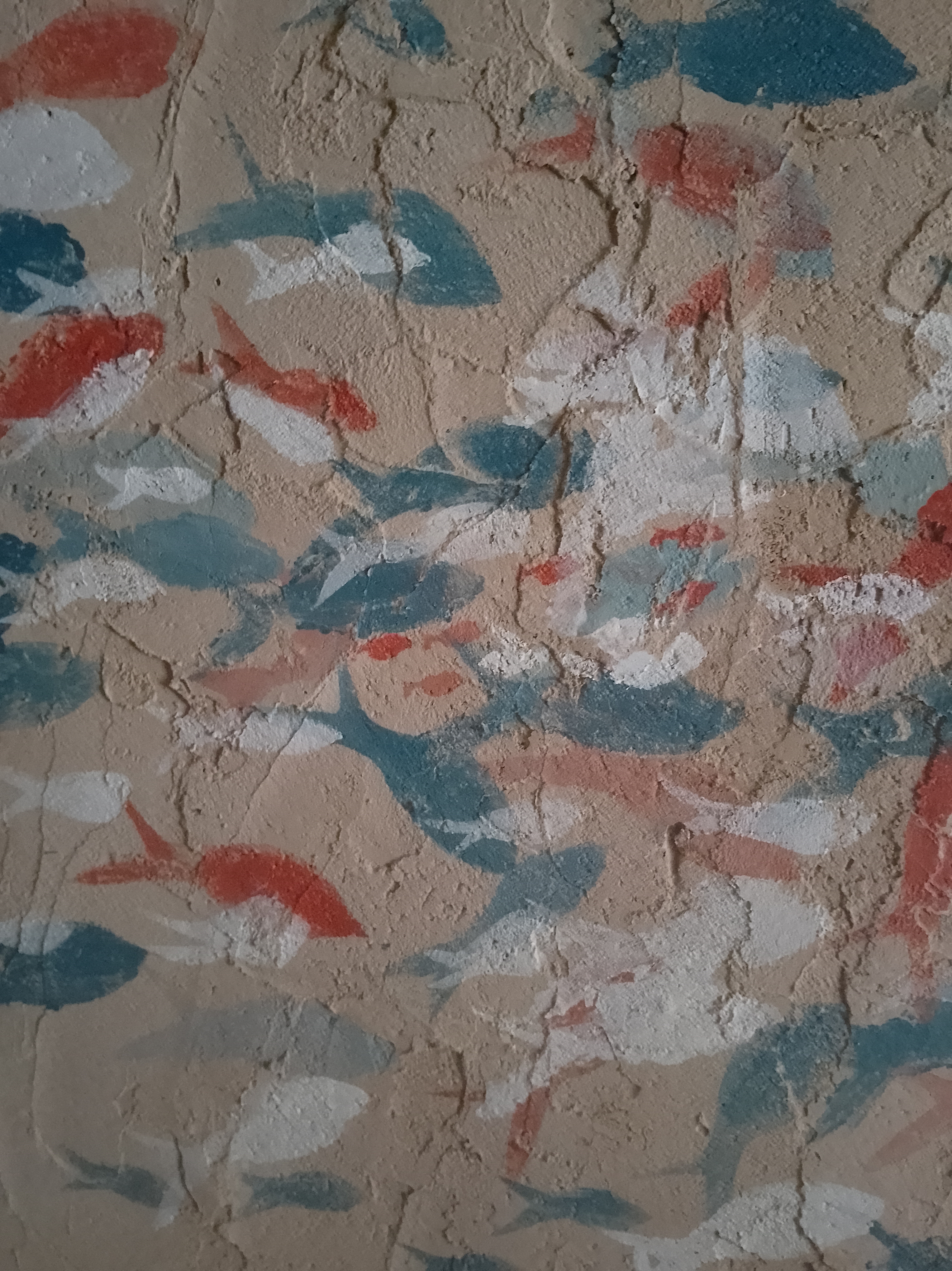
Mural on a lime plaster wall

Looks as if I painted this mural on a beach in between waves, or after the tide just went out.

Lime plaster is a wonderful rendering to give a wall. The plaster breathes and deals with any moisture. It’s antibacterial, anti-mold, and the insects hate it.

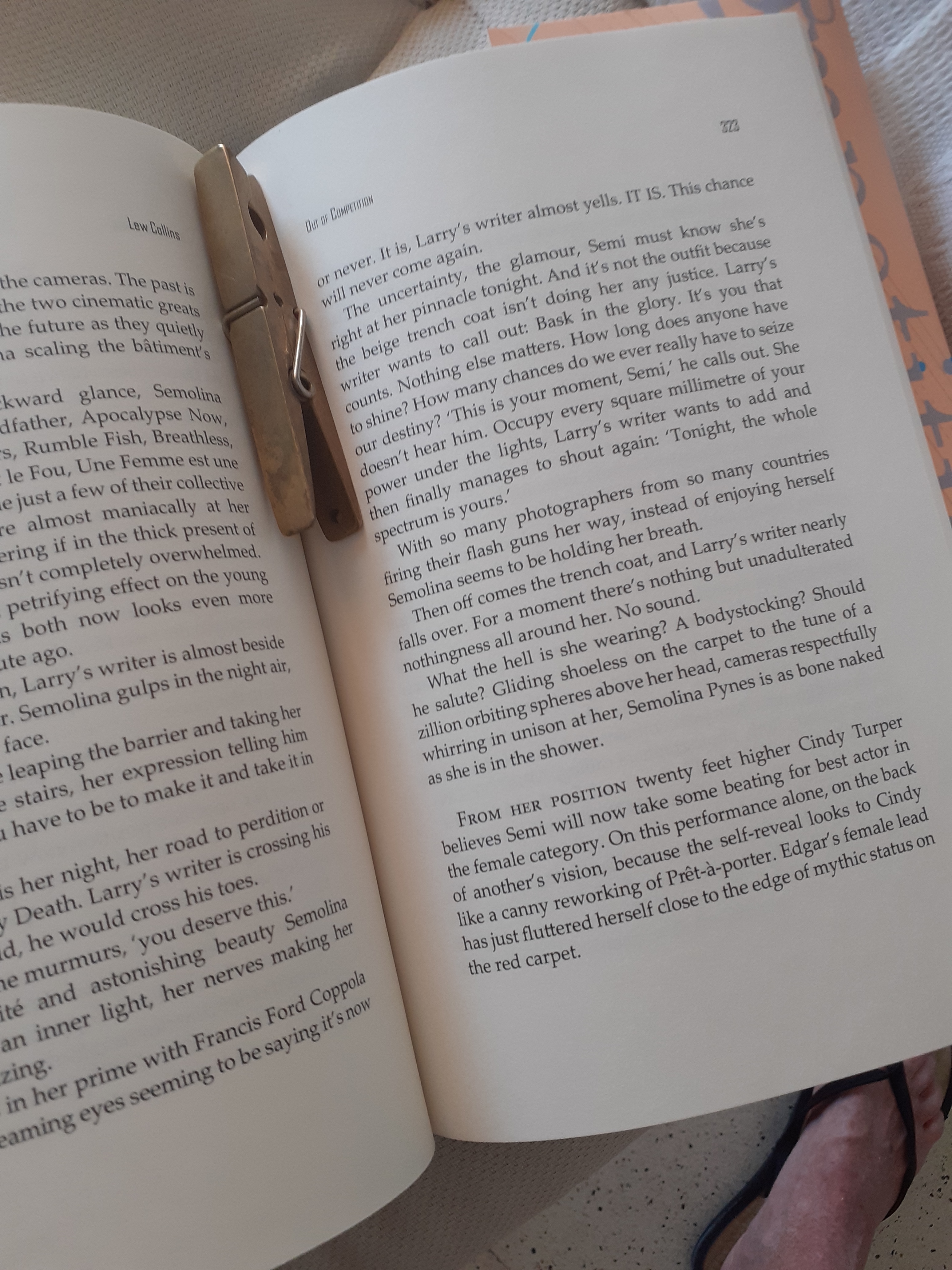
Review: “Out of Competition” by Lew Collins

by Austin Williams, Director of The Future Cities Project

It is fifty years since Spielberg’s movie, Jaws, first reached the big screen. It was described by film critic, Mark Kermode as a “genre-defining blockbuster that changed the face of modern cinema.” Indeed, a new theatre production, The Shark Is Broken, reflecting on the making of that movie is playing in UK theatres today. Lew Collins’ new book “Out of Competition” makes a few nods to the film – one of the characters is proposing yet another remake of the Jaws franchise – and to film-making per se, in a novel of intrigue, murder, and protest set in the murky world of international-finance in the film industry. Within the first chapter, a motor-boat driver is killed by a real shark falling from a promotional helicopter stunt. And so it begins.

The story is told in chronological order, day by day, over the course of a Film Festival in the south of France. A central protagonist Larry Linsteeg, a failing Hollywood film producer, kicks things off and within the first few pages we see him manhandled in a street in the south of France and bundled into a rowdy, radical, pro-democracy meeting. He’d been on his way to close a film-deal, and this opening chapter is fast-paced, and scripted in a manner of a Tarantino-esque film-edit. And equally confusing.

This book has been acclaimed as the 2023 Kenneth Patchen Award-winner (a prize celebrated by the Journal of Experimental Fiction). The author, Lew Collins relocated to France several years ago and his love of the country and especially its language comes across in the text that mixes French language freely into the dialogue. Maybe it’s a little too much for this GCSE-level reader. I found myself reaching for the Google Translate app across several paragraphs (but perhaps that says more about me than the average reader).

Adding to the need for concentration while reading this book, a number of characters appear with few flags or signature and we are confronted by a growing cast in rapid succession: a dodgy Russian oligarch, a film correspondent, a freelance photographer, a chief inspector, an ex-KGB agent with a heart condition, an outgoing festival director, critics, journalists, billionaires and showgirls. Along the way, there is a disappearance and a murder; there are Chinese kickboxers, Japanese artists and leftist demonstrators. It’s a lot for the reader to take in, and it is clearly a strain in the author’s character-naming inventiveness; culminating in Semolina Pynes, the out-of-her-depth, lead actress; or Zena Zatters, the festival gofer. Where characterisations are made, they are a little laboured, for example, sign-posting the “LA-based American audiovisual expert and putative film producer” or describing the oligarch’s boat as “a three hundred and twenty foot welded steel and aluminium moulded fibre-glass… ocean-going, part-solar-powered ship cruiser.”

That said, the story settles, and intrigue ensues. With so many characters, they rise and fall, appear and disappear all too easily and it is hard to relate to the characters in sufficient depth. But the pace is cinematic. Indeed, the filmic ambitions of the novel seem to have drawn characters from movie references: I pictured Rollergirl in Boogie Nights, or Alain Delon in La Piscine, and one can imagine a script for the big screen that emphasises the “homage“, as they say in France, towards updated Bogart detective noir. Maybe even a hint of Get Shorty… about a loan shark after all.

Out of Competition” by Lew Collins, Jef Books, 2024. pp407.

https://futurecities.org.uk/2025/02/01/french-connections/

Do we want to see Democracy die in America?

My current novel’s main theme was always Democracy from the earliest days I began to write it, but several years ago, deep in the writing I didn’t foresee how important Democracy would become in this era.

I decided early, writing ‘Out of Competition’ set in a film festival, that it would be comic because while I believed all processes of democracy could be better promoted everywhere I never foresaw democracy facing a serious existential threat.

Democracy has always been a major part of my life. My father was in the second world war so democracy always figured in my consciousness, and while I have never experienced totalitarianism I understood it wasn’t the way of the west, or a real threat, until now.

I never thought not even after the murder of John F. Kennedy that a U.S. president, however he got into power would try to destroy democracy in order to cling to power.

Democracy has never been perfect. It’s been manipulated, not just in the United States but its demise in the US, UK, France, Canada, Australia, or any western European nation is unthinkable. Democracy remains fundamental, especially in America.

The world is watching. Everything American was once received well. Cultural power is real. John F. Kennedy understood this.

These times need courage, unity, political skill.

OUT OF COMPETITION (JEF Books 2024)

Kenneth Patchen Award for the innovative novel

‘Laugh out loud funny’

Carla M. Wilson

5 OUT OF 5 STARS

Intelligent, provocative and fun

Cherry Jam UK, October 16, 2024 Review

Humorously subversive. It goes so fast I read it in two days. A must for anyone with a love of cinema and its festivals. And the most irreverent novel written about the South of France

5 OUT OF 5 STARS

Ten Years is Enough!

Read-fest UK, 9 September 2025

A sharp satire about democracy set in a Riviera Film Festival facing collapse as young cineastes demonstrate against privilege and lack of transparency in the annual voting shakedown, the novel opening with the kidnap off the streets of a desperate bankrupt Hollywood producer cadging money wherever he can

Out of Competition Ingram distributing, found at:

JEF Books

https://www.experimentalfiction.com/products/out-of-competition

Bookshop.org, bricks & mortar bookstores and online booksellers