Pacific Rim Review of Books’ review of ‘Uncorrected Proof’

PUBLISH OR DIE! by Paul Duran

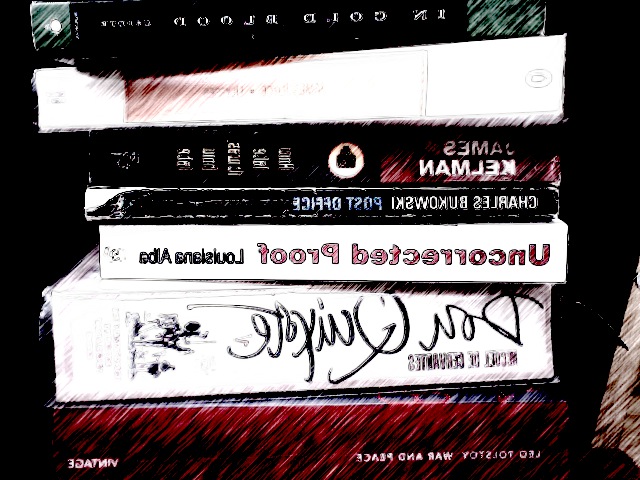
Review of Uncorrected Proof by Louisiana Alba – ElephantEars Press
Paul Duran – L.A. director and writer

from Pacific Rim Review of Books Fall/Winter 2009 Issue 12 – pg. 33


Who is Louisiana Alba and what does she (or he) have against the publishing industry? It’s a rhetorical question since most authors inevitably have some gripe against the media giants they are forced to rely upon to shepherd their creative works to the masses. Yet usually, besides the odd drunken cocktail party diatribe or expletive-laden rant to one’s spouse, authors won’t, or can’t afford to, bite the hand that feeds them. Alba on the other hand has decided to go straight for their throats, going public with the writer’s eternal screech – the bastards have    (add your own word here – ruined, stolen, fucked up, etc.) my book! – then framed it within a literary conceit so audacious and capricious, that to stumble just a little bit is to fall off the mountain completely.

It’s a high wire act that literally co-opts the style of dozens of literary untouchables and pop culture icons from James Joyce to Jimi Hendrix, Anthony Burgess to Andy Warhol, Ernest Hemingway to Quentin Tarantino (there are over a hundred authors and artists listed in the book’s acknowledgements starting with ABBA!). Alba (an obvious nom de plume) uses each successive voice in her vast arsenal to tell the story of Archie Lee, the plagiarized author who schemes to get his novel back from the people who stole it – the celebrity novelist Martyrn Varginas, his greedy publisher Menny Lowes, and his man-eater of an editor, Ellen Spartan.

Using The Iliad as a starting reference point (in a deliberate cracked mirror image to Joyce’s use of The Odyssey in Ulysses), the novel playfully winks at Homer not so much for his epic poem’s style as for its archetypal tale of love, abduction and revenge. The characters all are sly doppelgangers for their Greek counterparts; Archie Lee for Achilles; Ellen Spartan for Helen; Menny Lowes for Menelaus and so on. But the book does not rely solely on post-modern mimicry or clever homage to keep our interest. It more than holds it’s own as a thoroughly enjoyable pulp story about stolen manuscripts and deferred vengeance in the volatile, cutthroat world of publishing. Making publishing a life and death enterprise involving kidnapping, murder and the CIA is a nice conceit that no doubt will give even the crustiest of publishing execs a knowing chuckle.

The novel starts with Archie out to expose his literary theft at the Crocker Prize banquet (read Booker Prize). He gets cold feet when he comes face to face with his nemesis Varginas and Varginas’ attractive editor Ellen. She unexpectedly offers Archie a position at her new imprint when he stammers out that he’s “expert with espionage thrillers.” From there the story follows Archie’s desperate scheme to wreak revenge from inside the publishing mecca using his newfound influence to try to get his original novel into print under the name of an opportunistic young hustler he has hired for the part. Nothing goes according to plan as the novel ricochets from London to Barcelona to the South of France to New York and back; from pulp crime to spy thriller, memoir to meta-fiction, screenplay to redacted text.

It may sound like a daunting task for the narrative to constantly shape-shift from one disparate source to another but the effect is breathtakingly kaleidoscopic and in most cases wholly appropriate (even the few typos in the book seem correct given the title). In truth it would probably take a tenured literature professor with a vast music and DVD collection to decode all the stylistic shifts in Uncorrected Proof but that’s not really the point. Given all the literary byplay and conceptual ambition, the story is still amazingly accessible, so when you are able to pick up on a particular author or style, it just adds to its kicky pleasure.

In the end Uncorrected Proof is also a cautionary tale about ego and ambition run amok in a world where ego and ambition are the only character traits that seem to really matter. With no clear winners or losers it could almost be read as a twisted metaphor for our own troubled times, with the publishing industry standing in for Wall Street and the banks, where the “best and brightest” have had their way for too long and have grown fat on the bones of those crushed under their Gucci loafers and stiletto heels. Perhaps I’m reading too much into Alba’s remarkably varied prose, but the seeds of a revolution are there, if not on the economic front, then maybe just in the publishing house.

Paul Duran’s films, Flesh SuitcaseThe Dogwalker.

Another review by LiteraryMinded please go to:

http://blogs.crikey.com.au/literaryminded/2008/11/07/uncorrected-proof-louisiana-alba/

elephant-ears-8-2
 

Let’s Bet on Independents

Borders is dead, long live the independents.

When Borders came into the UK and bought up Books etc, what happened? A superb small bookshop chain that knew what it was doing slipped out of sight. We know what BIG can do. It goes bust with a BANG in bad times, well, a dull thud in this case.

Do we get the message? BIG doesn’t work in tough times. So why not support the people who are there for us with books year in and year out.

In my area there’s ONLY one – Stoke Newington Bookshop – owned and run by Jo for the last twenty-two years. She’s seen whole families of readers grow up, took over the floor space when Barclays moved out..remember that? A bit before my time. Jo has weathered rent rises, publisher and writer collapses, buyers and banks coming and going.

It’s a superb shop, one of the best book table layouts I’ve ever seen. If you are a  reader who likes to book-browse without pressure this is the shop for you.

Stoke Newington Bookshop 159 Stoke Newington High Street, London, N16 0NY (near the t-junction with Stoke Newington Church Street)


Progress of the Novel

Image – ElephantEars Press

The novel has seen so many developments on so fronts through its long history in many languages and periods of history. It began with Cervantes and still is going strong. ElephantEars Press through its Facebook group Progress of the Novel, wants to learn of innovative novels, ‘gems’ published in recent years.

(posting for ElephantEars Press)

http://www.facebook.com/group.php?gid=199000248124&ref=mf

It’s enough to be in Paris

BILD2186


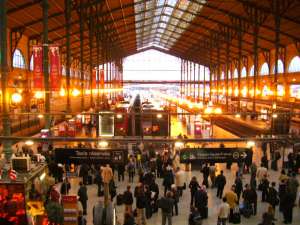
I went to Paris for my birthday (had to say it at least once). Found a wonderful hotel, with the sort of market just two minutes away you can only find in France. Combination of food on sale and items and atmosphere. Checked the book in Shakespeare and Co. Have a look, too – Uncorrected Proof, under A for Alba.


BILD2132

BILD2070
BILD2080

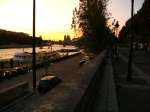
Walked the streets. Passed through, open-mouthed, the commercial alleys of the left bank. Should manic tourism do this to such a brilliant part of the city? Up and away through Montparnasse, by the Pantheon and back down by Joyce’s home (one of 13 while he was in Paris).* I  just found the address without any idea where it was, wasn’t even thinking of him. Now I’m asking myself what are the chances of chancing on it in a city the size of Paris.


BILD2123

Not one for tourist plaques or gravestones but this is worth lingering by.


BILD2177

Really didn’t do all that much in two days –  didn’t lunch or dinner at expensive restaurants, didn’t even tea or coffee in les deux magots. Just absorbed the sounds and sights from train to train. It’s enough to be in Paris.


BILD2159BILD2113
BILD2116

* As the New York Times tells us, it was Joyce’s “prettiest place…Valery Larbaud’s apartment in a kind of mews at 73 Rue Cardinal Lemoine, on the Contrescarpe behind the Pantheon and with curving view of Paris.”

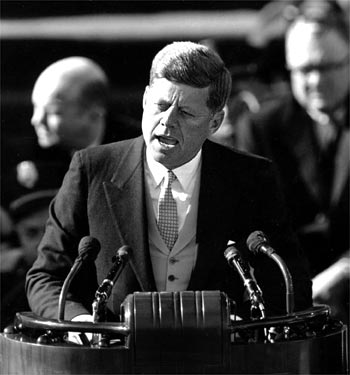
Ted Kennedy

Let’s put politics aside for a moment, and pay tribute to three brothers, John, Bobby and Ted Kennedy.

jfk1

JOHN F. KENNEDY

946a28f9398c4779_landingEDWARD M. KENNEDY

Photo_rfk_RfkChavez

ROBERT F. KENNEDY

Three brothers who could easily have just enjoyed themselves, sailing, making money and having fun (which they did too), but chose also to take up the causes and interests of those less well off than themselves. My thanks and admiration for all they did and tried to do, to bring justice and basic human rights to Americans and all of us throughout the world. There is barely a day goes by when I don’t think of what might have been.

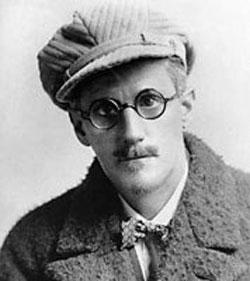
Happy Bloomsday

Though they didn’t see eye to eye in everything a certain analogy there somehow was as if both their minds were travelling, so to speak, in one train of thought. p536 ‘ULYSSES’ – THE CORRECTED TEXT

As summer reaches for its solstice, as the stones of Big Ben time tremble from Stonehenge right around the world, as the polititudinous rage bleeds in ancient places and I sharpen these scribal tools to palimpsest my way through another 16th, I salute old JJ, for his ‘galaxy of new devices and stances and verbal antics, extravagant, derisive, savage, rollicking, tender and lyrical… ironic dominion.’ (thankees to Richard Ellman)

Let’s all salute  oldy-poldy JJ his voices talking at us still, twirling in time all this live long day, as we take a moment to let ourselves be literarily astounded  all o’er agin by  his thesis for true intelligence….

We are all equal every wingy, tready, swimmy, barking one of us

_.._IICManager_Upload_IMG_NewYork_joyce 2

Being a Film Critic (in Cannes)

http://www.guardian.co.uk/film/video/2009/may/22/cannes-film-festival


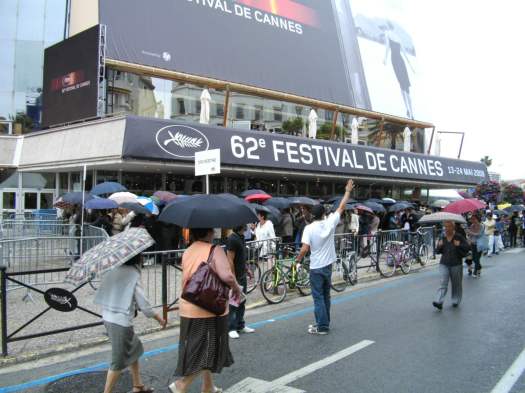
Watching the video of the Guardian’s group of UK film critics on their annual junket to Cannes, sitting around a half empty glass of blanche, un bicchiere di bianco, mezza affogata nell’alcol doing the Guardian’s wrap up video Cannes film festival roundup: ‘A year of Prophets and Basterds, scandals and stars’, watching them get it so completely and utterly and horribly wrong on what and who would win, with at least one expert exhibiting an ‘Oh oh I’m gedding a liddle tipthsy’ half giggle, was one of the best laughs at Cannes 2009 in a year that seemed notably spare of the real thing up on screen.

The film hardheads guarding our take and hold on the fourth dimensional art form, displayed zero-none insight into the Cannes Festival Jury’s collective mind or political process of selection. It had me wondering if they ever got out of the UK film village at all over the two weeks. They weren’t idiots, don’t get me wrong. Intelligent, personable, likable almost – they just didn’t know anymore than you or me, their comments about as good as yours or mine on any given film at any given glassy-eyed moment. I mean who really knows what’s good or not in cinema? God only knows why or how anyone wins awards at these events – what really does go on behind those draped windows? Can you imagine the jury, sorry, The Jury, sitting around seriously trying to be serious about their role. I mean it’s a junket, an annual film publicity junket in a lovely breezy May-warm part of the French Mediterranean. Time to get the sunglasses and floppy linen out and the dingly-dangly things and say words from romance languages almost as the French do…okay, simulate the French.

BILD1156

BILD1158BILD1154

But after being there and getting back and seeing the Guardian get it horribly, no, miserably, wrong, I thought I’ll have a go at being a film critic too. I went and sat through Synecdoche at the Rio Cinema and here’s my review:

It was an interesting film, an interesting two hours plus of my time spent indoors on a warmish rainless spring afternoon in London. I left the cinema thinking: real life aint so bad after all.

For me Charlie Kaufman is a genius, or the closest thing to true genius that film, well, the closest thing to true genius that American film… well, there’s also Woody Allen, an influence on him and his work Kaufman said. So who’s first and who’s better? Well…See it all gets very silly, very quickly, not just the genius tagging bit but film criticism all round.

Synecdoche is an uncompromising portrait of a human being doing everything but slip down the toilet before your eyes, all written and directed by someone who wrote Being John M, Adaptation and Eternal Sunshine – we are talking serious film writing ability here. But Synecdoche is tough to watch. Not impossible, not horrible or miserable, well yes it is miserable – and between Woody Allen’s division of the world, “miserable” or “horrible”, this is Kaufman’s “miserable”.

It brought Woody Allen to mind, it brought Fellini back to me, Coppola, really anyone who made a film that was a tough ask, a tough sit, at least once, in their hey or other days. Bring on the heh heh days I say, because there seems to be a moment in many famous filmmaking careers when the auteur inside says screw the audience, screw entertainment, screw the laughs I’m going to give them a piece of my art, one from the heart ART.

It also brought to mind a scene in Woody Allen’s Anything Else, David Dobel (Woody Allen) and his protege Jerry Falk (Jason Biggs) walking, nutty Dobel giving Falk some more sage advice.

DOBEL What goals.. wh-what are these goals?

FALK I want to write a novel, Dobel, a novel about man’s fate in the empty universe, no god, no hope, just human suffering and loneliness.

DOBEL Yeah well I’d stick to the jokes if I were you, that’s where the money is.


….Okay I’m a philistine, so what else is new.

Easy Rider is back in Cannes

BILD1052

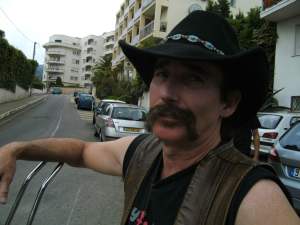
It might be raining on the Cannes parade, and security out of hand, some of the films, well, but there’s still one bright note on a gray, rain-spitting Riviera first festival Friday. The bike of the film, Easy Rider, forty one years old this week, is back at the film festival that gave the film life, once more at the festival where the film and cast – Peter Fonda, Dennis Hopper, Jack Nicholson and Karen Black earned a vital critical reprieve from the Cannes film festival. In fact, Cannes put Easy Rider into orbit.

BILD1064

BILD1069

The master builder of the easy rider Captain America replica, Jack Lepler, is here with the bike as well. The secrets behind the film, the legend behind the story (what Jack “doesn’t know” he isn’t telling, not about the bike nor the original film, no how. ‘It aint worth saying nor knowing,’ he says with a wink.

BILD1073

So the sequel, Easy Rider II, has that bike back on the Cote D’Azur, at Cannes again.

If it weren’t for the 22nd Cannes Film festival – the festival after 1968, the year students and filmmakers with Godard and Truffaut stopped Cannes and France in its tracks – the original Easy Rider might not have seen the light of day. American distributors would not touch the film, said they were embarrassed by it. More fool them, because this game-changer budgeted at $400,000 took $60 million at the box office. Easy Rider is a large part of the reason behind independent American cinema’s regeneration of Hollywood’s power in the late 1960s, a movement that took a tired LA studio-system filled with failure and excess and lit a fire under it.

And it was Cannes that gave the story of the bike its traction, a new way its market tread. Easy Rider was a key independent production – turning a savvy creative low-budget know-how into a creative trend that saved Hollywood from a crippling decline. More power to Peter Fonda and Dennis Hopper. More power to Easy Rider sequels.

BILD1068

Credit where, all hail to..

It is, I assure you, an infuriating mess, a refuge, a joy to behold, an acrimonious cesspool of computerisable angst, an endless checklist of outso(u)rcerized disputes – a hole in the wall for all the world’s minds to filter down onto damaged DVDs. They will in time. And this you will find will be their final resting place.

The staff are miraculous, critically underpaid, limitlessly incompetent, irritatingly profound, delightfully empty, lazified beyond imagining, utterly perfect in their rhombus like cartoon feature creatures silicon graphic simulatoring carnival spirit. They sit there one at a time in that hell’s kitchen like Camusian sentences in utter knowing decrepitude.

If I could ever find the title I crave, the one I have up here, I will throw a week long party for all of you (send me yr contact). As a photocopier – though – to be honest – let’s be fair – my local is the soul of efficiency. As a printer of documents it is besmirchless –

….any fault the computer hard-drives at you is not down to the poor beleaguered impoverished centre.

It is a meeting, as it were or was – point by point – planned, for the perfect silence of minds, brought to life ONLY by murmuring mobile phonies and at least one hundred SE-a-MLESS dialects.

Not a letter I know is transferrable in order to patronise misapplication by default (if you know how to approach it). So…All hail to my local

….– library.

Intentional fallacy

It was called the intentional fallacy when I was at university  – meaning for me  that the author is not really a good judge of her or his work, doesn’t really understand what has been written.

Roland Barthes spoke of something similar in the The Death of the Author. I would have liked to have talked to Barthes back at university about it, instead of much later in my head when postmodernism seeped into my consciousness. It would have provided a shorter route to where I believe I am than the road I took. But at least I heard of intentional fallacy and it had an effect on my understanding of how literary works are constructed (or not). And then I heard of Barthes and many others later, and my understanding deepened.

One intentional fallacy I would like to point at in Uncorrected Proof (or maybe it’s not really an intentional fallacy, more a mistake) –  I based the novel (a little tongue in cheek, I admit) on the prelude/the history of Helen and Greece prior to the context of the Iliad and then fast-forwarded to the finale of Homer’s poem itself. For me any strict following of Homer’s martial poem would have been a weight I didn’t need. I felt in my heart that I had the greatest on my side in this, and that if Shakespeare were  Joyce he might have decided on a less strict following of the Odyssey for Ulysses, and given more emphasis in Bloom‘s narrative to ‘story’. For me, Shakespeare knew how to use story as a platform for other literary ventures. Joyce it seemed didn’t ‘do’ story or didn’t want to understand it, seeing story as a unnatural structure forced upon him by commercial literary progress, at least so it seems in Ulysses and Finnegans Wake. But there is story in Ulysses, just it isn’t in any way commercial. Did Joyce intend to deconstruct story or did he simply not do it well?

The intentional fallacy (is it one or not?) I must own up to in Uncorrected Proof is this: in my creation of one particular character I intended for readers to read the words as I pronounced them in my head. And one word with a possible reader-mispronunciation attached to it only occurred to me recently, a mispronunciation that might have some politically correct readers catching their collective breath.

For reasons that shall remain in code, I named my genre plagiarist novelist in the story- Martyrn Varginas.

I lived in Italy and speak Italian and understand the Greek and latin bases to western European languages, so for me, Varginas, without question, is pronounced as the Greeks might, with the main accented syllable being the first Vár (as in are)-gin (as the drink)as (mass)

If it were in Italian the accent would be on gin…definitely NOT as English speakers might read it, with the emphasis on a middle sylalble – gyne – leading the surname to more than hint at the female sexual organ in plural.

Now it is true I realised the implications of making Martyrn’s surname and ‘vaginas’ so close but as I based it on a real name, itself very close to the most actively used pejorative term for the female sexual organ, I deemed it just and fair use. Suddenly (I kid you not) I realised of course that, just as swimmers at my local pool mispronounce Lido lie-dough, instead of lee-dough as it is in the original italian, they would just as readily mispronounce Varginas.

So, for the record: It is Vár (as in are)-gin (as the drink)as (mass)..okay?

Phew. Now that this has been clarified I will move onto the main characters in Uncorrected Proof that are based on the Iliad:

Archie Lees – Archilles

Ellen Spartan – Helen of Sparta

Anthony Gamenman or A.Gamenman(n) – Agamemnon

Menny Lowes – Menelaus

Cal Kline (or Cal Chase or Patrick Locus) – a fusion of Calchas/Patroclus

Dolon – Dolon (perhaps western literature’s first spy)

The first part of the story’s premise: Archie Lees gatecrashes the Crocker Book awards in a hairbrained scheme to get his novel back from the bestselling genre novelist..Martyrn Várginas..the ‘gin sodden half-assed’ hack who plagiarised Archie’s book …

Anymore from me on this subject could inspire some virulent shouts of intentional fallacy.….or worse…